Summary
- Buy a half ham labeled “ready-to-eat” and “ham with natural juices”.
- Smoke at 225-250°F.
- Use a mild fruit smoke wood, and go easy on the amount of wood used.
- At 110°F internal temperature, remove ham from smoker. Score the fat in a diamond pattern, apply glaze, and return to smoker.
- Glaze ham again at 120°F internal temp.
- Serve when ham reaches an internal temperature of 130°F.
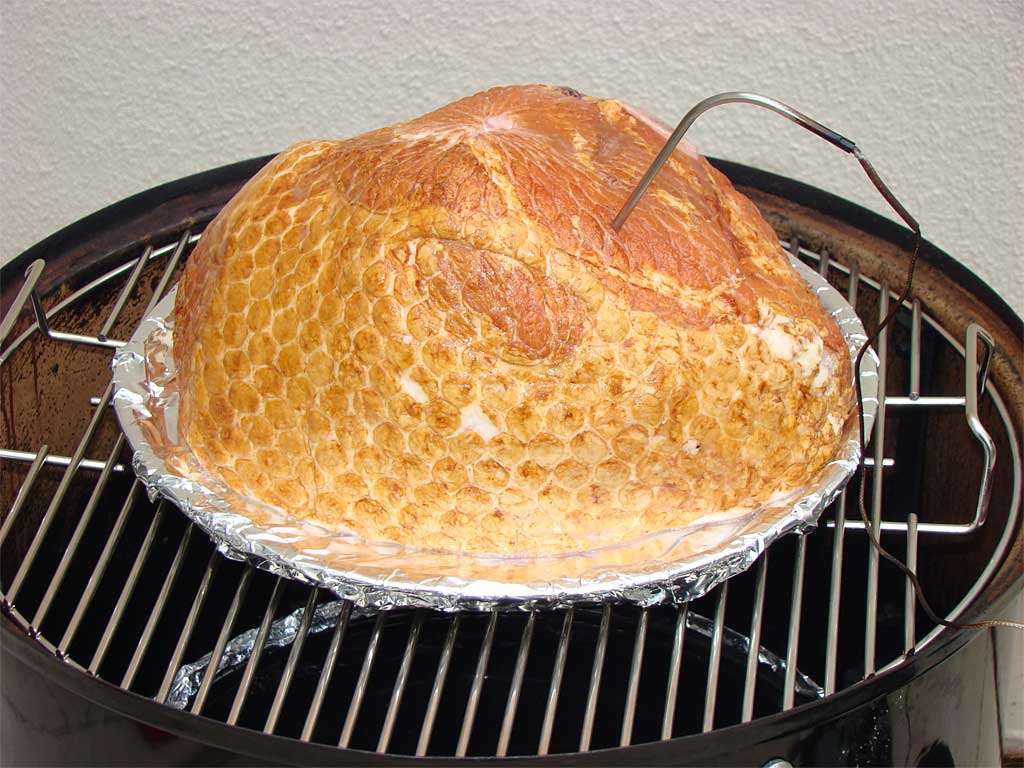 Heating a “ready-to-eat” ham using the Weber Smokey Mountain Cooker is quick, easy, and makes a great addition to your holiday table. This one with an apricot and whole-grain mustard glaze is inspired by a recipe from Martha Stewart.
Here are some pictures I took on May 24, 2008 when I prepared this ham.
Choose A “Ham With Natural Juices”
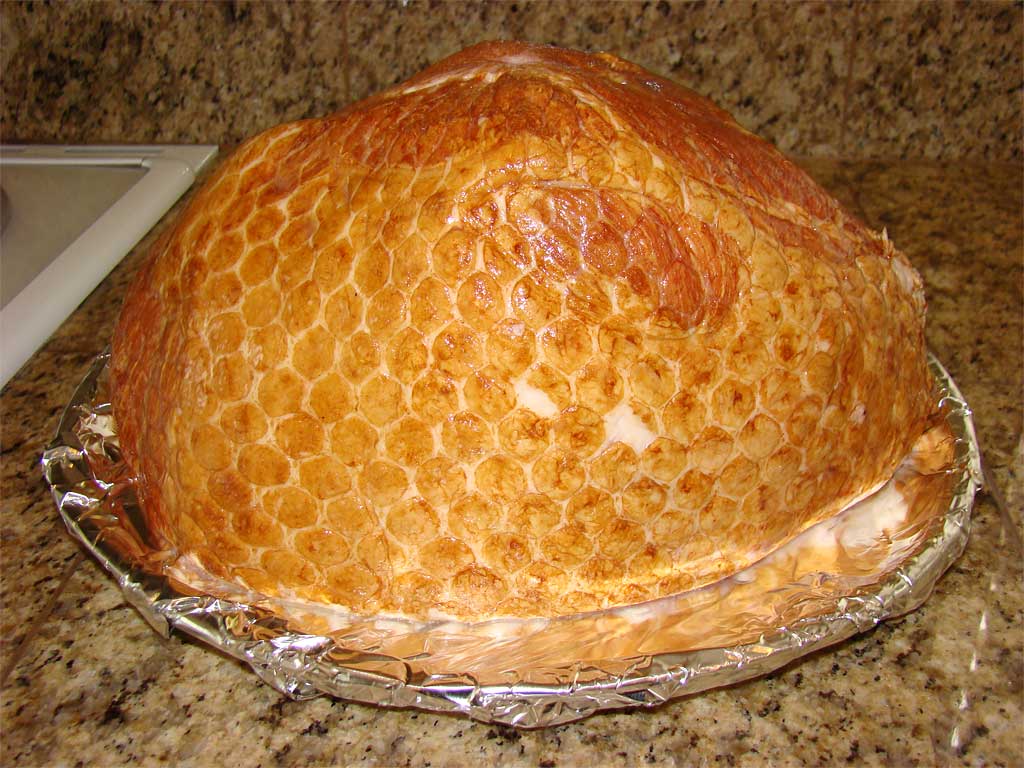 Purchase a half ham labeled “ready-to-eat”, meaning that you don’t have to cook the ham before serving, you just need to heat it up. Also, look for the term “ham with natural juices” on the label. This indicates a high-quality ham.
Remove the ham from its packaging and place it face down on a foil-lined pan that will fit on the top cooking grate in the WSM. The ham shown here is a butt-end, ready-to-eat half ham with natural juices, weighing 10.62 pounds.
To learn more about the various types of ham and ham terminology, visit the Ham Selection & Preparation page.
Smoke Wood Is Optional
The ham I used was a high-quality applewood smoked ham. I decided not to use smoke wood for added flavor, knowing that I would get just a bit of flavor from the charcoal alone.
Depending on your ham, you may want to use 2 chunks of apple smoke wood. Each chunk should be small, for example 3″ x 2″ x 2″ or similar. In this case, a little bit goes a long way—you don’t want to overpower the meat. Another mild wood like cherry or oak can be used if apple is not available.
There is no need to soak the wood or remove the bark before use.
Fire-Up The WSM
Fire-up the cooker using the Minion Method. Fill the charcoal chamber 1/2 full with unlit Kingsford Charcoal Briquets, then light 20-40 briquets with a Weber chimney starter and spread them over the unlit ones. Place any smoke wood chunks on top of the light coals.
Put the water pan in the cooker and fill it with cool tap water to help with temperature control.
Heat & Glaze The Ham
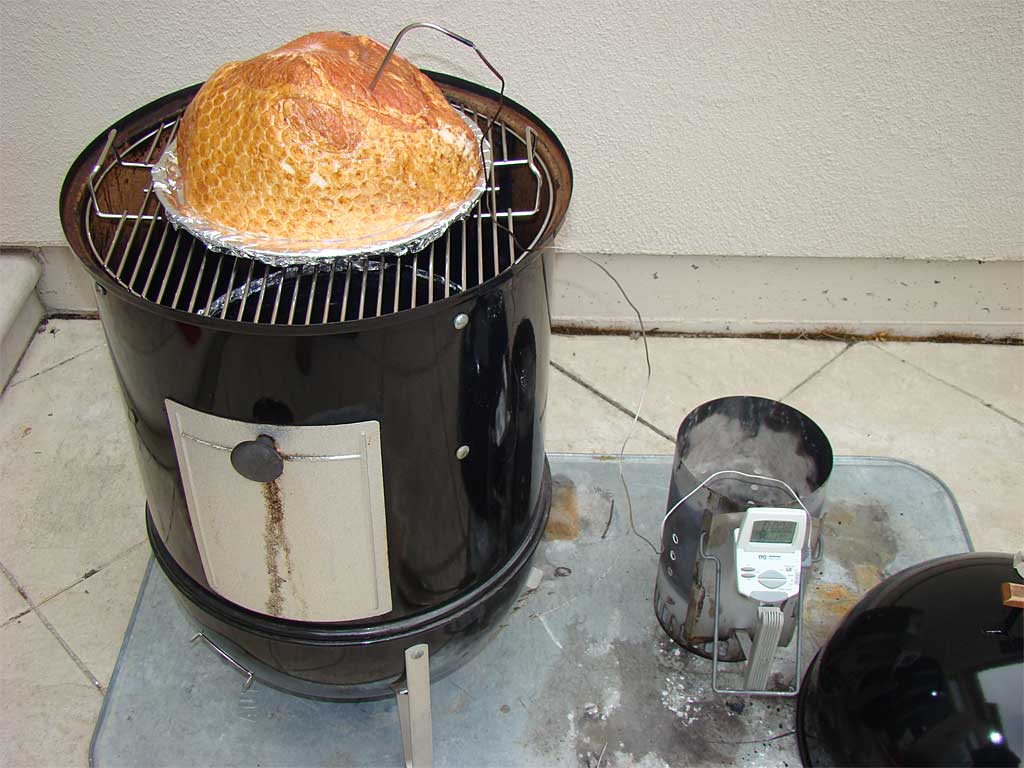 Assemble the cooker and put the ham on the top cooking grate. Insert a probe thermometer in the thickest part of the ham to monitor internal temperature during cooking.
Set the 3 bottom vents to 100% open. Open the top vent fully and leave it that way throughout the entire cook.
When the cooker reaches about 200°F, set the 3 bottom vents to 25% open so the cooker settles in at 225-250°F measured at the lid. Adjust the 3 bottom vents as necessary to maintain this temperature range throughout the cooking session.
Heat the ham at 225-250°F to an internal temperature of 110°F. Remove from the cooker and use a sharp knife to score the fat in a diamond pattern, making the lines about 3/4″ apart and 1/4″ deep. Brush with 3/4 of the glaze (see recipe below) then return the ham to the cooker.
Continue heating the ham until it reaches 120°F internal temperature, then brush with the remaining glaze. Return the ham to the cooker. It is ready to serve when it reaches 130°F internal.
Remember, there’s no cooking involved here…a ready-to-eat ham is already fully cooked, so you’re just heating the ham to serving temperature and glazing it with the apricot/mustard sauce. This may seem like a low finishing temperature, but anything much higher risks drying out the ham.
Here’s how the cooker and meat temperatures went for this ham.
| Time | Lid Temp | Meat Temp | Vent 1 % | Vent 2 % | Vent 3 % |
| 3:05 pm (b) | – | 35 | 100 | 100 | 100 |
| 3:15 pm | 237 | – | 25 | 25 | 25 |
| 3:30 pm | 229 | – | 25 | 25 | 25 |
| 3:45 pm | 247 | – | 10 | 10 | 10 |
| 4:00 pm | 249 | 44 | 10 | 10 | 10 |
| 4:15 pm | 250 | – | 10 | 10 | 10 |
| 4:30 pm | 251 | 55 | 10 | 10 | 10 |
| 4:45 pm | 252 | – | 10 | 10 | 10 |
| 5:00 pm | 252 | 75 | 10 | 10 | 10 |
| 5:15 pm | 255 | – | 10 | 10 | 10 |
| 5:30 pm | 254 | – | 10 | 10 | 10 |
| 5:45 pm | 253 | 100 | 10 | 10 | 10 |
| 6:00 pm | 253 | 107 | 10 | 10 | 10 |
| 6:05 pm (s)(g) | 253 | 111 | 10 | 10 | 10 |
| 6:22 pm (g) | 240 | 120 | 10 | 10 | 10 |
| 6:30 pm | 250 | 122 | 10 | 10 | 10 |
| 6:45 pm | 256 | 125 | 10 | 10 | 10 |
| 7:00 pm | 257 | 129 | 10 | 10 | 10 |
| 7:15 pm | 255 | 131 | 10 | 10 | 10 |
(s) scored ham
(g) glazed ham
Note that the vent percentages represent the way I set the vents at the time indicated.
Prepare The Glaze
You’ll need the following ingredients for the glaze:
Apricot & Whole-Grain Mustard Glaze
- 1/4 cup whole-grain mustard
- 2 Tablespoons apple cider vinegar
- 1/2 cup apricot preserves
No need to choose a fancy brand of preserves. Use whatever is cheap and available.
In a 1-quart pot, bring apricot preserves to a simmer over medium-high heat.
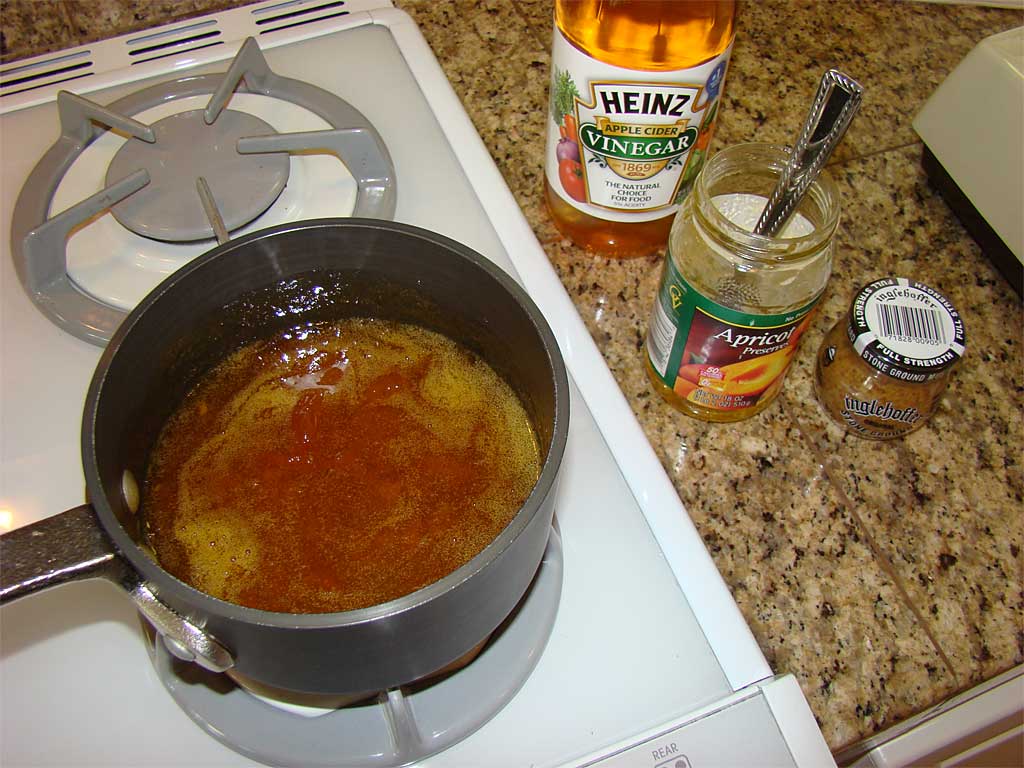 Place preserves in a blender and purée until smooth, about 2 minutes.
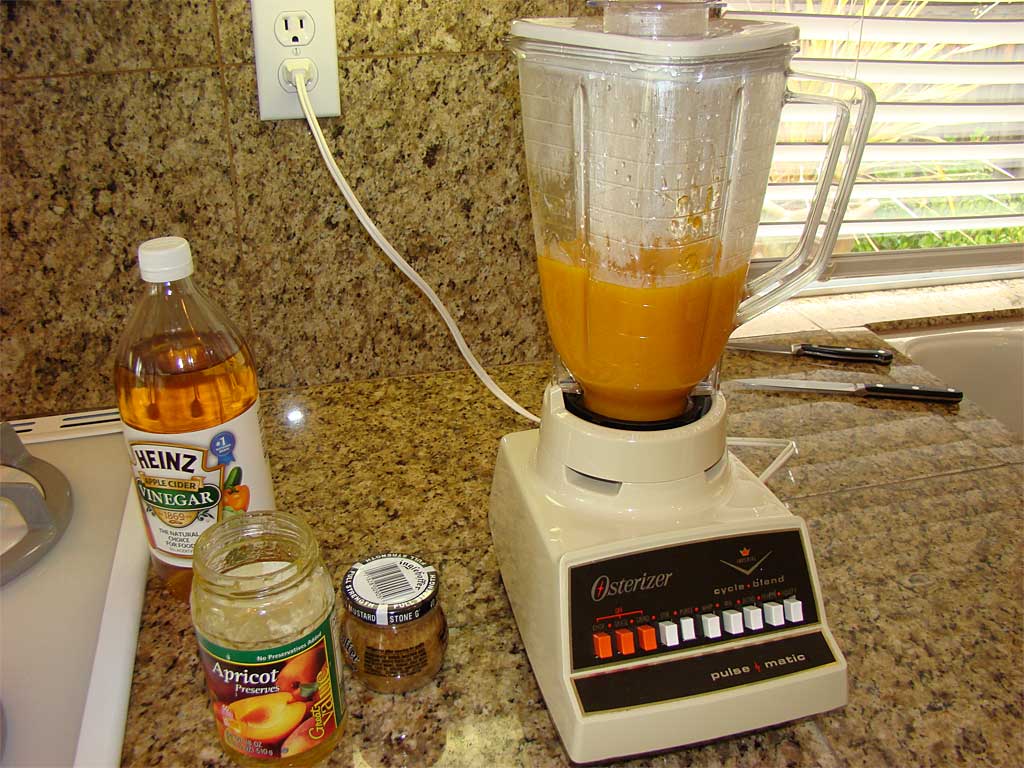 Pass through a fine sieve. You should be left with slightly less than 1/2 cup of preserves.
In a small bowl, combine puréed apricot preserves, whole-grain mustard, and cider vinegar.
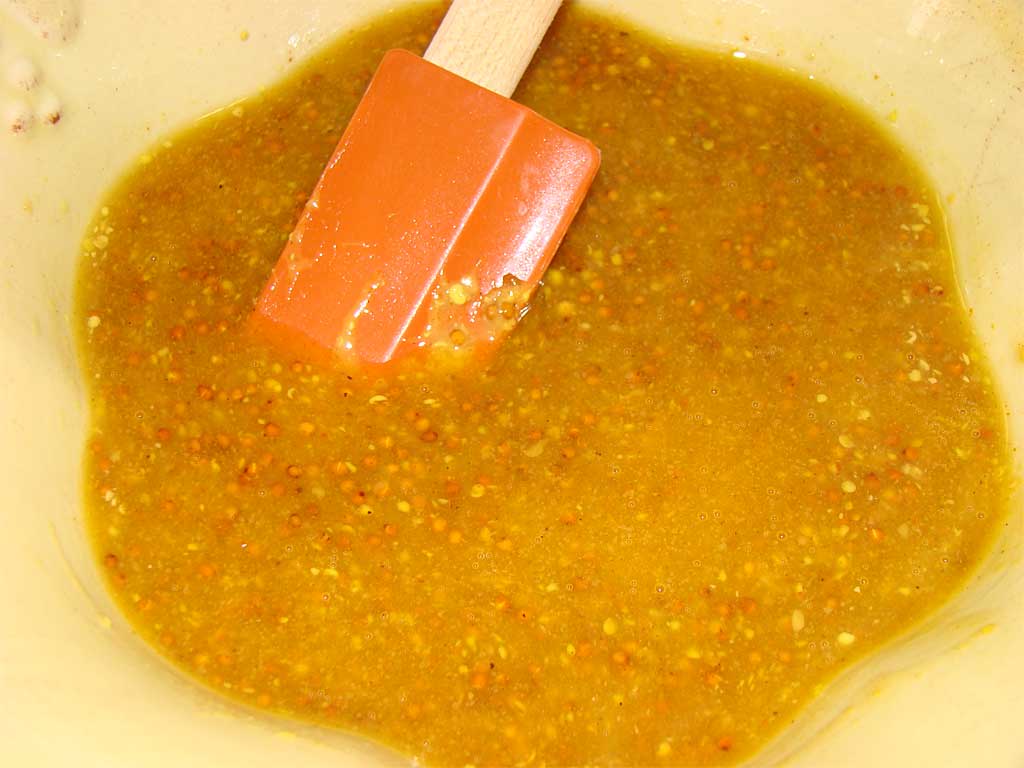 Apply glaze to ham as directed.
Serve The Ham
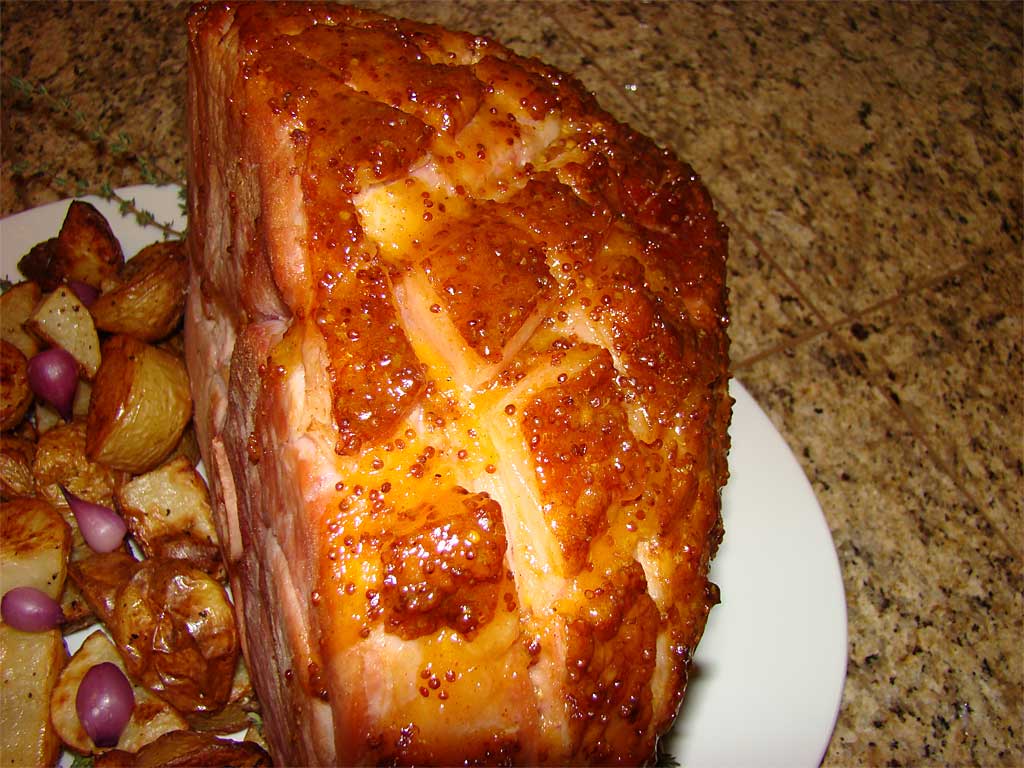
When the ham reaches an internal temperature of 130°F, it’s ready to serve. This photo shows the finished ham served with roasted potatoes, pearl onions, and sprigs of thyme.
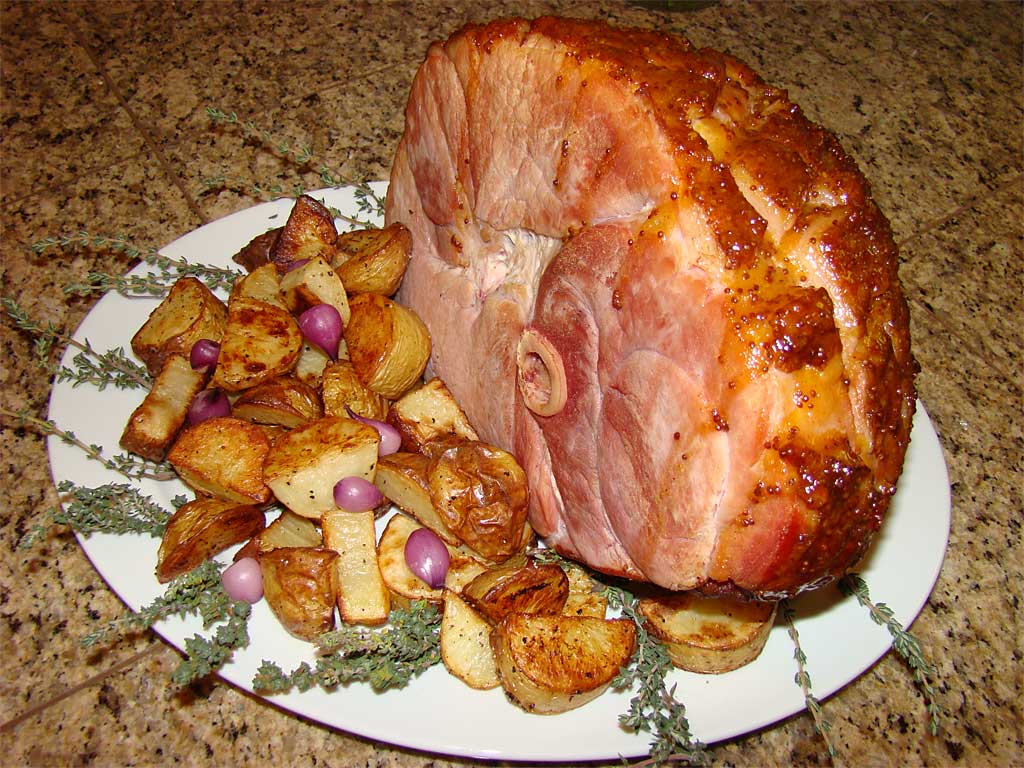 This photo shows a close-up of the diamond-scored and glazed surface of the ham.