Summary
- Select a whole, untrimmed “packer cut” brisket weighing 10-12 pounds.
- Trim excess fat, leaving a 1/8″ – 1/4″ fat cap, and apply a favorite rub.
- Barbecue at 225-250°F to 170°F internal temperature.
- Wrap in foil and cook in a 300°F cooker or oven to 205°F internal temperature.
- Let the meat rest for at least 30 minutes before serving, or hold in an empty cooler for 2-4 hours.
- Separate the flat and point portions, and slice the flat across the grain 1/4″ – 3/8″ thick.
Mike Scrutchfield, a renowned WSM barbecue champion during the 1990s, described this method of cooking a brisket in a 1996 post on The BBQ Forum. Mike’s approach calls for barbecuing a brisket 8-10 hours to an internal temperature of 165-170°F, then wrapping it in foil and finishing it in the cooker or oven at 300°F to an internal temperature of 205°F.
I tried Mike’s method for the first time in 1997 and found that it results in an extremely tender brisket and works especially well if you want to speed up the cooking process a bit.
This article was originally published in March 1999, and I’ve updated it based on a cooking session I did on August 14, 2004.
Buy And Prepare The Meat
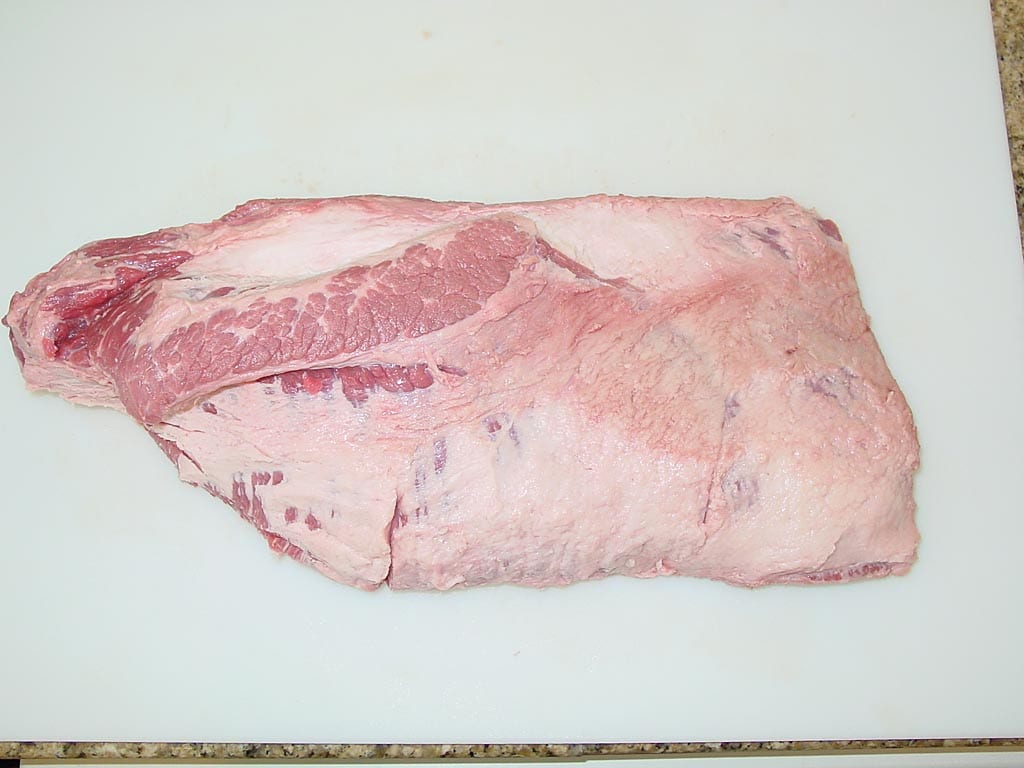
Purchase a whole, untrimmed “packer cut” brisket weighing 10-12 pounds. See Brisket Selection & Preparation for information on how to choose the best brisket for barbecuing.
Trim the excess fat from the brisket, leaving a 1/8″ – 1/4″ thick fat cap to keep the meat moist during cooking.
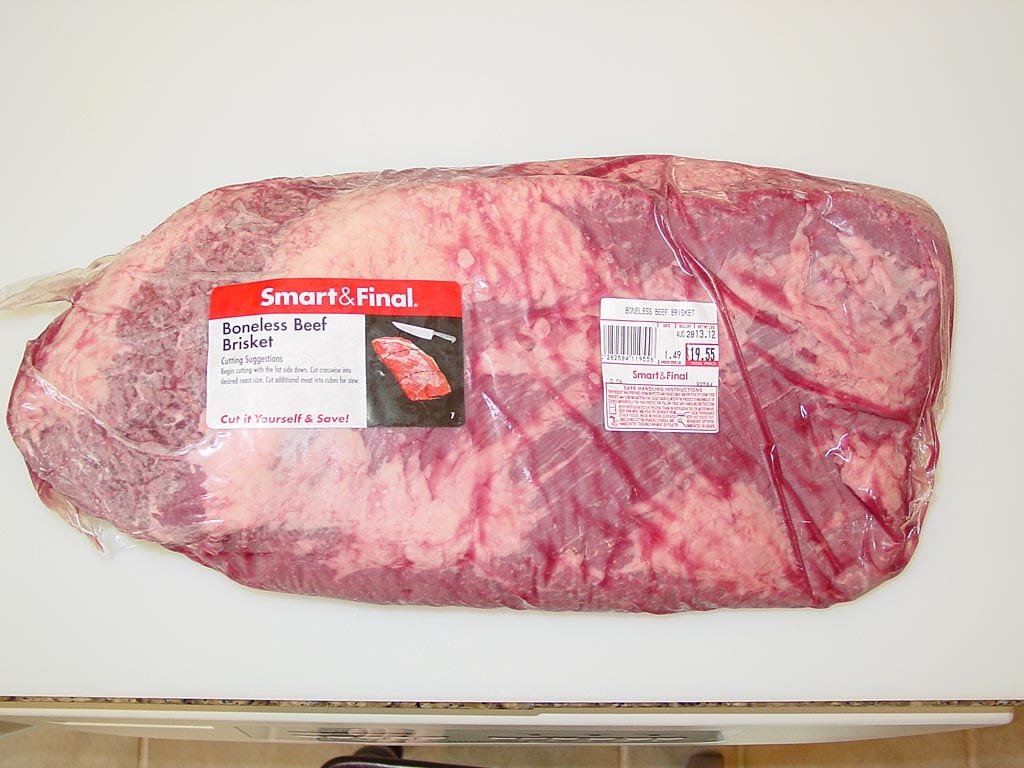
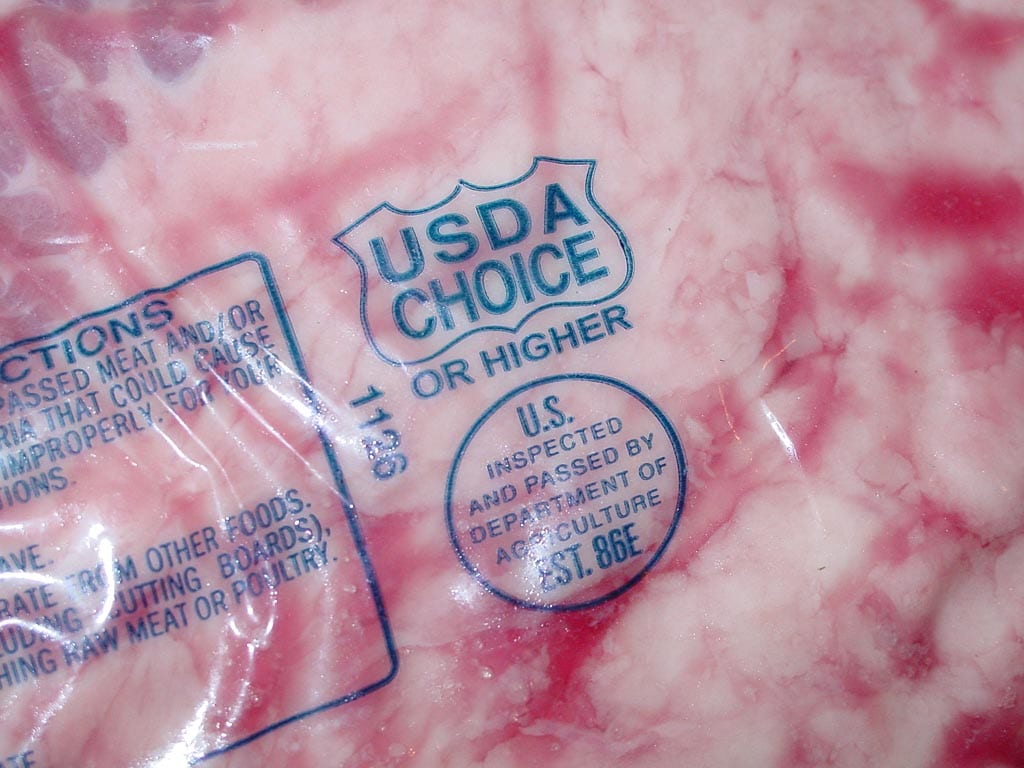
I bought this 13.12 pound, USDA Choice, whole, untrimmed brisket in Cryovac at a warehouse store that caters to food service professionals. I trimmed off the excess fat just before rubbing the meat and putting it in the cooker.
If desired, you can trim and rub the meat the night before cooking, wrap tightly in plastic wrap, and refrigerate overnight.
Apply The Rub
Pat the meat dry with paper towels and apply a generous sprinkling of your favorite barbecue rub to all sides of the meat. Brisket is such a big cut of meat that it’s hard to apply too much rub.
Put the rubbed meat back in the refrigerator while you fire up the cooker.
If you don’t have a favorite rub, try this all-purpose rub from Louis Charles Henley, pit boss at Ruthie’s Pit Bar-B-Q in Navasota, TX. This recipe was published in the Legends of Texas Barbecue Cookbook by Robb Walsh.
To ensure there’s enough rub for a big brisket, I modified the original recipe by increasing the amount of each ingredient by 50 percent, and I added some paprika for color.
Modified Louis Charles Henley’s All-Purpose Rub
- 6 Tablespoons Lawry’s Seasoning Salt
- 4-1/2 teaspoons finely ground black pepper
- 1 Tablespoon granulated garlic powder
- 1 Tablespoon paprika
- 1-1/2 teaspoons chili powder
Mix all ingredients thoroughly.
Fire The Cooker
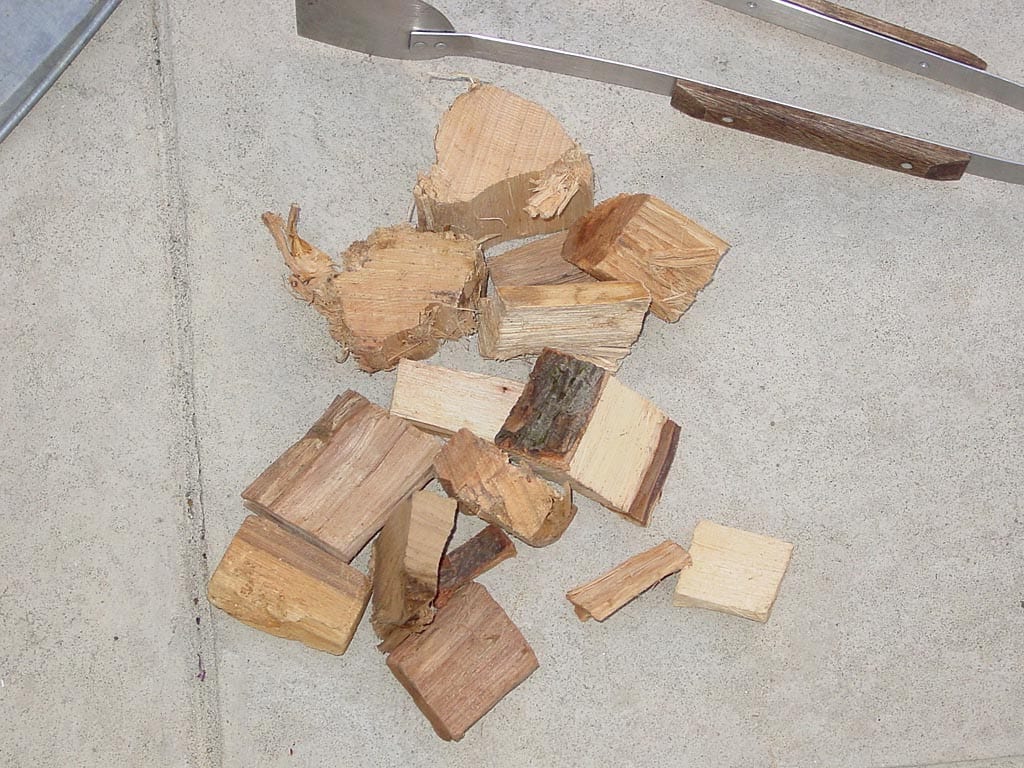
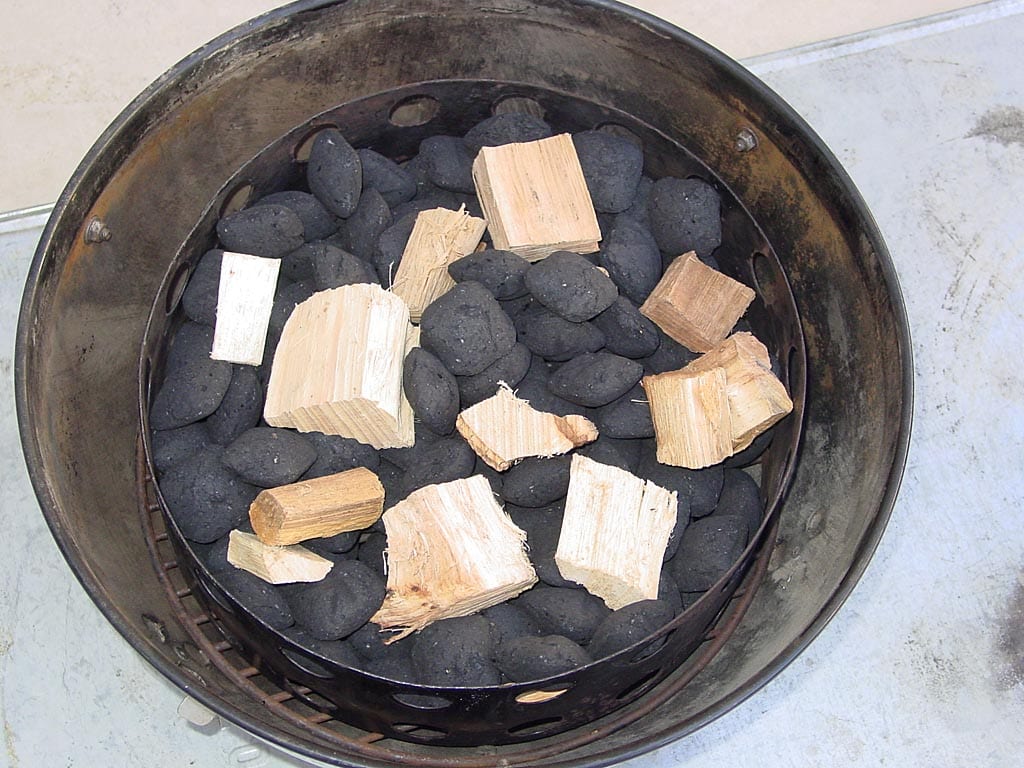
Light the cooker using the Minion Method. Fill the charcoal chamber to the top with unlit Kingsford Charcoal Briquets. Bury several chunks of dry smoke wood in the coals and place a few chunks of wood on top. This should be more then enough fuel to fire the cooker for 8-10 hours or more.
For this cook, I used pecan smoke wood. I didn’t have any large chunks, so I used lots of smaller pieces equivalent to about four fist-sized pieces.
Light about 20 briquettes using a Weber chimney starter and spread them over the unlit briquettes and smoke wood chunks.
Assemble the cooker and fill the water pan from above immediately with hot tap water. Foil the water pan before use for easy cleanup.
Put the brisket into the cooker directly from the refrigerator fat-side up on the top cooking grate.
Set the top vent 100% open and leave it that way throughout the entire cooking session. Start with all three bottom vents 100% open. When the cooker temperature hits 200°F measured at the lid, set the three vents to 25% open. Allow the cooker to come up to 225-250°F, adjusting the bottom vents as necessary to maintain that temperature range.
Smoke The Brisket
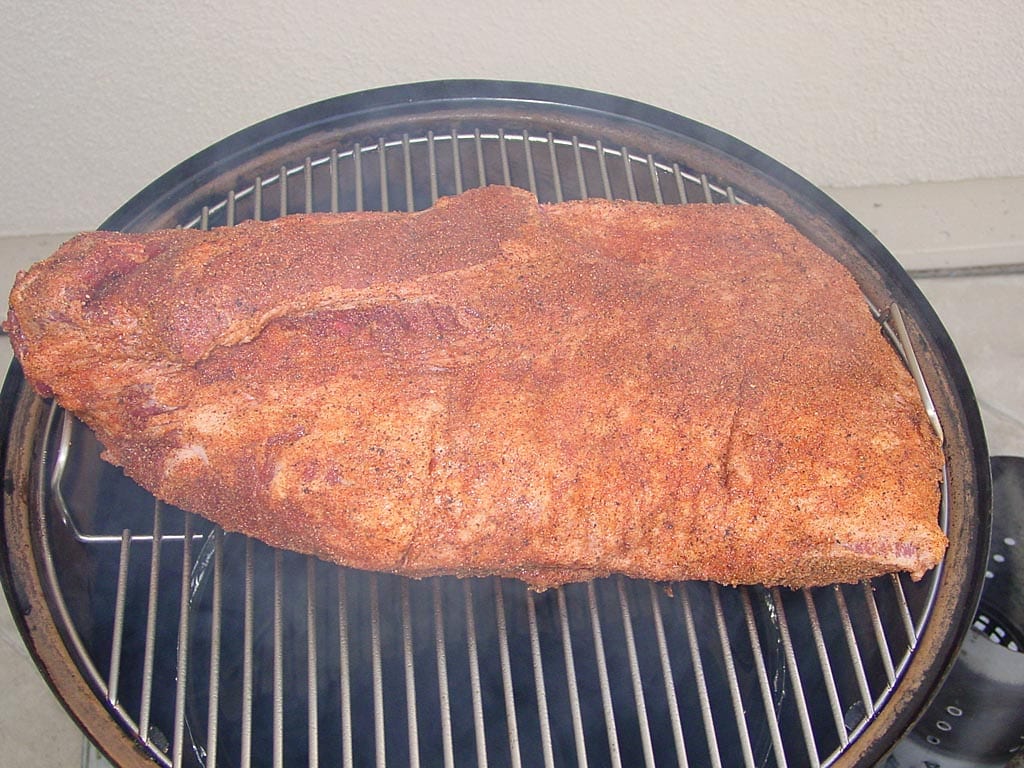
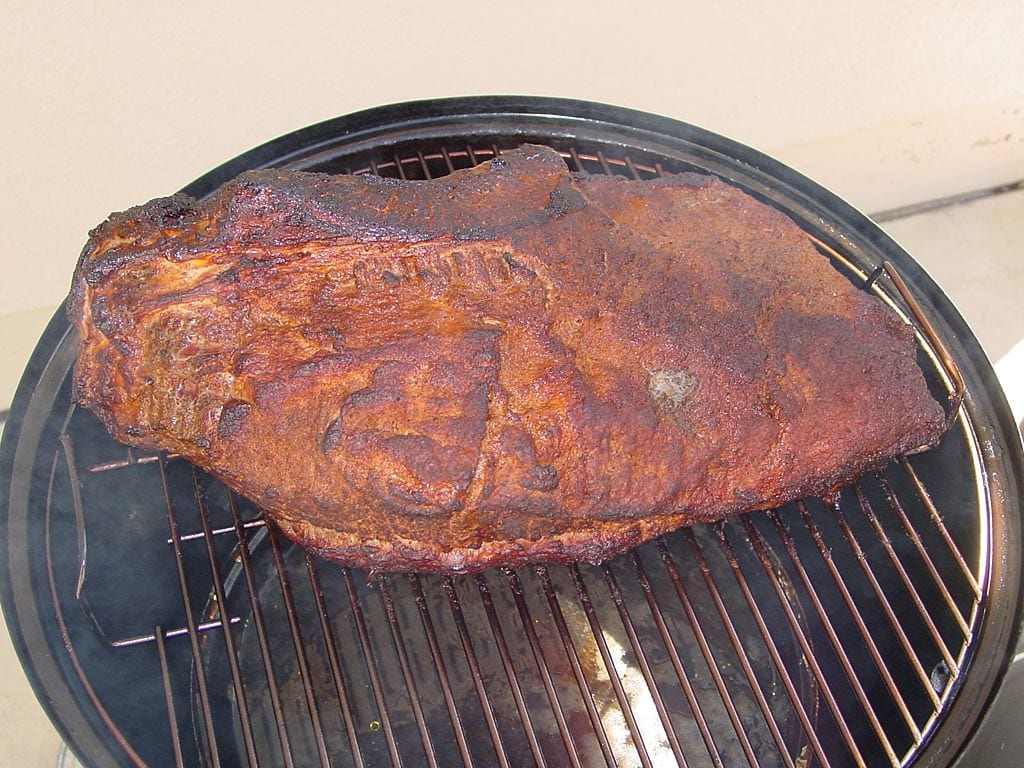
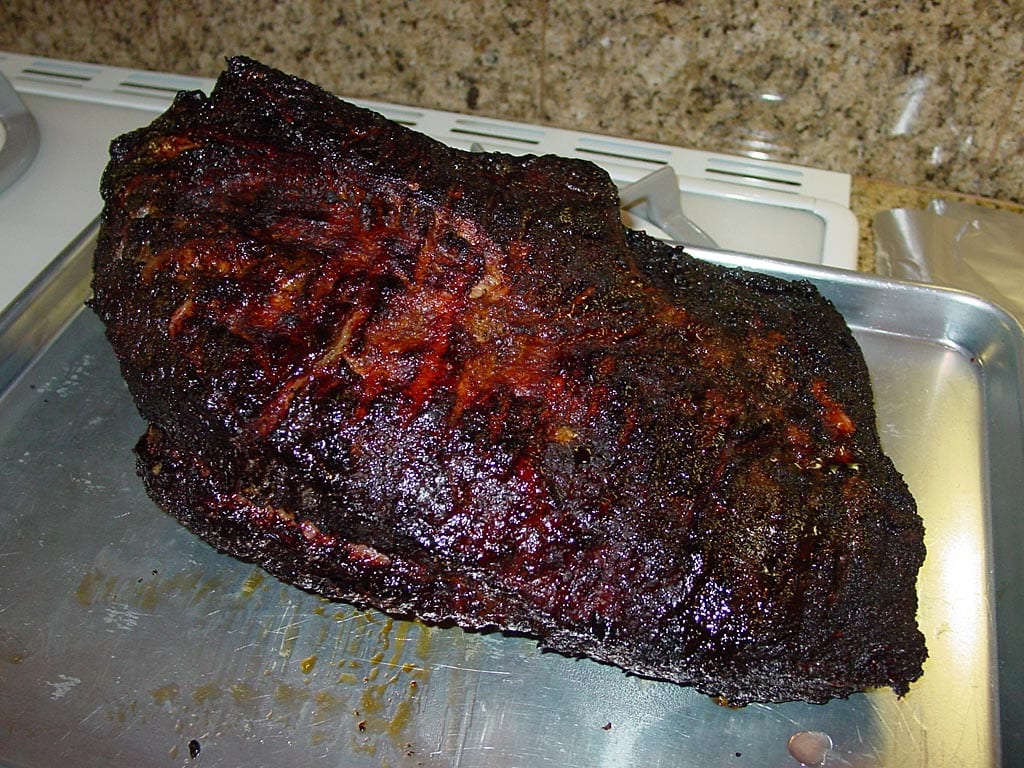
Cook the brisket at 225-250°F to an internal temperature of 165-170°F, then proceed to the oven finishing step.
Turn the meat once after 4 hours of cooking, and baste several times after 4 hours of cooking. I basted three times after turning the meat using Martinelli’s Premium Apple Juice applied with a spray bottle.
Replenish the water pan with hot tap water as necessary. I started with a full pan and replenish it just once after four hours of cooking.
As you can see in the first photo above, this brisket barely fit on the top grate. In a case like this, tuck the brisket between the grate handles to keep it from coming into contact with the cooker lid. After several hours of cooking, the brisket will shrink.
Monitor the internal temperature of the meat in the middle of the flat portion using an instant-read thermometer or a probe thermometer. I started checking internal temperature after 8 hours of cooking, and the brisket reached 165°F after about 9-1/2 hours of cooking.
Here’s how the cooker temperatures and vent settings went during my cook:
| Time | Lid Temp | Meat Temp | Vent 1 % | Vent 2 % | Vent 3 % |
| 10:50 am | – | – | 100 | 100 | 100 |
| 11:00 am | 175 | – | 100 | 100 | 100 |
| 11:30 am | 207 | – | 100 | 100 | 100 |
| 11:45 am | 218 | – | 25 | 25 | 25 |
| 12:15 pm | 215 | – | 100 | 25 | 25 |
| 12:45 pm | 220 | – | 100 | 25 | 25 |
| 1:30 pm | 236 | – | 100 | 25 | 25 |
| 2:15 pm | 240 | – | 100 | 25 | 25 |
| 3:00 pm (t)(b) | 252 | – | 25 | 25 | 25 |
| 3:45 pm | 257 | – | 25 | 25 | 0 |
| 4:45 pm | 242 | – | 25 | 25 | 0 |
| 5:00 pm (b) | 235 | – | 25 | 25 | 0 |
| 6:15 pm | 212 | – | 100 | 100 | 0 |
| 7:00 pm | 220 | 160 | 100 | 100 | 100 |
| 7:15 pm (b) | 267 | – | 100 | 100 | 100 |
| 7:45 pm | 262 | 162 | 100 | 100 | 100 |
| 8:15 pm | 252 | 165 | 100 | 100 | 100 |
(t) turned meat over and end-for-end
(b) basted meat
Note that the vent percentages represent the way I set the vents at the time indicated.
Finish Cooking In The Oven
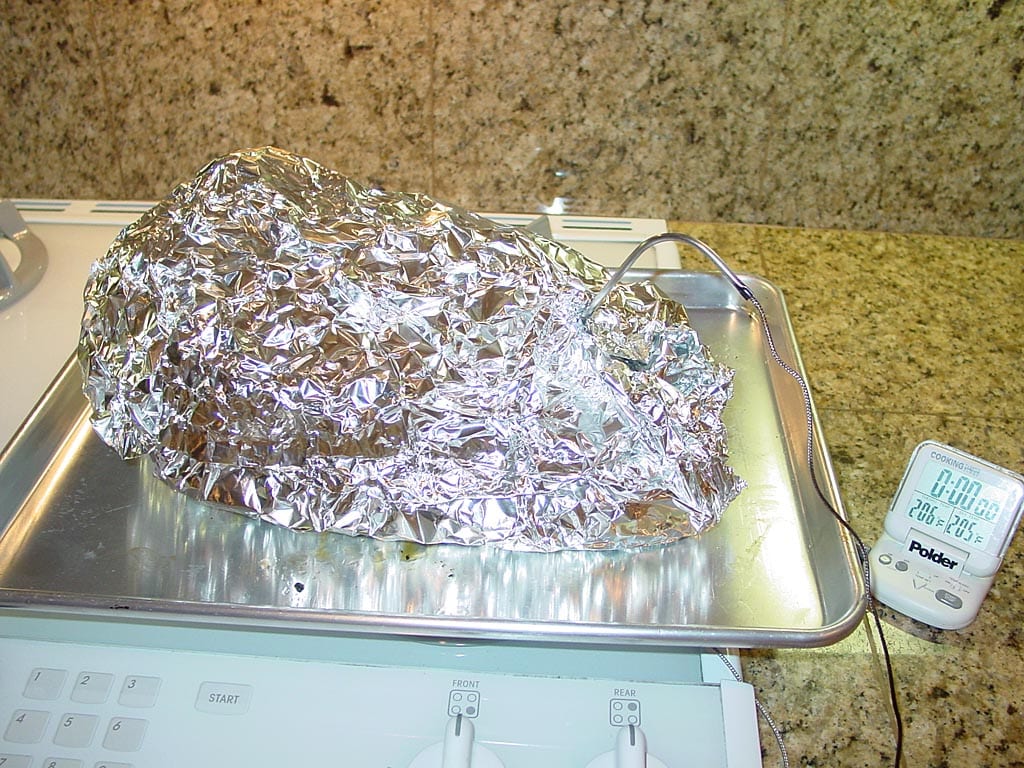
After the brisket reaches 165-170°F in the cooker, wrap it tightly in two layers of heavy-duty aluminum foil, insert a probe thermometer into the middle of the flat portion to monitor internal temperature, and cook in the oven at 300°F to an internal temperature of 205°F.
This brisket took 1 hour 40 minutes to reach 205°F.
Hold The Meat For Serving
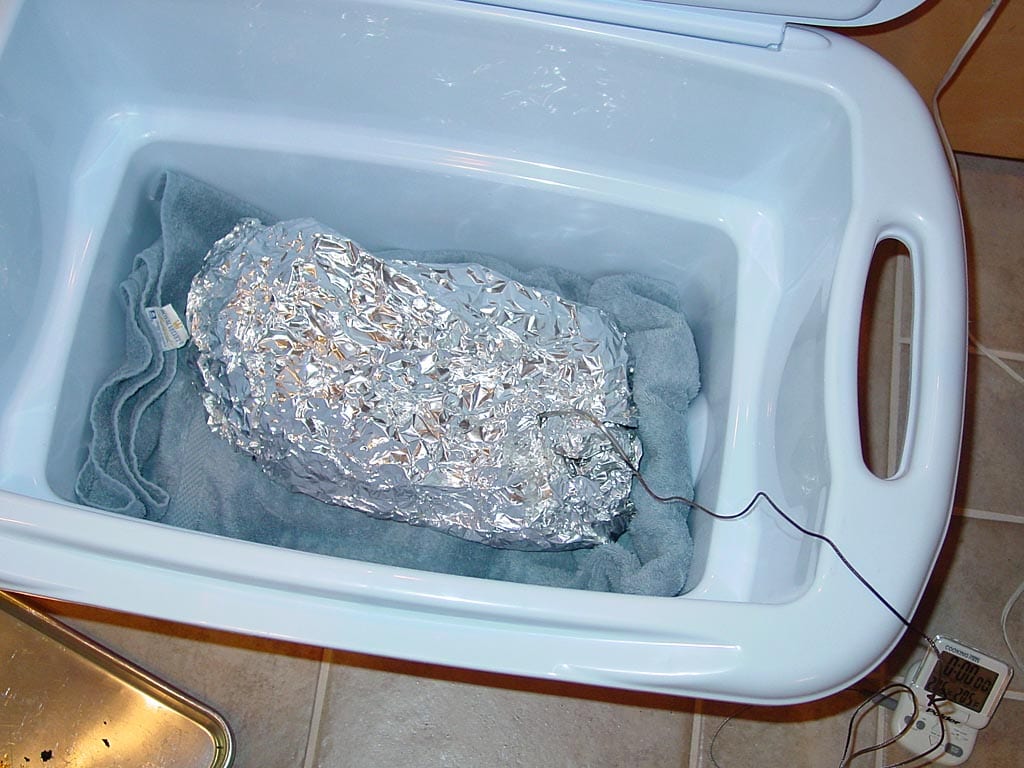
When the meat reaches 205°F, remove from the oven and allow it to rest, still wrapped, for at least 30 minutes before slicing and serving.
Alternatively, place the wrapped brisket in an empty cooler and hold until ready to serve. A 1-2 hour rest will help keep the meat moist, and it will remain safely above 140°F for 2-4 hours. See Holding, Storing & Reheating Barbecued Meats for more details.
This brisket rested for 3 hours before serving.
Is That A Meteorite…Or Awesome BBQ?
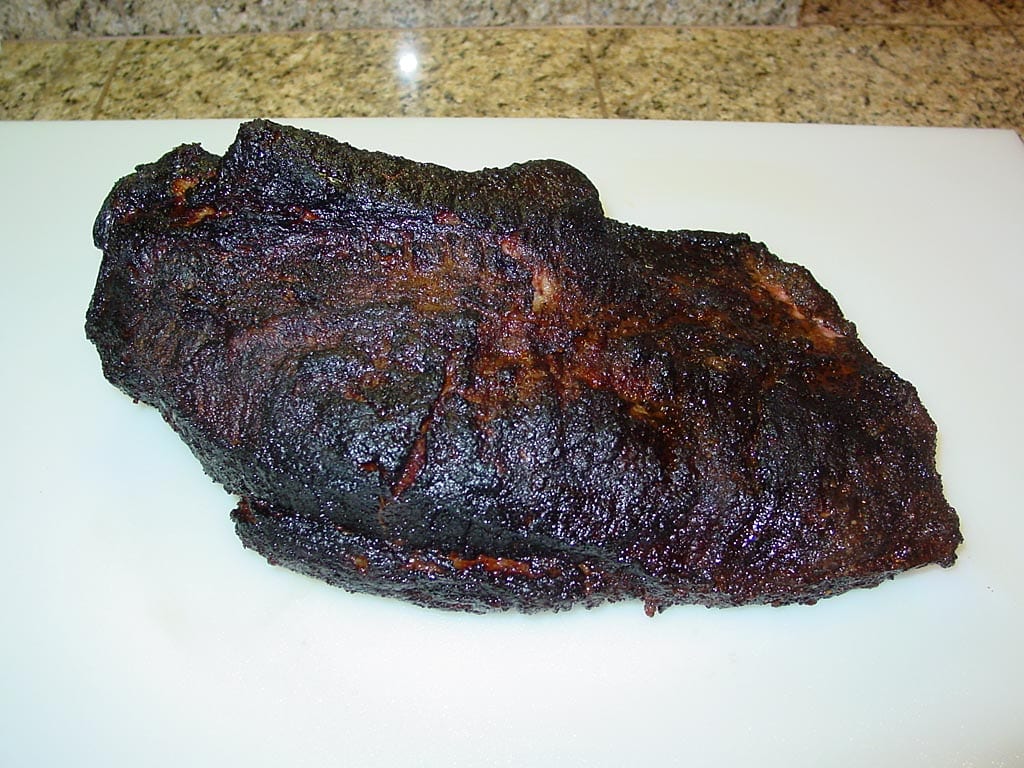
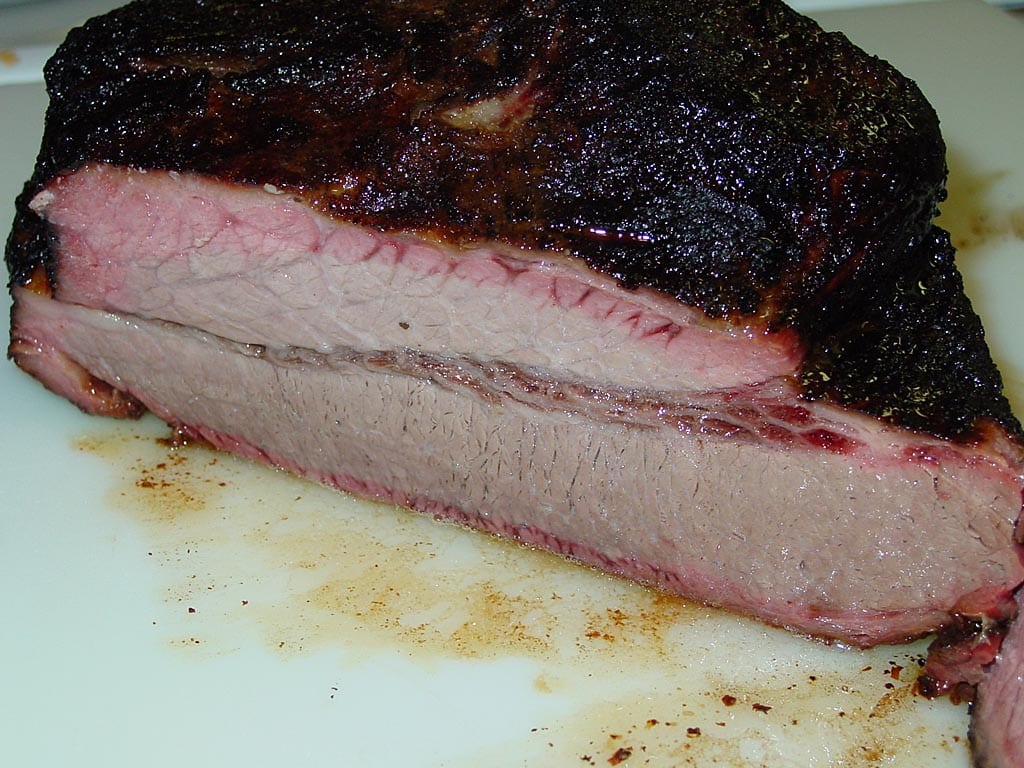
Here’s the finished product…it looks kind of burned, but it’s not. That dark exterior meat is the “bark”, the best part that’s full of great smoky flavor!
The photo above shows a cross-section of the brisket, with the point portion on top and the flat portion on the bottom. This brisket turned out nice and juicy, and with a decent smoke ring.
Separate the flat and point portions along the natural seam of fat and slice the flat across the grain 1/4″ – 3/8″ thick. The fatty point can be sliced as-is, or chopped and mixed with a thin barbecue sauce for sandwiches.
More Brisket Links On TVWB
- Brisket – High Heat
- Brisket – Midnight Cook
- Brisket – Wet Rub
- Whole Brisket – Central Texas Style Butcher Paper
- Whole Brisket – Competition Trim
- Brisket Flat – Central Texas Style Butcher Paper
- Burnt Ends – Kansas City Style
- Burnt Ends – Smoky, Sticky, Sweet
- Pastrami – Dry Cured
- Quick Pastrami – Smoked Corned Beef Brisket
- Brisket Servings Calculator
- Brisket Selection & Preparation
- Separating Brisket Flat & Point
- Using An Electric Oven To Hold Brisket At Temperature
- Camp Brisket 2020 Trip Report