Summary
- Select meaty slabs of beef back ribs (beef long ribs) with good meat coverage over and between the bones.
- A full slab will have 7-8 bones.
- Remove the membrane from the bone side of the slab, as you would with pork ribs.
- Smoke at 250-275°F for 4 hours and check for doneness. Ribs should be tender after 4-6 hours of cooking. Basting with beer is optional.
- When the ribs are done, brush lightly with your favorite barbecue sauce before serving.
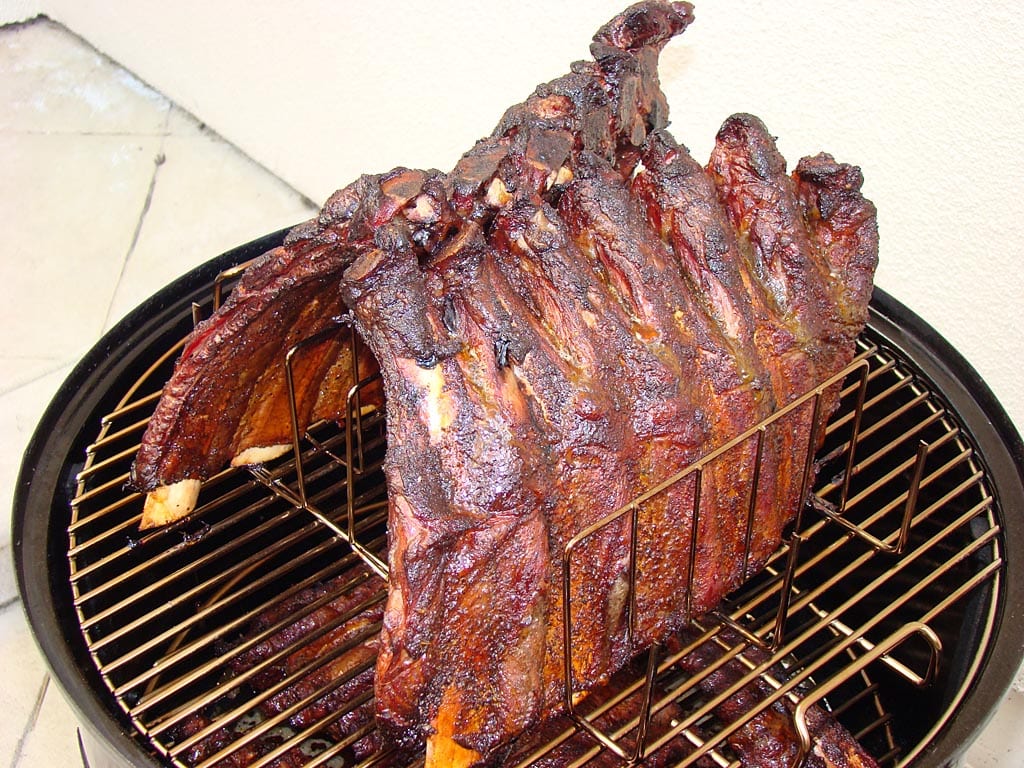
There’s nothing more satisfying than beef back ribs! Find yourself some meaty ones, apply a simple, no-nonsense rub, smoke ’em “low & slow” over oak and hickory wood, and watch your friends and family devour them faster than you can say, “Pass me another beer!”
I made a special effort to find big, meaty, beef back “long ribs” at a restaurant supply store. If you can’t find them, just substitute with the smaller back ribs you find at better supermarkets. But make sure to get the ones with lots of meat on the bones—not the ones where the meat’s been carved-out from between all the bones.
Here are some photos I took on March 15, 2010 when I barbecued these long bone beef back ribs.
Choosing And Prepping Beef Back Ribs
Beef back ribs correspond to loin back ribs on a pig, but of course they’re much larger in size. The extremely tender rib roast sits right on top of the back ribs, so you know these suckers are going to be tender and delicious if prepped and cooked properly.
For this cook, I wanted big, meaty, beef back “long ribs”. I bought these at Restaurant Depot, a members-only wholesale restaurant supply store with locations throughout the United States. If you are a Kansas City Barbeque Society (KCBS) member, you can get a free day pass by showing your KCBS membership card and a photo ID.
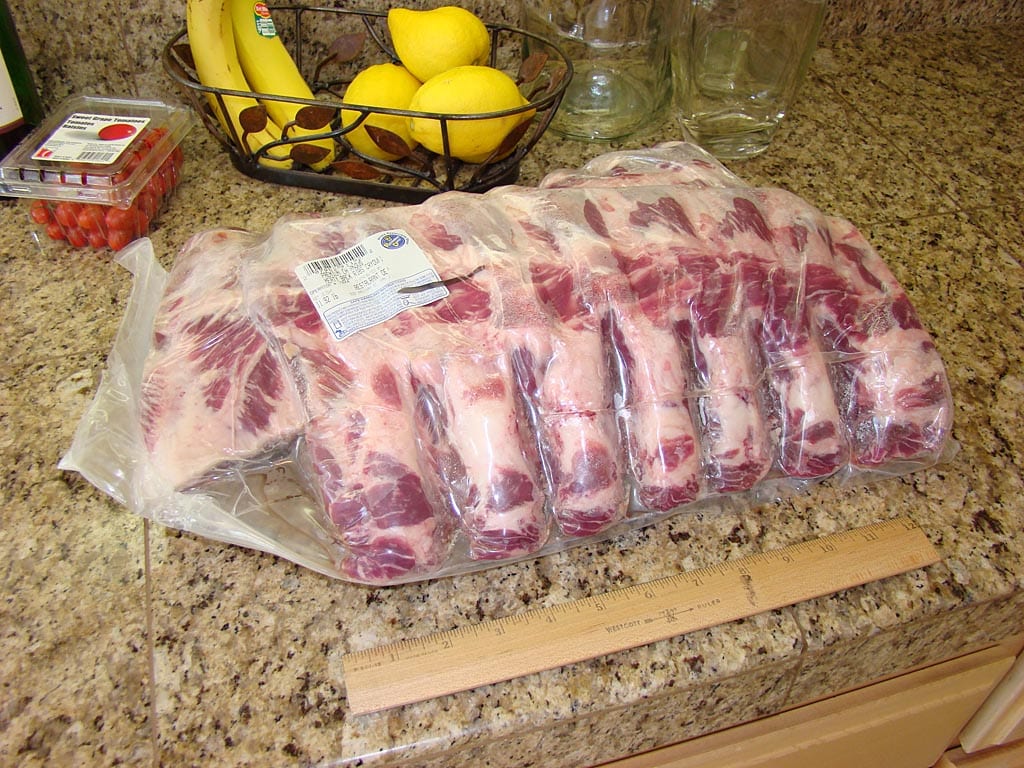
The photo above shows 3 slabs of ribs in Cryovac packaging weighing 11.92 pounds. The ruler in the foreground gives you a sense of the size of these ribs.
Examine beef back ribs carefully before purchasing them. Look for meaty slabs with good meat coverage over and between the bones. We’ve all seen stores selling slabs in which the meat has literally been carved out from between the bones—don’t buy those ribs. Also, count the number of bones. A full slab of beef back ribs will contain 7-8 bones.
Prepping beef back ribs is about the same as prepping pork ribs. Remove the membrane from the bone side using a butter knife and paper towel, as described in the Pork Loin Back Rib Preparation article. The membrane on beef ribs is much thicker and may put up more of a fight than on pork ribs, but the process is the same.
After removing the membrane, scrape away any large areas of fat on the bones, then flip the slab over and trim away any large areas of fat from the meat side. You don’t have to be too fussy, just trim away what makes sense to you.
The last step is to figure out how you’re going to fit these monsters into the cooker. These ribs are not as long as a full slab of pork loin back ribs, but much wider and with much thicker bones, which makes fitting them into a rib rack difficult. They also don’t like to roll into a circle like pork ribs do.
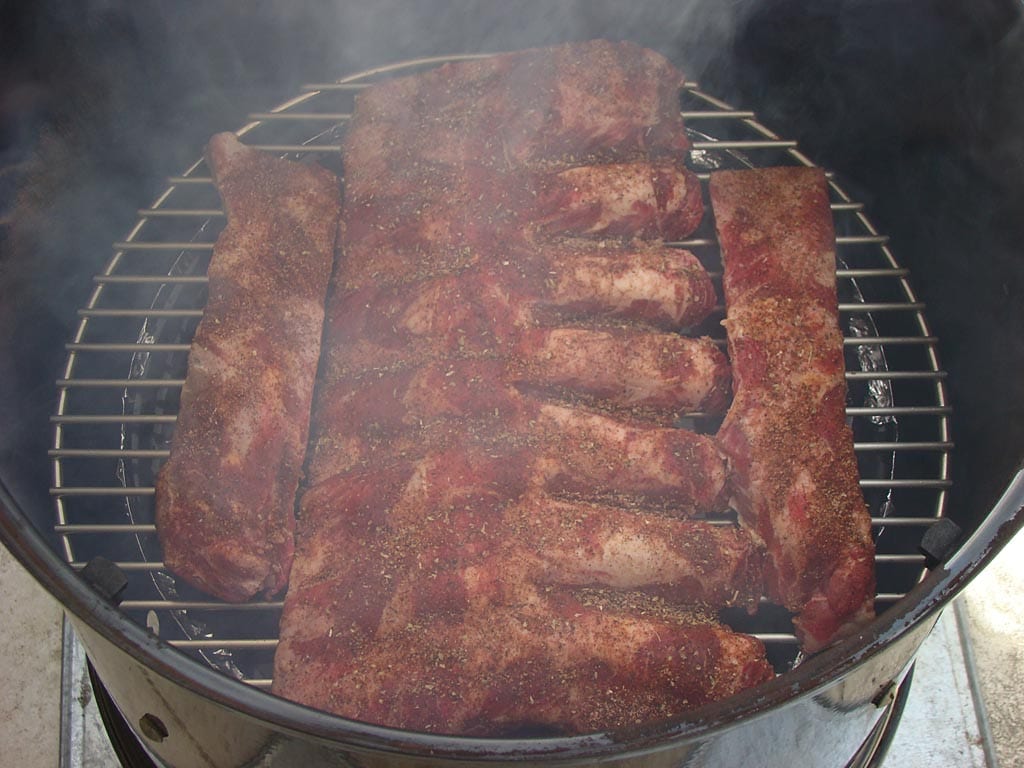
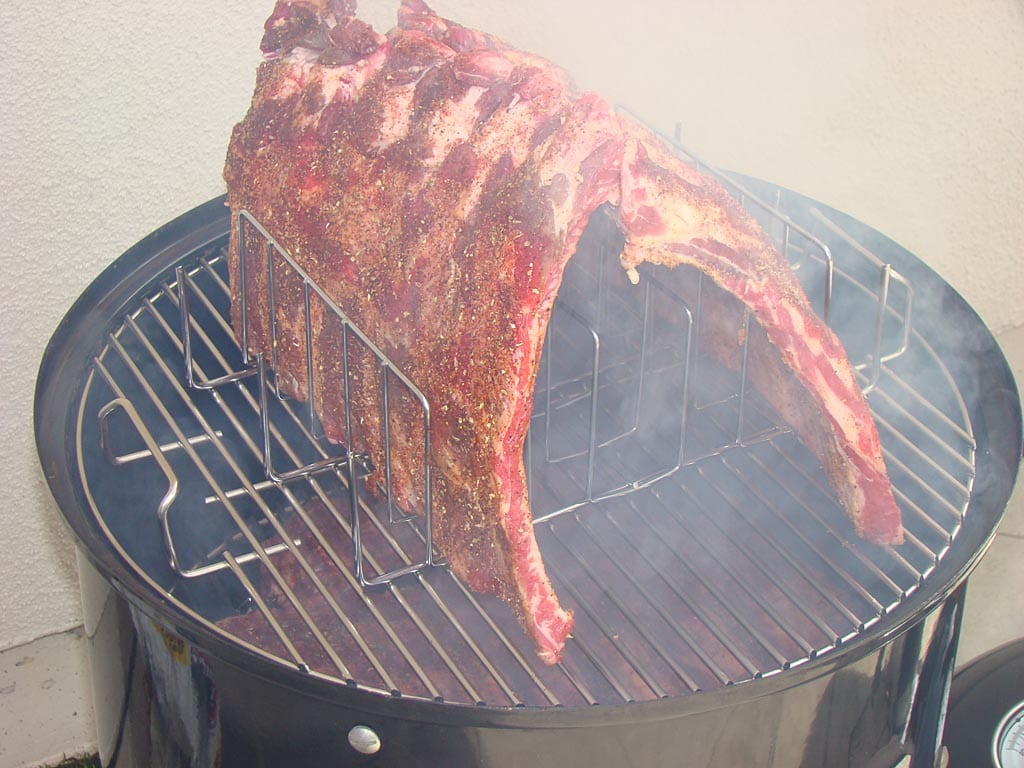
I was able to fit the smallest slab on the bottom cooking grate, but had to trim off 2 of the longest bones from the larger slabs. Those trimmings went on the bottom cooking grate, and the other 2 slabs went into a rib rack on the top cooking grate, as shown in the photos further down this page.
Rubbing The Ribs
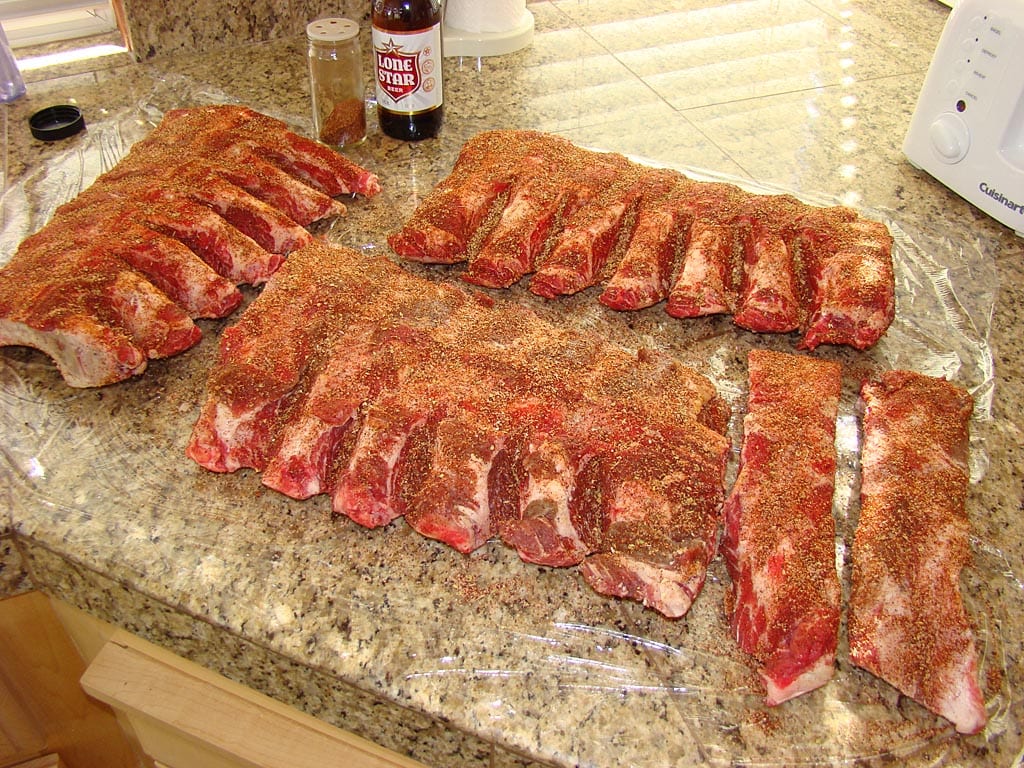
Author Steven Raichlen likes ribs so much, he wrote an entire book about them! For these beef back ribs, I used his “Lone Star Rib Rub” recipe from Raichlen on Ribs, Ribs, Outrageous Ribs.
Lone Star Rib Rub
- 3 Tablespoons kosher salt
- 3 Tablespoons pure chile powder
- 1 Tablespoon freshly cracked black pepper
- 2 teaspoons granulated garlic powder
- 2 teaspoons dried oregano
- 1 teaspoon cayenne pepper
- 1 teaspoon cumin
Combine all ingredients and mix thoroughly.
Examples of pure chile powder include chipotle and ancho. I used ancho for these ribs.
Apply a heavy dose of rub to both sides of each slab and let sit at room temperature while you fire-up the Weber Smokey Mountain Cooker.
Fire The WSM
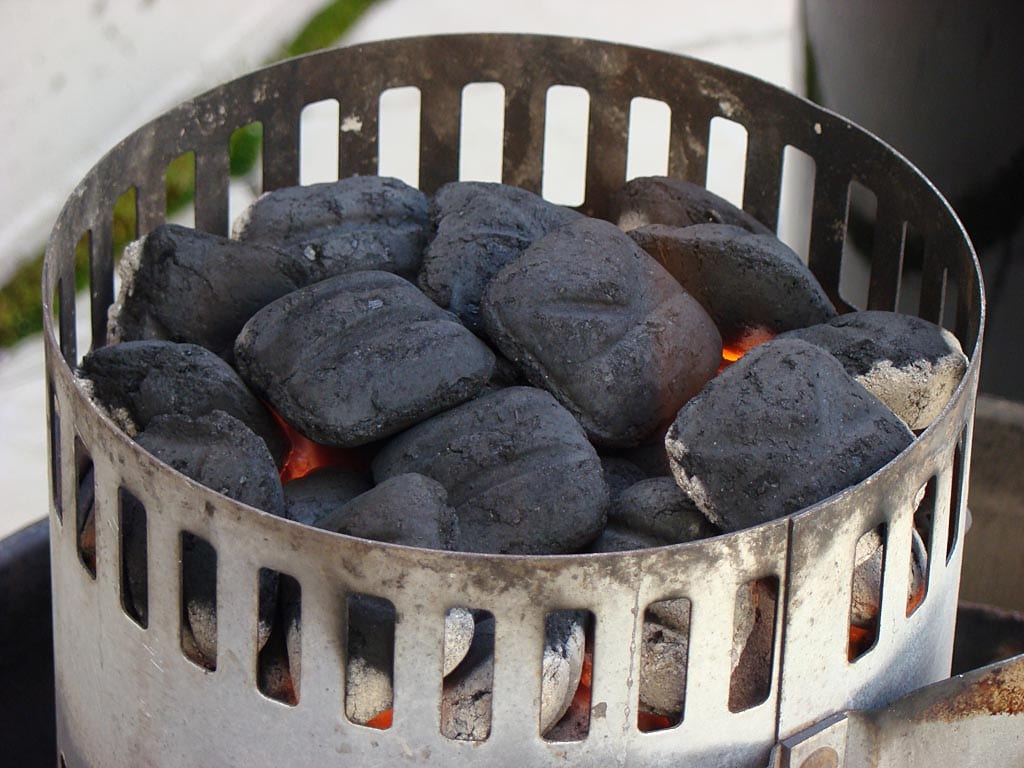
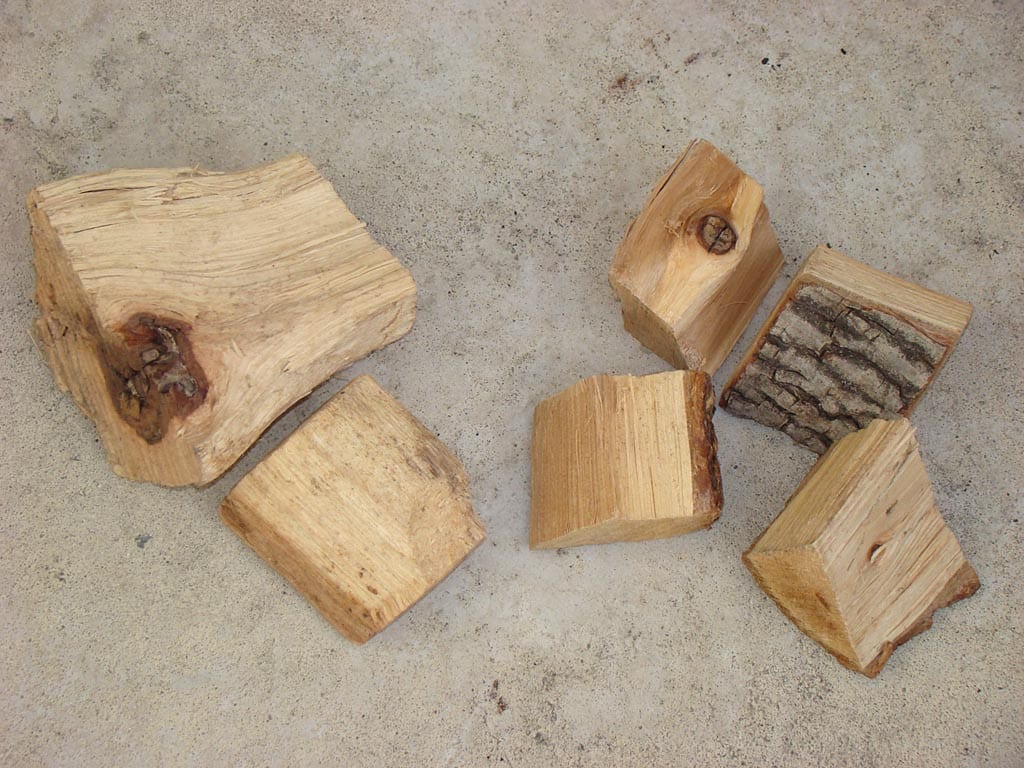
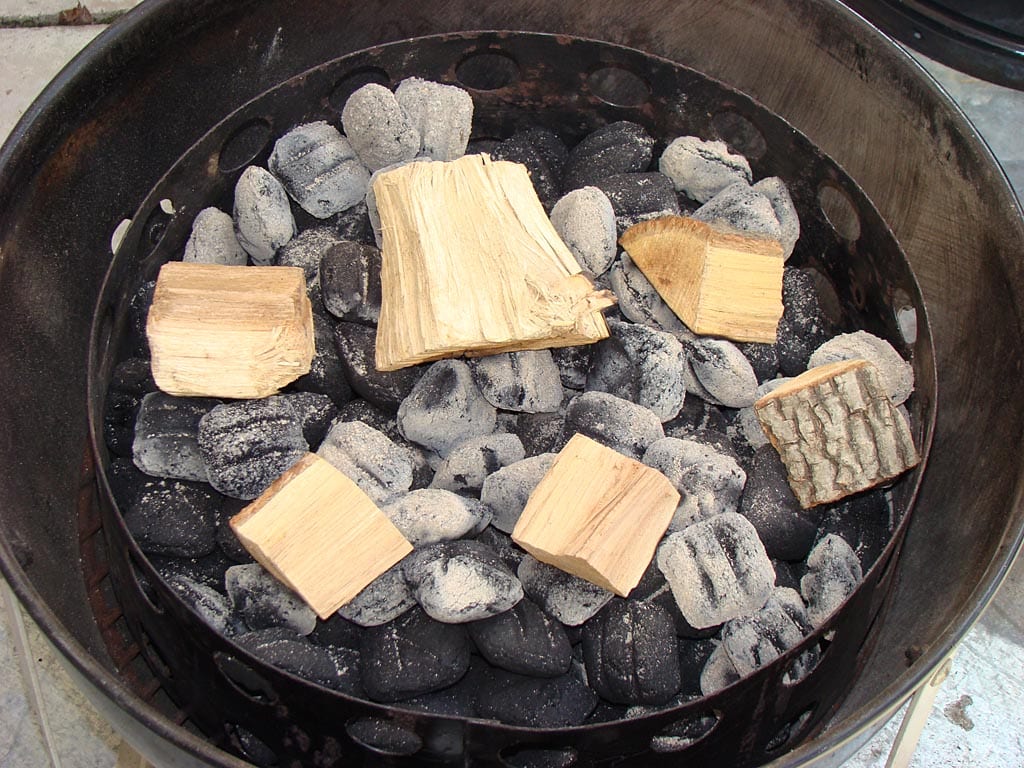
Fire-up the Weber Bullet using the Minion Method—fill the charcoal chamber about 1/2 full with unlit Kingsford Charcoal Briquets and then spread about 30-40 hot coals over the unlit ones. I used an upside-down Weber chimney starter to light the 40 briquettes shown above.
Place a few chunks of your favorite smoke wood on the hot coals. I used 2 oak chunks and 4 small hickory chunks.
Assemble the cooker with the water pan in place and fill it with cool water.
Arrange the ribs on the top and bottom cooking grates and put the lid on the cooker.
Set the top vent to 100% open and leave it that way throughout the entire cooking process. Start with all 3 bottom vents 100% open. As the cooker approaches 250°F, begin to partially close all 3 bottom vents to maintain 250-275°F. Adjust the bottom vents as needed to maintain this temperature range throughout the cooking process.
Details Of The Cook
Barbecue the beef back ribs at 250-275°F for 4 hours and then check for doneness. The ribs should be tender after 4-6 hours of cooking—these ribs took just 4 hours. Replenish the water pan with hot tap water during the cook, as you feel necessary.
If you want to spritz the ribs with beer a few times, feel free to do so, starting halfway through the cooking process. I used the bottle of Lone Star beer shown in the background of one of the earlier photos.
Here’s how the cooker temperature went during my 4-hour cook:
| Time | Lid Temp | Meat Temp | Vent 1 % | Vent 2 % | Vent 3 % |
| 3:30 pm | – | – | 100 | 100 | 100 |
| 4:00 pm | 198 | – | 100 | 100 | 100 |
| 4:45 pm | 205 | – | 100 | 100 | 100 |
| 5:20 pm | 224 | – | 100 | 100 | 100 |
| 5:45 pm (b) | 267 | – | 100 | 100 | 100 |
| 6:00 pm | 275 | – | 75 | 75 | 75 |
| 6:15 pm | 273 | – | 75 | 75 | 75 |
| 7:00 pm (b) | 276 | – | 50 | 50 | 50 |
| 7:30 pm | 282 | – | 50 | 50 | 50 |
(b) basted ribs with beer
Note that the vent percentages represent the way I set the vents at the time indicated.
Bodacious Beef Bones
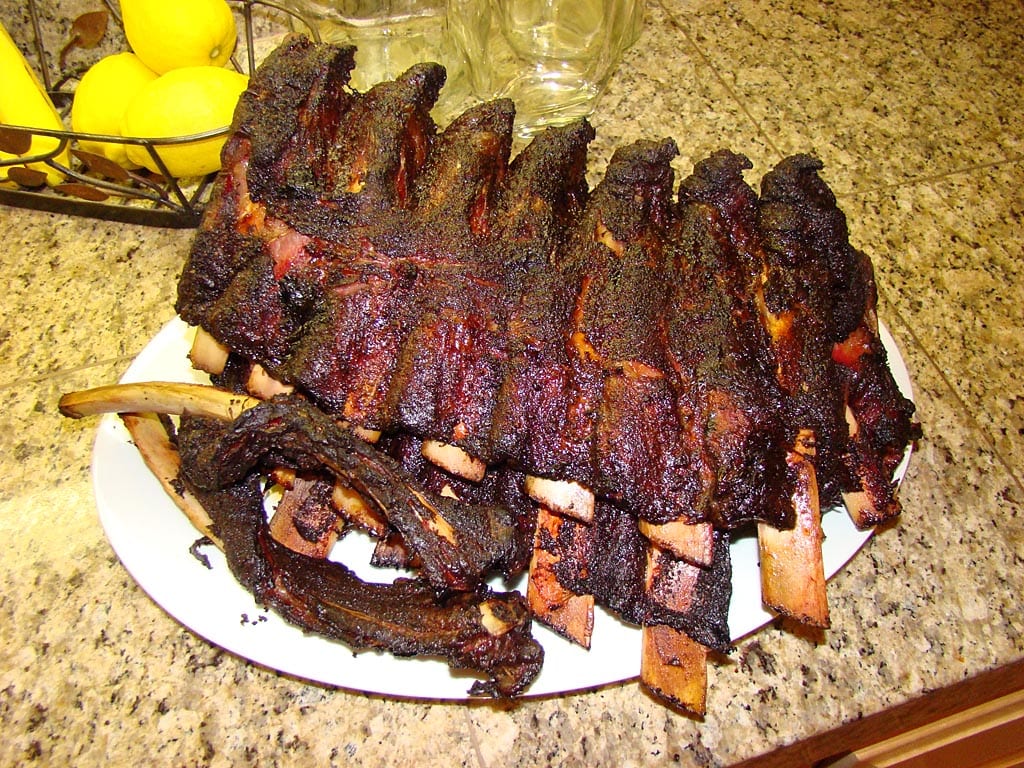
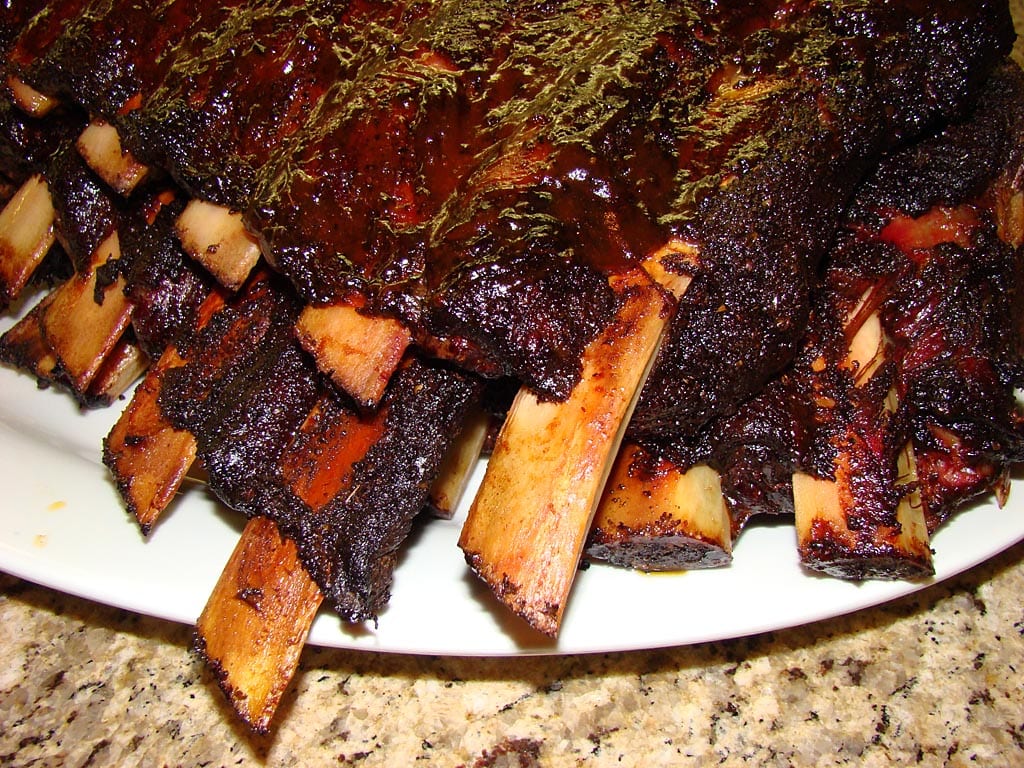
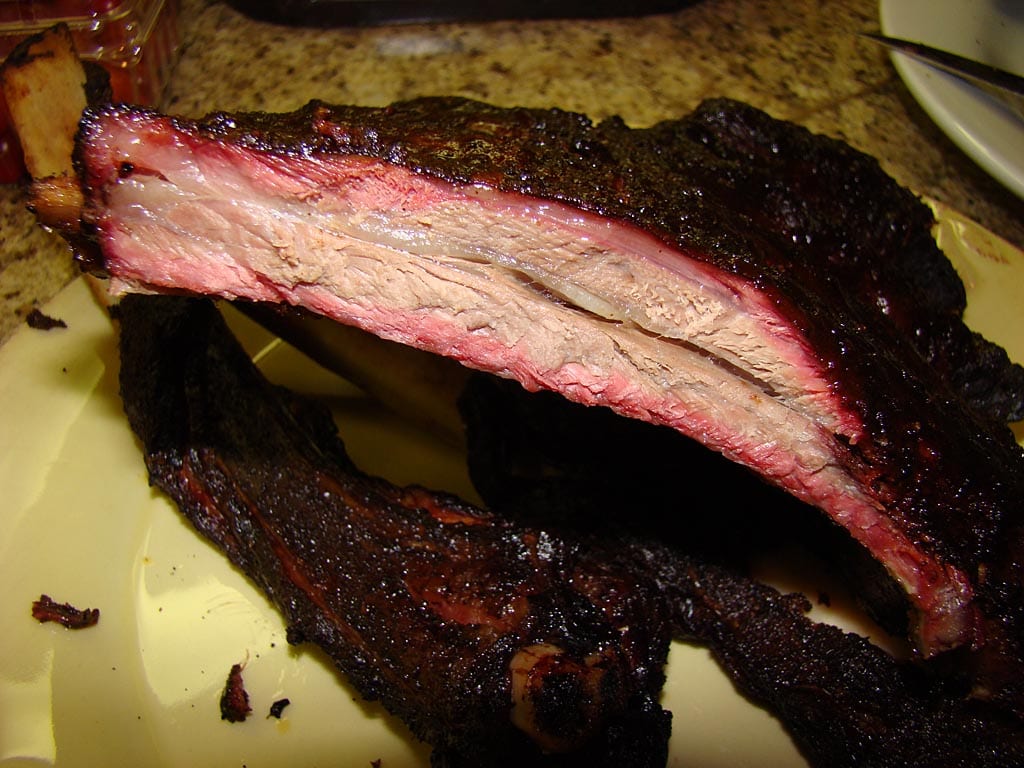
After cooking for 4 hours, I checked the ribs for tenderness by pulling on two adjacent bones. The meat offered just a little resistance before tearing easily, so I knew they were done.
The ribs came out of the cooker and I basted them with a little barbecue sauce.
I wrote in my cooking log, “Really dark, almost black in color. Good tenderness and smoke ring. Rich flavor, almost like eating prime rib.”
If you can find beef long bones, give them a try. You’ll like them!