Many people have asked me for a list of items that a new Weber Smokey Mountain Cooker owner needs to get started. In addition to the obvious things like charcoal and smoke wood, here are the items that I think are essential, followed by some optional ones.
Essential Items
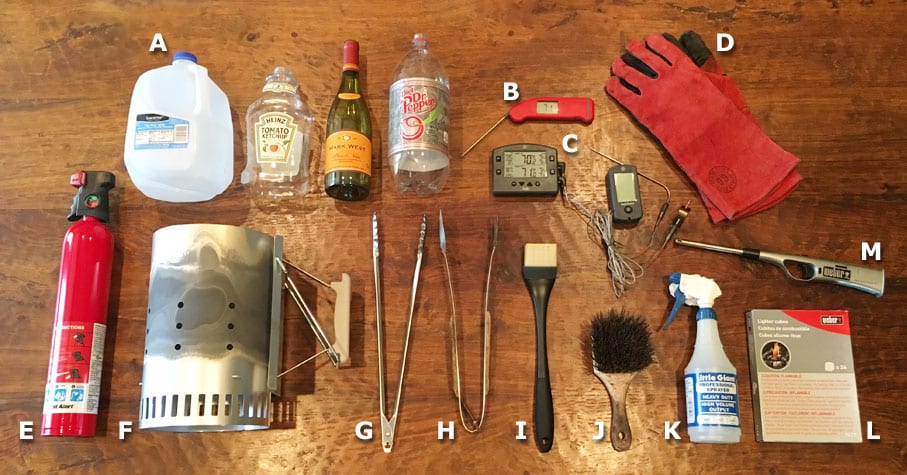
- Water Container: When cooking with water in the water pan, you’ll need a container to fill and replenish the water. You’ve probably already got something suitable around the house. Shown here are a 1-gallon milk jug, a 64-ounce ketchup bottle, a wine bottle, and a 2-liter soda bottle. A garden watering can with spout also works well.
- Instant-Read Thermometer: For taking quick internal temperature readings in the kitchen or at the cooker. Shown here is the ThermoWorks Thermapen ONE, the best unit on the market. See Measuring Temperature In The Weber Bullet for details.
- Remote Probe Thermometer: A remote probe thermometer measures internal meat temperature and pit temperature and transmits those readings wirelessly to a display in your pocket, on the kitchen counter, or next to your bed. Shown here is the ThermoWorks Smoke remote probe thermometer, one of the highest quality units on the market. See Measuring Temperature In The Weber Bullet for details.
- Barbecue Gloves: Use heavy leather barbecue or welder’s gloves when working with hot cooker parts or hot coals. Choose fingered gloves over mitten-style for greater dexterity.
- Fire Extinguisher: Always have a fire extinguisher within easy reach, and have it inspected annually.
- Chimney Starter: There is none better than the Weber chimney starter. Holds 100 Kingsford Charcoal Briquets (5 lbs 5 oz), is rust resistant, and has a secondary metal handle for stability. See How To Use A Chimney Starter for details.
- Food Tongs: For handling meat, I like the scalloped edges and sturdy construction of these Edlund 16″ commercial-grade stainless steel tongs with locking handles.
- Charcoal Tongs: For spreading hot coals in the charcoal chamber and adding fuel or wood chunks through the access door. Tongs with long handles are a must.
- Basting Brush: For saucing meat toward the end of cooking. Shown here is the OXO large silicone basting brush. Washes easily in the dishwasher.
- Cleaning Brush: A palmyra brush (the same material used in push brooms) works great for brushing out the WSM charcoal bowl during cleanup.
- Spray Bottle: For basting meat with water, apple juice or other liquids during the cooking process. A good quality bottle will last many years.
- Lighter Cubes: Use Weber Lighter Cubes for clean, easy lighting of the chimney starter. Affordably priced, 24 cubes to a box.
- Butane Lighter: The long reach and continuous flame make lighting a chimney starter easy. Look for a refillable model instead of a disposable.
Optional Items
Here are some non-essential items that I’ve found very useful. Consider adding these to your collection as you gain experience with your cooker.
- Hot Meat Handling Gloves: Neoprene or rubber gloves (available at hardware stores and home centers) are heat and chemical resistant and clean up easily. Ideal for handling large cuts of meat like brisket, pork butt, ribs, and whole chicken. For pulling pork, lightweight knit cotton gloves covered with nitrile gloves work great.
- Disposable Food Service Gloves: A sanitary way of handling meat during preparation, carving and serving. Reduces the need for repetitive hand washing. Essential when working with hot items like chili peppers. Form-fitting nitrile gloves are best for work that requires dexterity (e.g. meat cutting).
- Cotton Mop: For basting meat during the cooking process. A must for basting liquids that won’t pass through a spray bottle. Mops are available at grocery stores, gourmet kitchen stores, and restaurant supply stores. Mops may be cleaned and reused. Some are cheap enough to use once and throw away, while others come with replaceable mop heads.
- Rib Racks: To increase rib cooking capacity. Weber makes a good rib rack.
- Drip Pan: A large-sized automobile oil drip pan does a great job of protecting a patio or deck from drips coming off the cooker. Rust-resistant and easily cleaned, these pans are large enough to accommodate the WSM with room leftover to hold the lid when removed and a charcoal chimney. Available at most auto supply stores.
- Vacuum Sealer: A FoodSaver vacuum sealer extends the life of leftover barbecue in the refrigerator or freezer. Portion meat into small bags for convenient barbecue anytime.
- Cooler: Keep hot barbecue ready for serving for hours in an empty cooler. See Holding, Storing & Reheating Barbecued Meats for details.
- Poultry/Kitchen Shears: Makes cutting the backbone out of a chicken safe and easy. Nice for cutting away fat and scrappy meat.
- Knives: A cimeter is my knife of choice for making large cuts on brisket and pork butt and a flexible boning knife for detailed trimming before cooking. A good serrated knife does the trick for slicing after cooking.
- Extra-Large Plastic Cutting Board: You’ll appreciate a really big work surface when dealing with huge briskets and pork butts. Available at restaurant supply stores.
- Rimmed Baking Sheet Pans: A pan with a rim helps catch extra rub during application to meat. Heavy-duty aluminum models are a good value and allow you to carry a 12-pound brisket to and from the cooker with confidence.
- Hotel Food Pan: Similar to a rimmed baking sheet pan, but deeper. Great when injecting and rubbing pork butt and brisket.
- Shakers: Pizza cheese shakers work well for all kinds of rub, or reuse shakers from store-bought seasonings.
- Funnel: Neatly pour apple juice into a spray bottle or homemade rub into a shaker.
- Bamboo Skewers: For rolling ribs to increase rib cooking capacity. Cheap and disposable. See Pork Rib Preparation for details.
- Disposable Foil Pans: For cooking beans, meatloaf, nuts, or other items in the smoker that require a shallow or deep pan. Rinse after use and recycle.
Competition Checklist
If you’re going mobile for the purposes of competition barbecue, you’ll need a lot more than what’s listed here. Smokin’ Guns BBQ offers two useful checklists:

You’ll also find a list of recommended competition supplies available from Amazon.com on the BBQ Shopping page.