In This Topic
- 18.5″ Features
- 22.5″ Features
- Detailed Specs
- Videos on YouTube
- 22.5″ Photo Gallery
- 18.5″ vs. 22.5″ Comparison Photos
- Test Cook #1
- Test Cook #2
- Test Cook #3
- Test Cook #4
- Test Cook #5
- More Cooking Photos
- Visit to Weber Corporate Headquarters
- Disclosure
The Weber Smokey Mountain Cooker you cooked on in 2008 was essentially the same product people were cooking on when the WSM was first introduced in 1981. With the exception of changing some rust-prone steel parts to aluminum and changing the lid handle from wood to plastic, it was basically the same product all those years.
It was a great product that served us well, but for many years Weber fans had been hoping for some product improvements and innovations. A bigger cooker with greater cooking capacity, a built-in thermometer, a bigger, more stable water pan, a better access door, and a charcoal grate that doesn’t drop charcoal into the bottom of the bowl.
Well, our prayers were answered in the Fall of 2008!
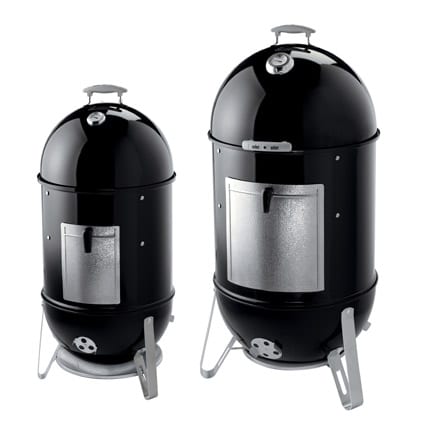
The new 2009 18.5″ and 22.5″ Weber Smokey Mountain Cooker Smokers
In October 2008, Weber introduced an improved 18.5″ Smokey Mountain Cooker and a new, larger 22.5″ Smokey Mountain Cooker.
18.5″ Features
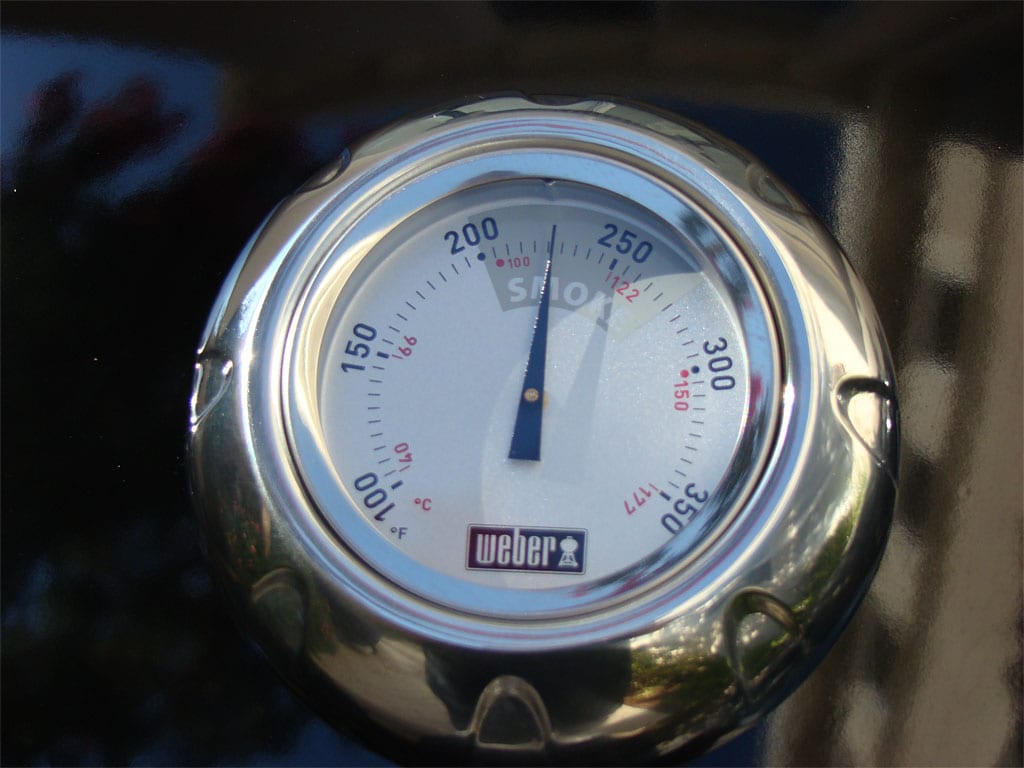
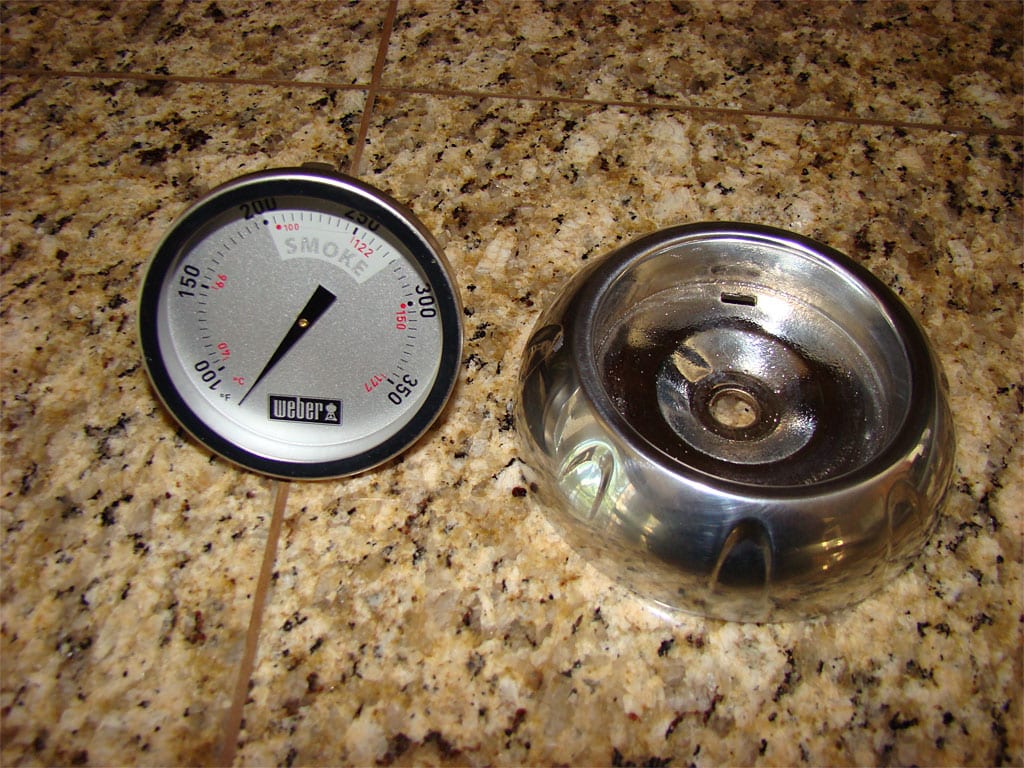
- Built-in lid thermometer with 1.5″ stem
- Temperature range of 100-350°F in 5°F increments
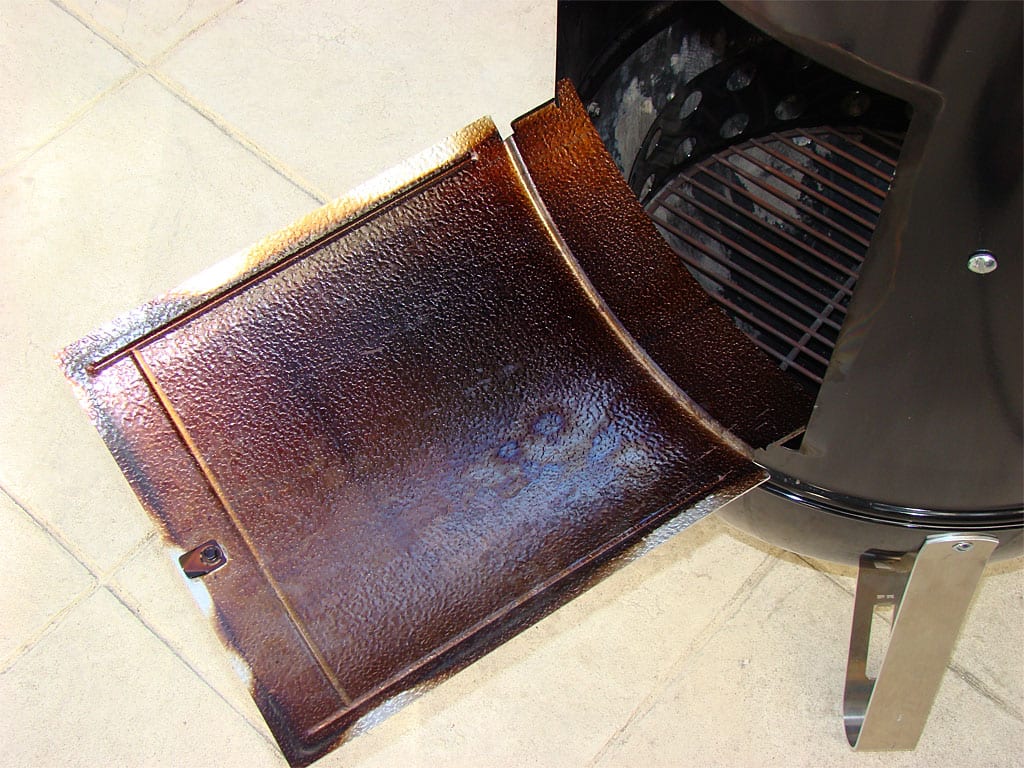
- Improved access door
- Door handle indicates locked position
- Latching mechanism pulls door tight to middle cooking section
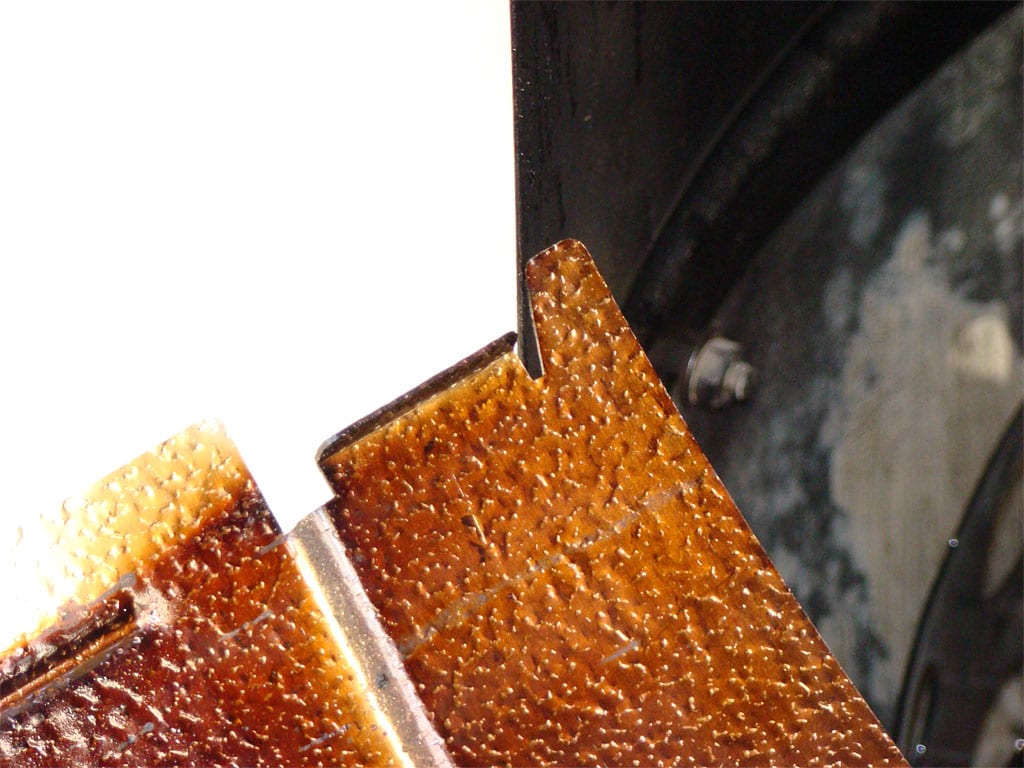
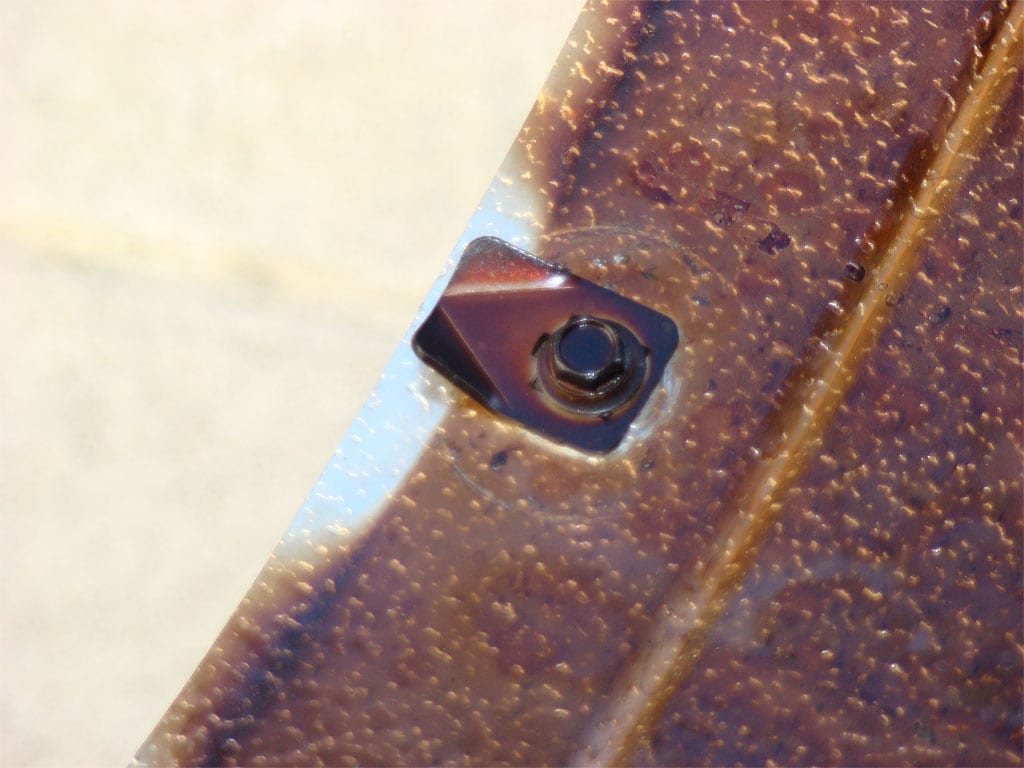
- Clever new design allows the door to be removed entirely or have it open downward but still attached to the cooker—without hinges
- Improved water pan
- 2.5 gallon capacity
- More solid fit on grill straps
- Unfortunately, less headroom between bottom of water pan and charcoal chamber
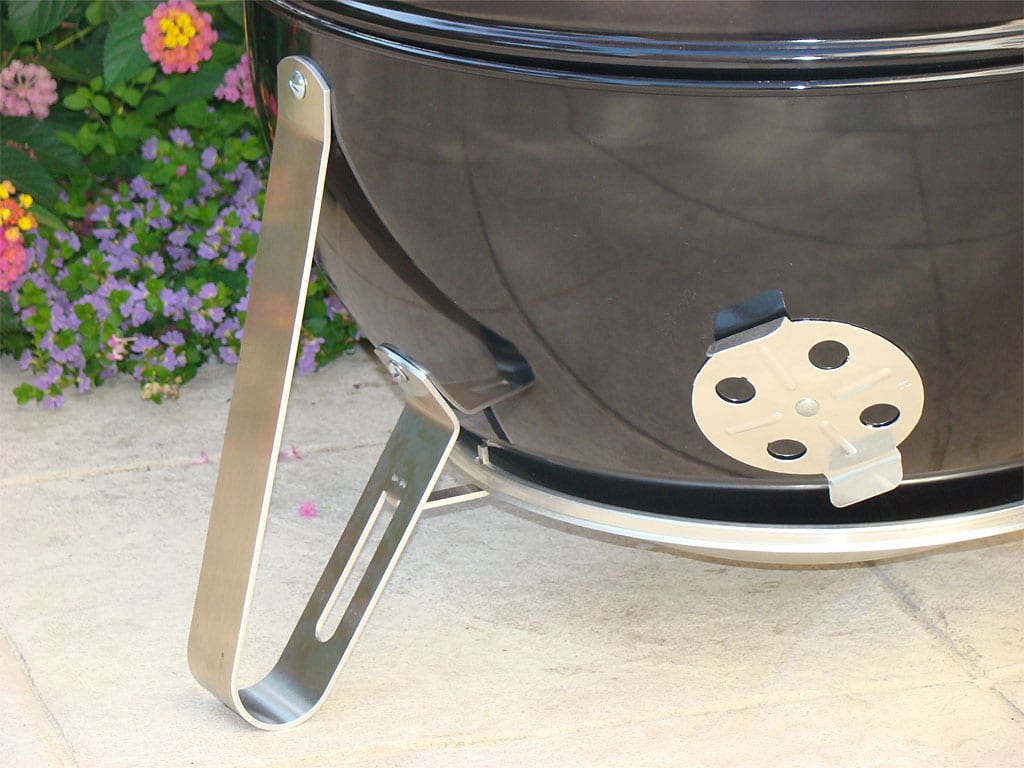
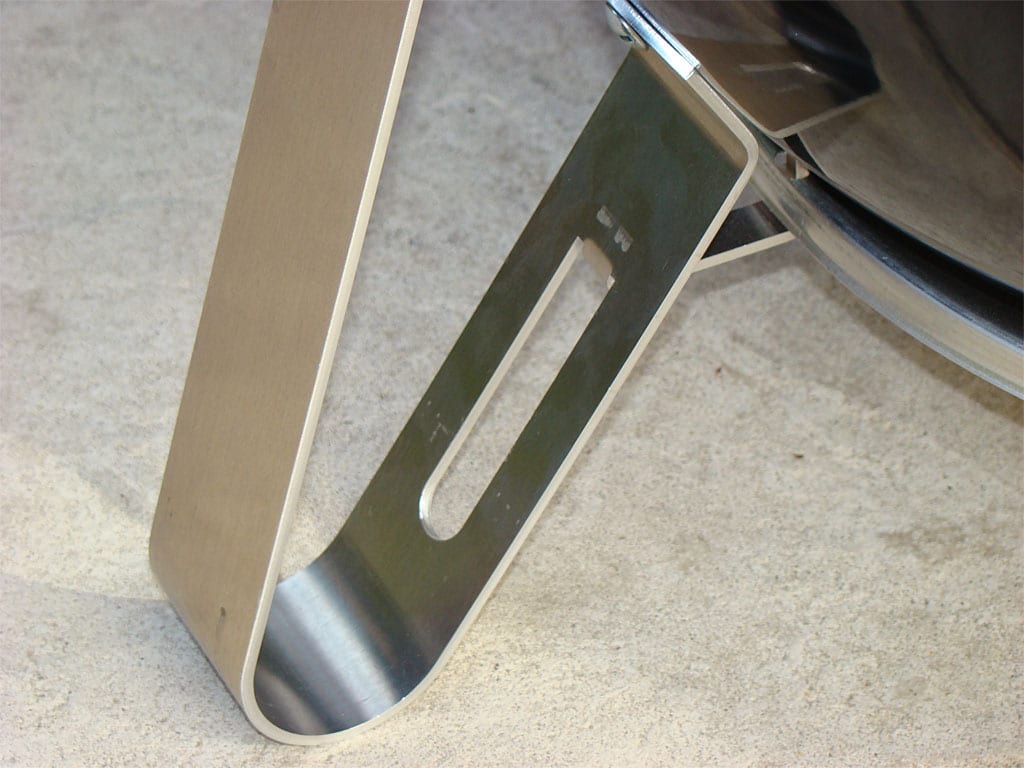
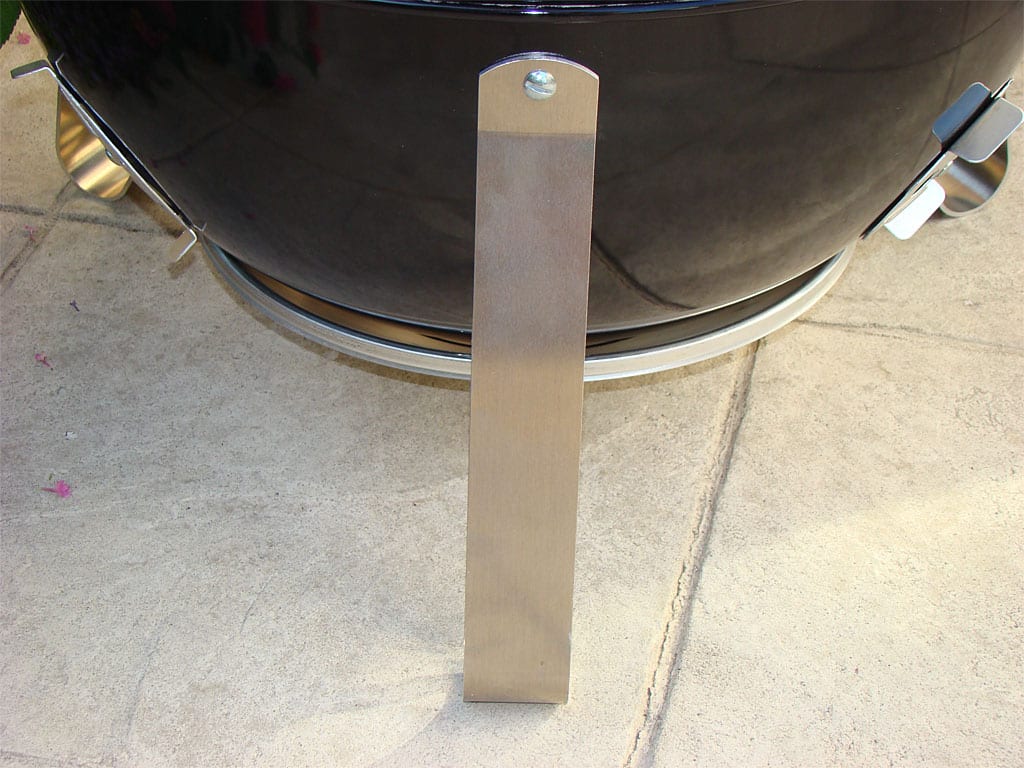
- Sturdier legs
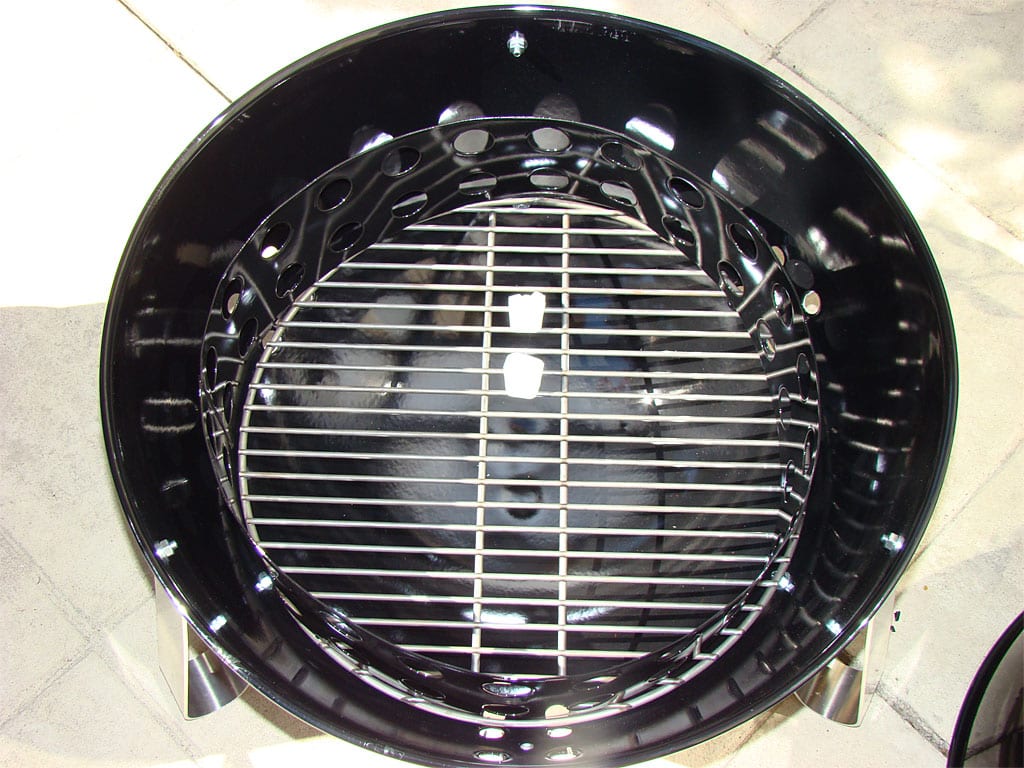
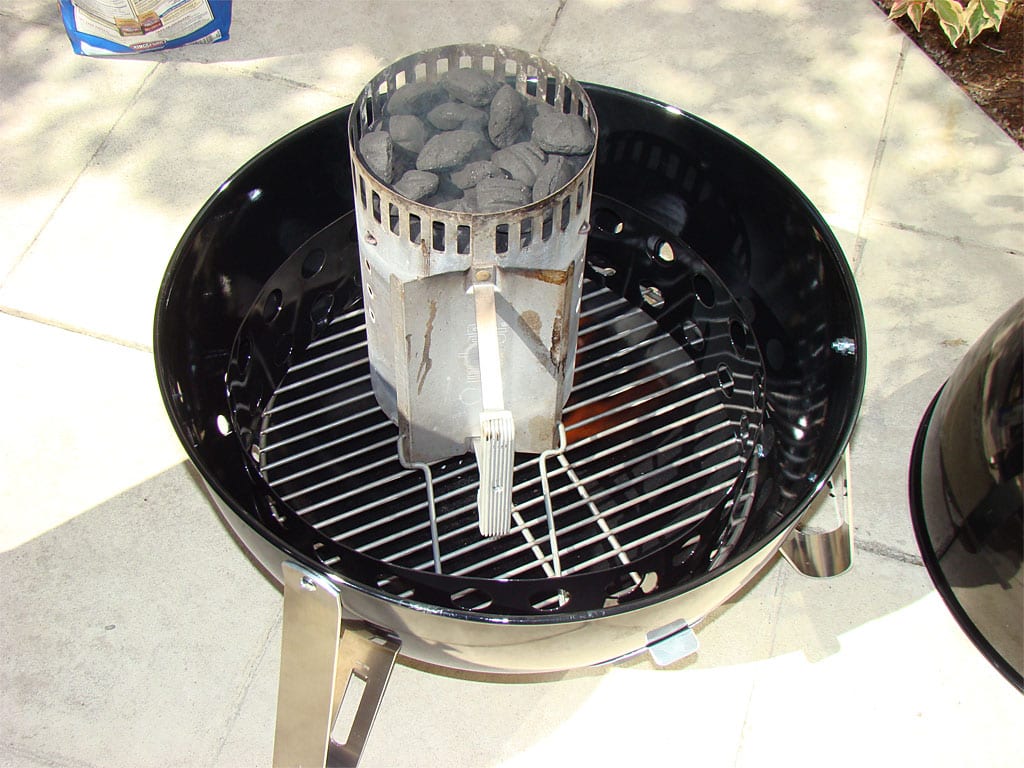
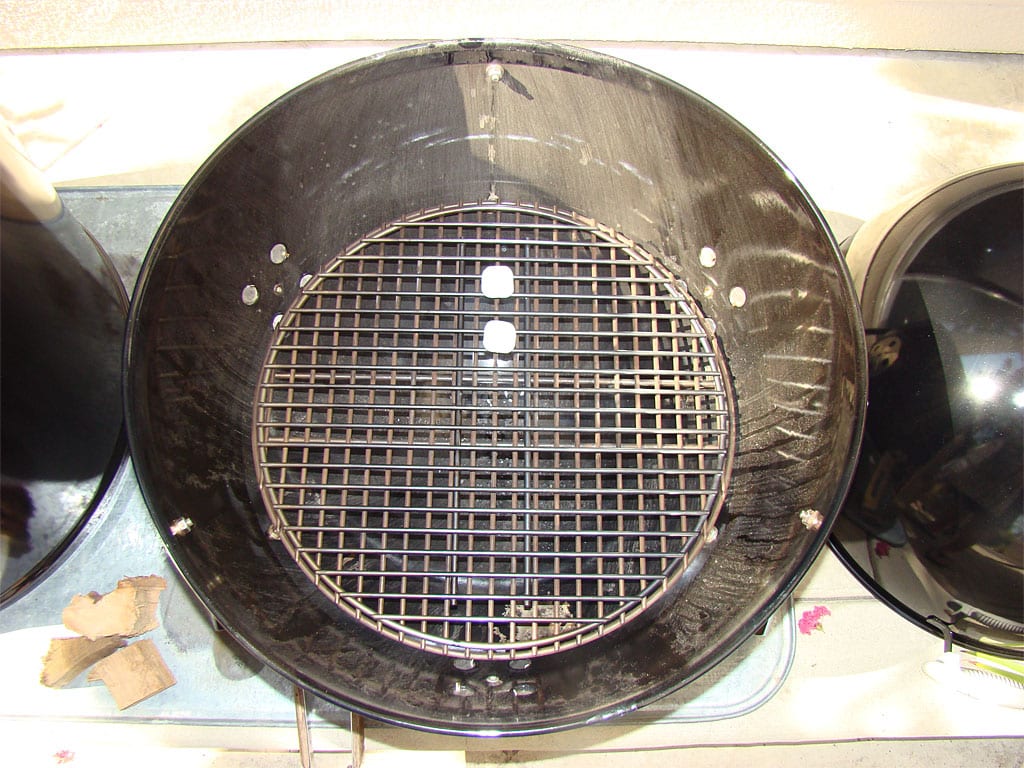
- Improved charcoal grate prevents charcoal from falling through into the bowl
- Heat shield mounted to the legs under the charcoal bowl protects patio or deck
- Improved packaging protects the product during journey from factory to front porch
- Updated owners manual operating instructions and modern recipes
22.5″ Features
- Two 22″ cooking grates
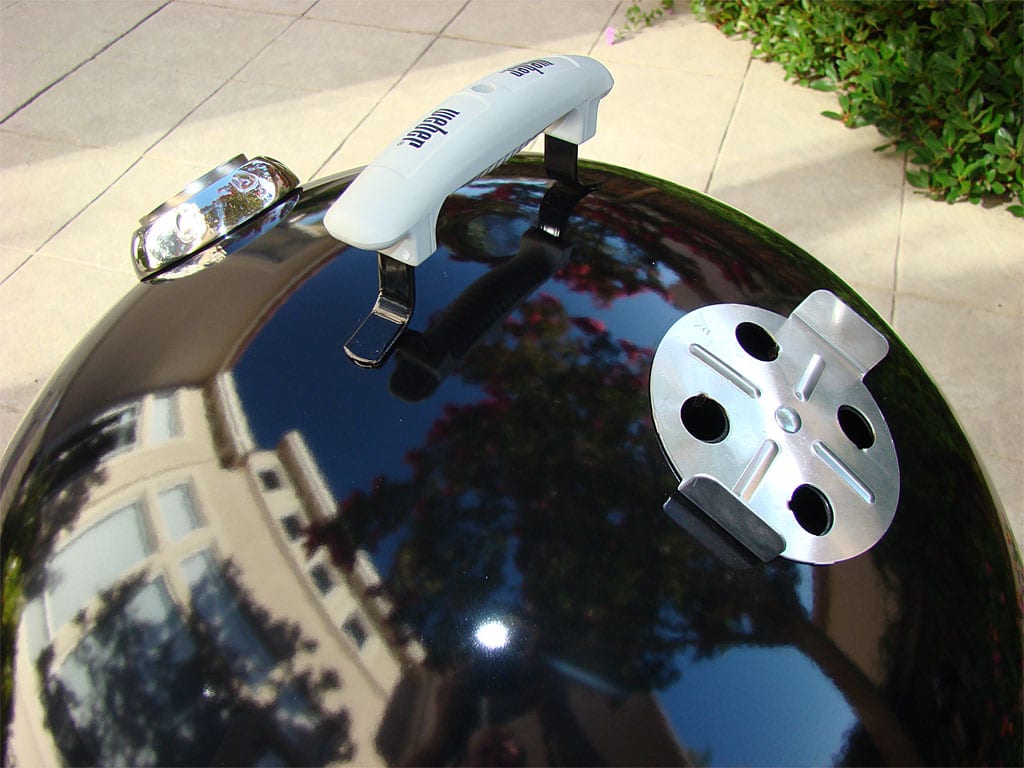
- Built-in lid thermometer with 1.5″ stem
- Temperature range of 100-350°F in 5°F increments
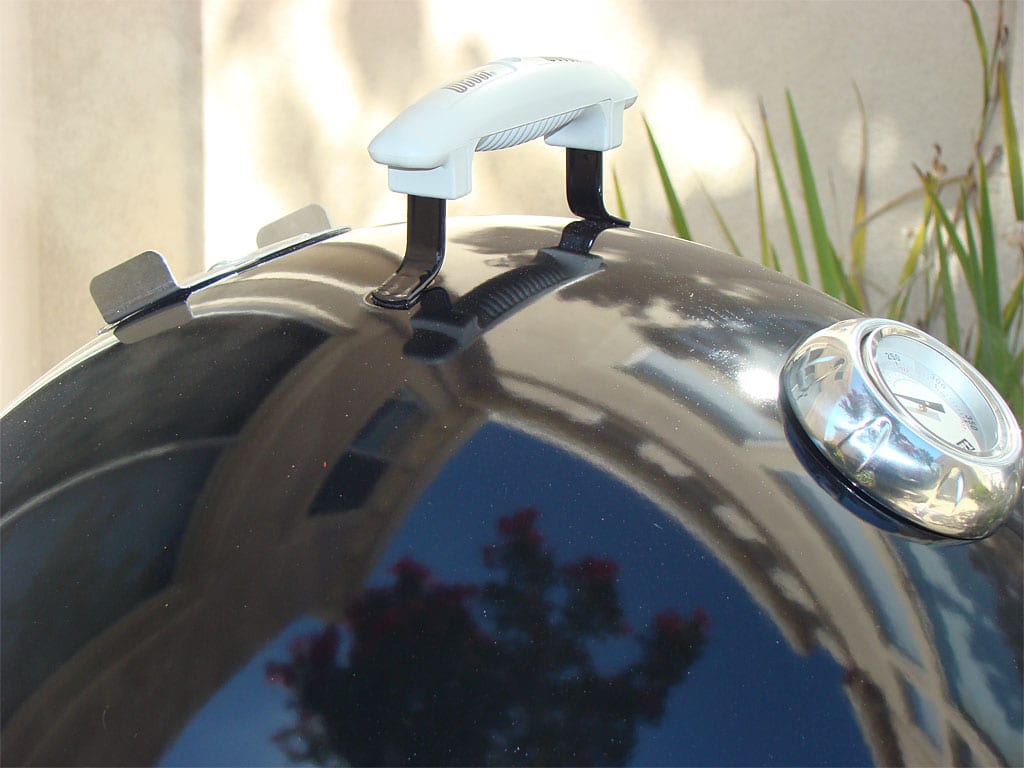
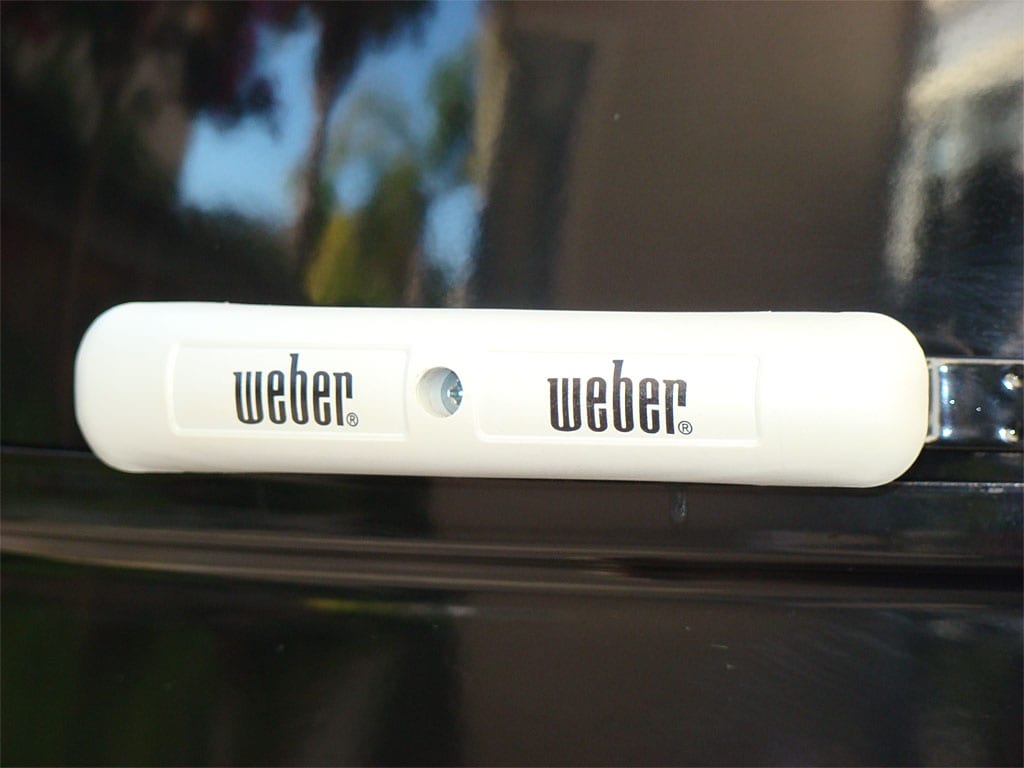
- Additional handle on edge of lid to assist with lifting
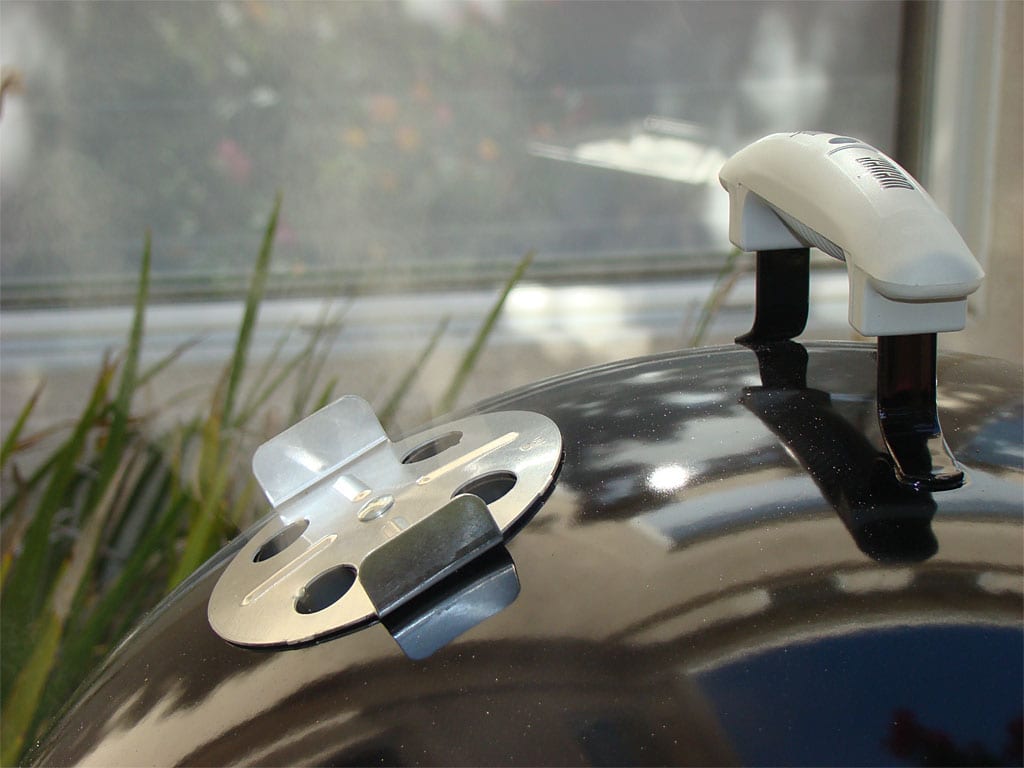
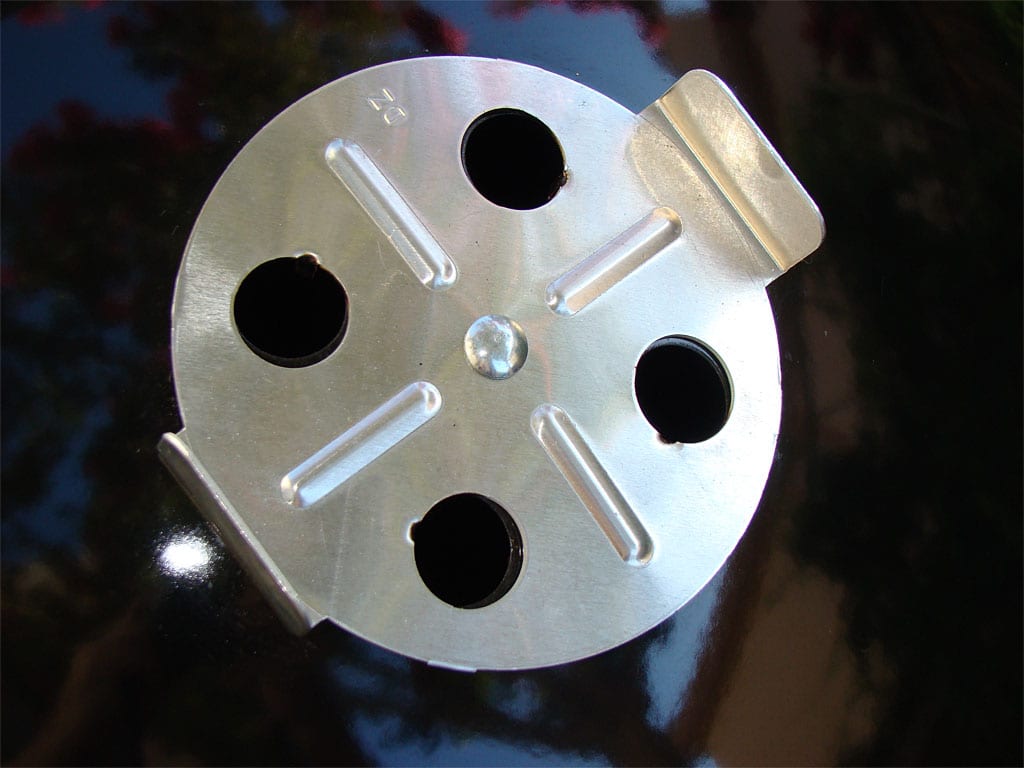
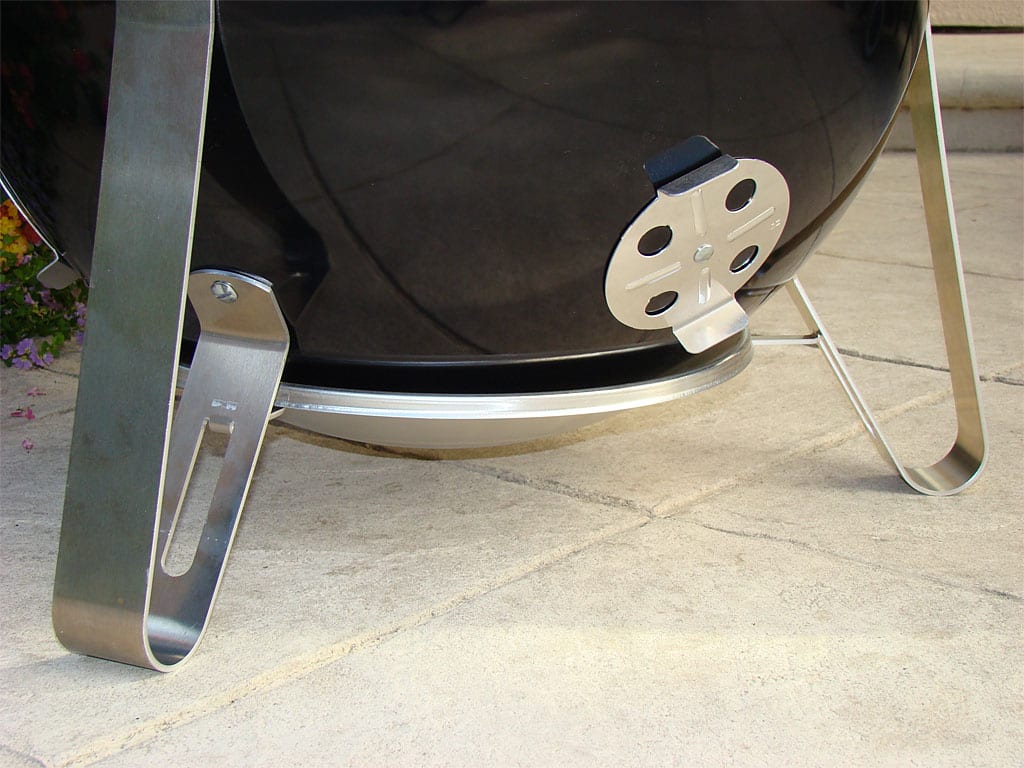
- Larger 4-1/4″ vent dampers, each with four 3/4″ holes
- Improved access door
- Taller, much wider door opening
- Door handle indicates locked position
- Latching mechanism pulls door tight to middle cooking section
- Clever new design allows the door to be removed entirely or have it open downward but still attached to the cooker—without hinges
- Improved water pan
- 3 gallon capacity
- More solid fit on grill straps
- Sturdier legs
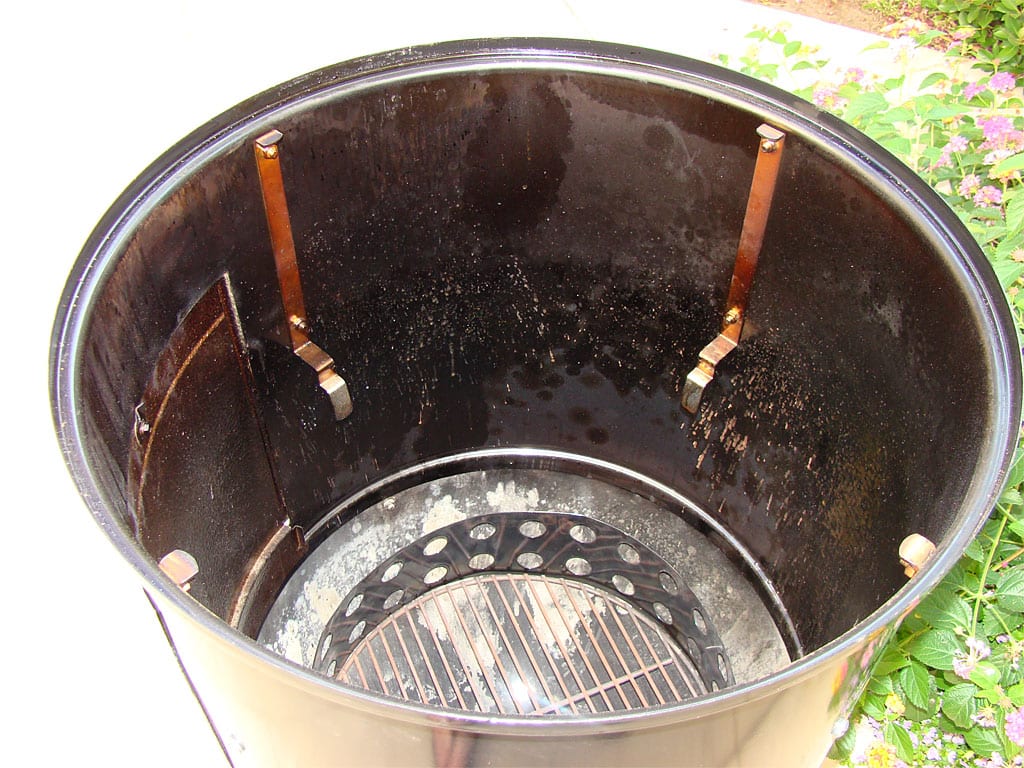
- Improved charcoal grate prevents charcoal from falling through into the bowl
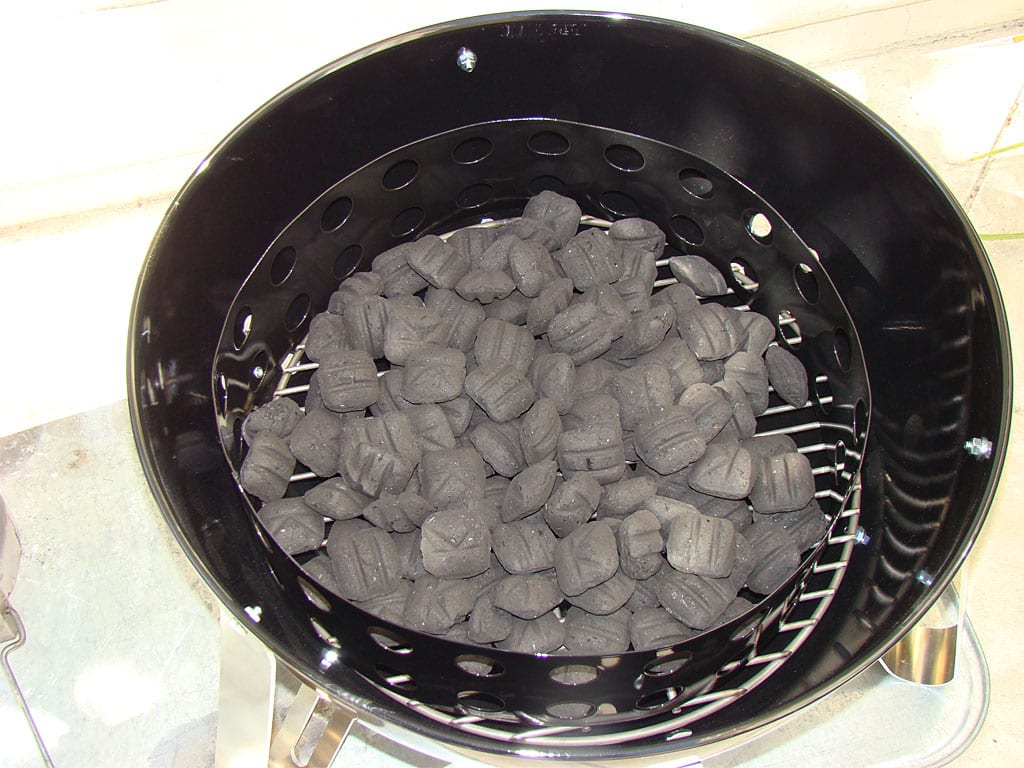
- Larger charcoal chamber holds an entire warehouse club-sized bag of briquettes
- More headroom between the top cooking grate and the lid, and more space between the top and bottom cooking grates
- Heat shield mounted to the legs under the charcoal bowl protects patio or deck
- Improved packaging protects the product during journey from factory to front porch
- Updated owners manual operating instructions and modern recipes
Detailed Specs
| 2009 Model 721001 18.5″ | 2009 Model 731001 22.5″ | |
| Height | 41-1/2″ | 48-1/2″ |
| Width | 18-7/8″ | 22-7/8″ |
| Weight | 37 pounds | 52 pounds |
| Top cooking grate | 17-1/2″ 240-1/2 sq. in. |
21-1/2″ 363 sq. in. |
| Bottom cooking grate | 17″ 227 sq. in. |
20-3/4″ 338 sq. in. |
| Distance between cooking grates | 7-1/2″ | 9″ |
| Water pan | 14-3/8″ x 7″ 2.5 gallons |
18-3/4″ x 4-1/4″ 3 gallons |
| Distance between water pan and charcoal grate | 5-3/4″ | 12-1/2″ |
| Charcoal chamber | 14-1/2″ x 4-3/4″ | 17″ x 4-3/4″ |
| Charcoal grate | 15-1/4″ | 18-1/4″ |
| Distance between charcoal grate and bottom of charcoal bowl | 4-1/2″ | 5-1/4″ |
| Lid | 18-1/2″ OD x 13″ (including handle) 10-1/2″ between inside top of lid and top cooking grate |
22-1/2″ OD x 14-5/16″ (including handle) 11-13/16″ between inside top of lid and top cooking grate |
| Lid damper | One 3″ damper with three 3/4″ holes | One 4-1/4″ damper with four 3/4″ holes |
| Thermometer | 100-350°F, 5°F increments 1-1/2″ stem |
100-350°F, 5°F increments 1-1/2″ stem |
| Thermometer hole in lid | 3/8″ | 3/8″ |
| Middle cooking section | 18-3/4″ OD / 17-5/8″ ID x 17-1/2″ 6″ between screw holes |
22-7/8″ OD / 21-3/4″ ID x 21-1/2″ 7-1/4″ between screw holes |
| Access opening | 7-1/4″ x 10″ | 12-3/4″ x 13-7/8″ |
| Access door | 8″ x 11-3/4″ | 14″ x 16-1/4″ |
| Access door knob | 3″ long | 3″ long |
| Charcoal bowl | 18-1/2″ OD x 10″ (without legs), 12-3/8″ (with legs) | 22-5/8″ OD x 12″ (without legs), 14-1/4″ (with legs) |
| Charcoal bowl dampers | Three 3″ dampers with three 3/4″ holes | Three 4-1/4″ dampers with four 3/4″ holes |
| Legs | Three, 11-1/2″ x 1-1/2″ | Three, 13-1/4″ x 2″ |
Videos on YouTube
Weber was kind enough to provide a pre-production version of the 22.5″ WSM so I could cook on it and provide feedback. You can watch my comments as I open the box for the first time and assemble the cooker, and see a comparison between the old 18.5″ WSM and the new 22.5″ WSM.
- Part 1: Out of Box Experience
- Part 2: Out of Box Experience
- Part 3: Assembly
- Part 4: Final Comments & Comparison to Old 18.5″ WSM
- Part 5: Addendum
- Charcoal Capacity
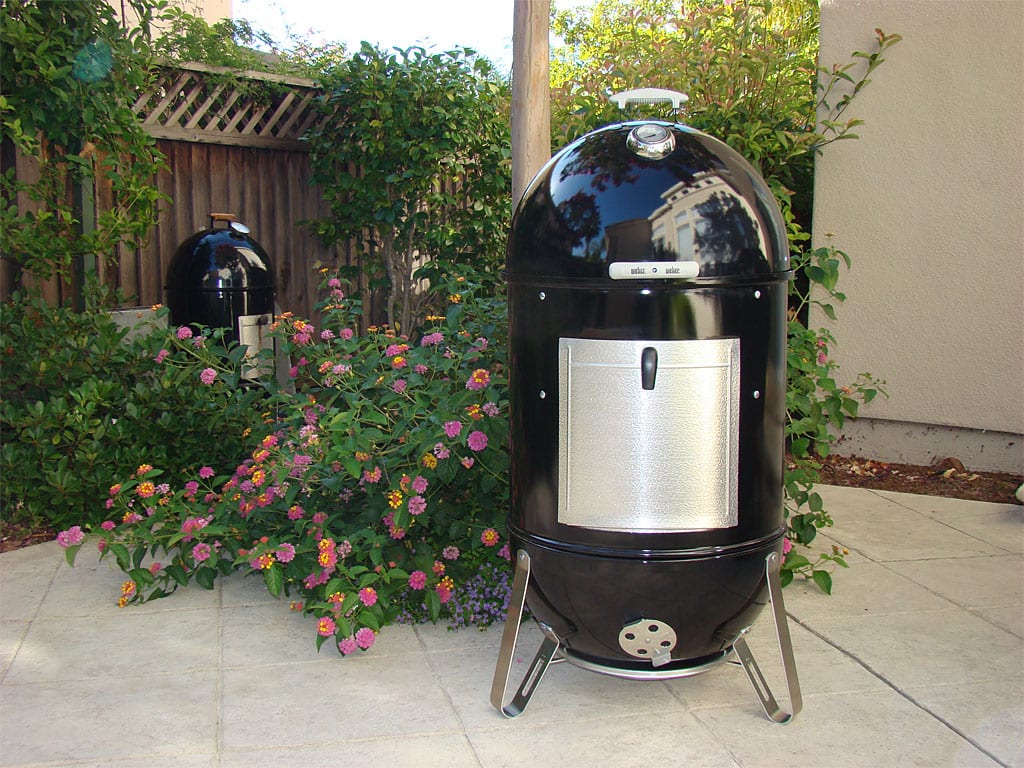
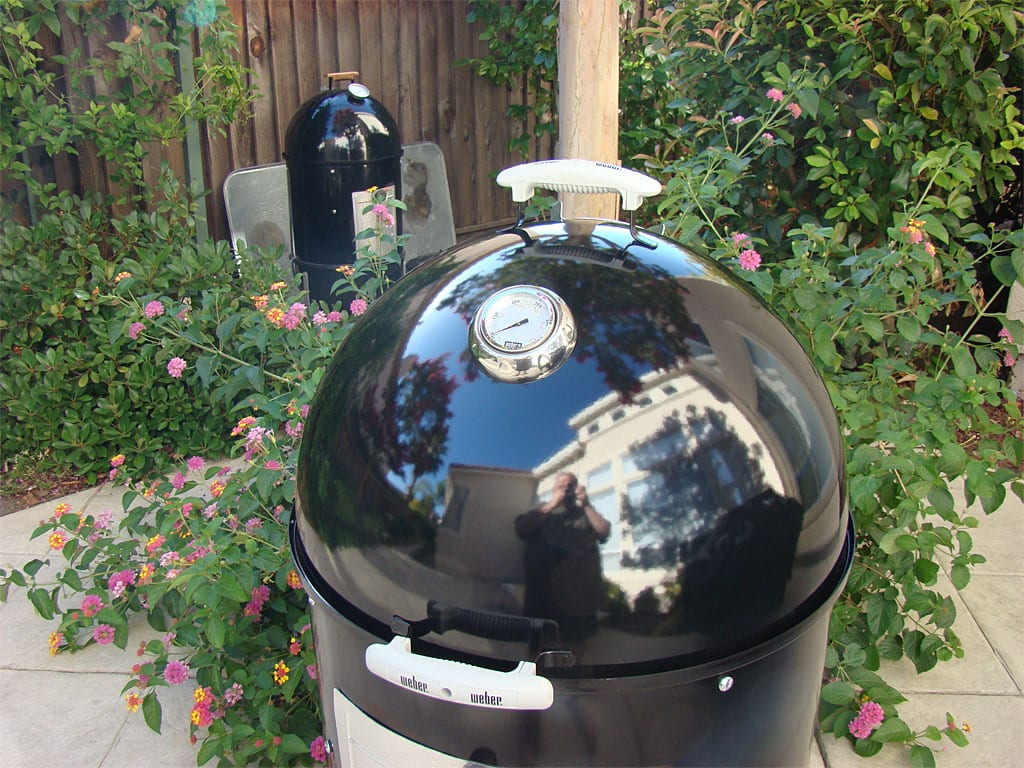
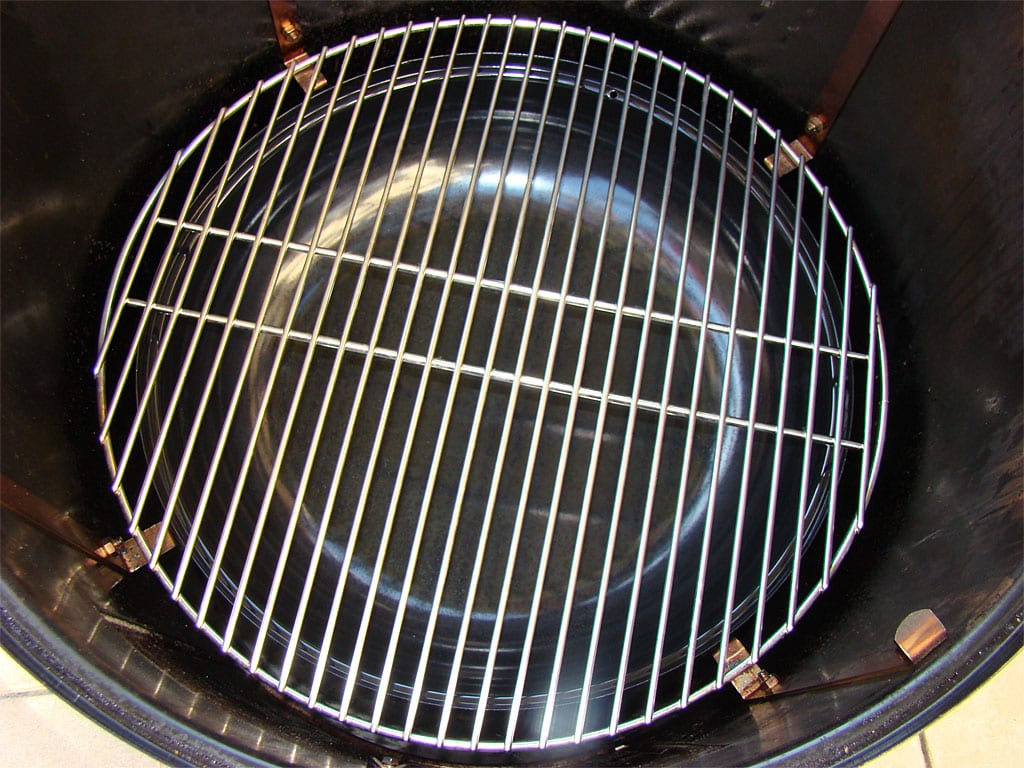
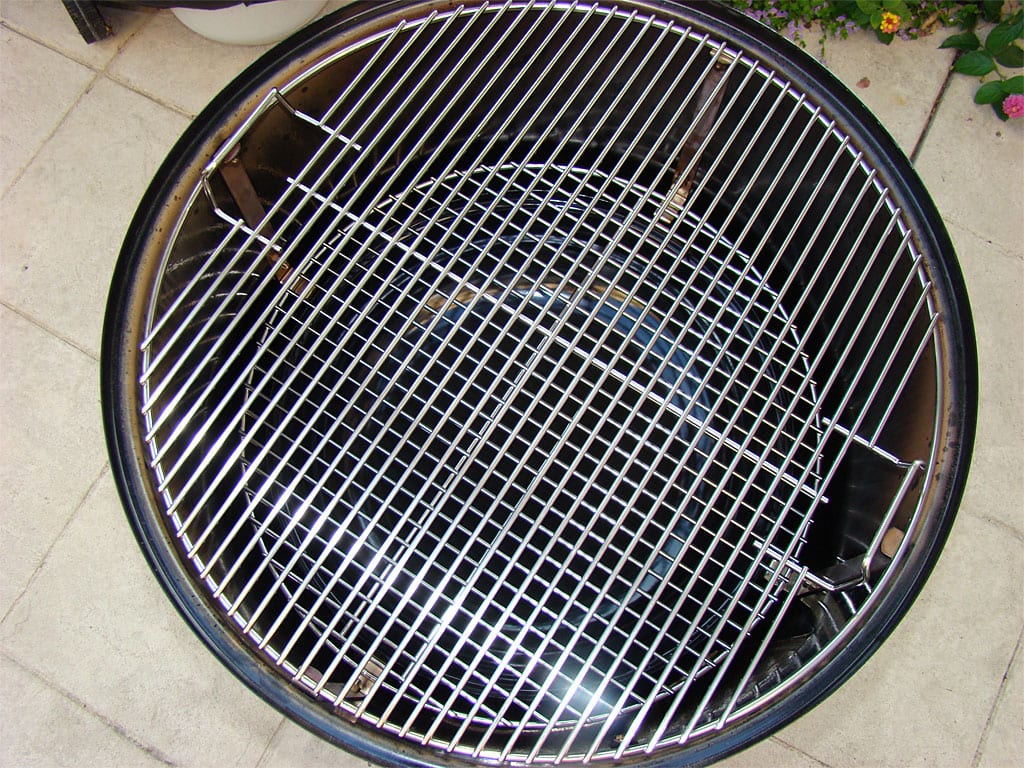
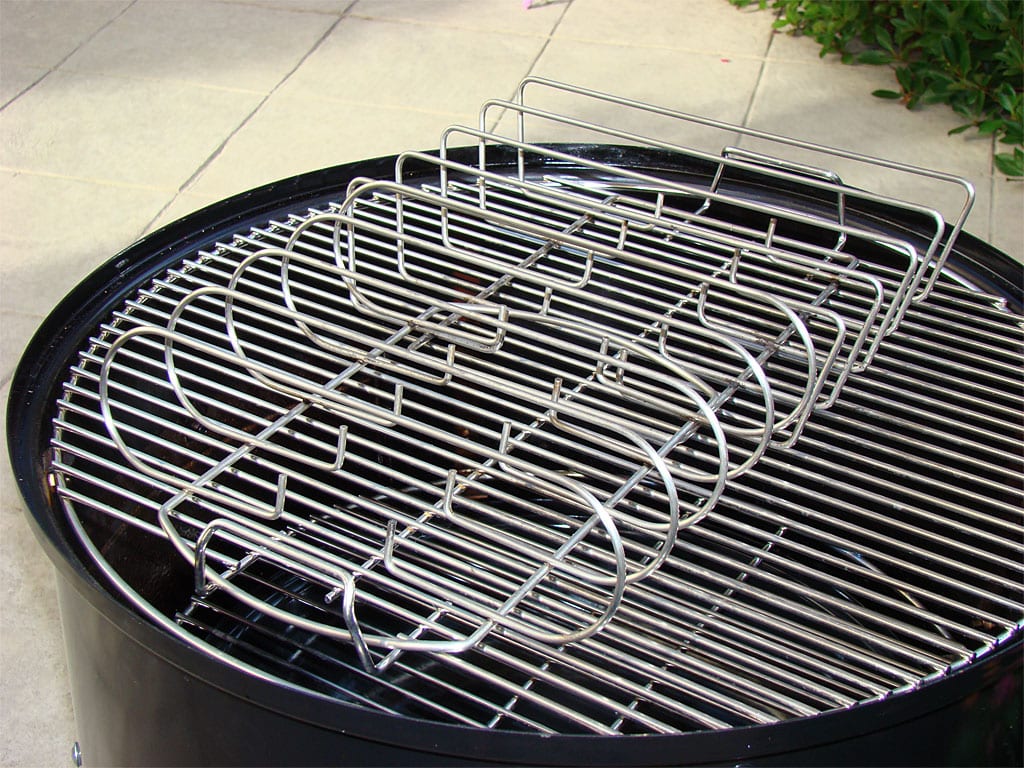
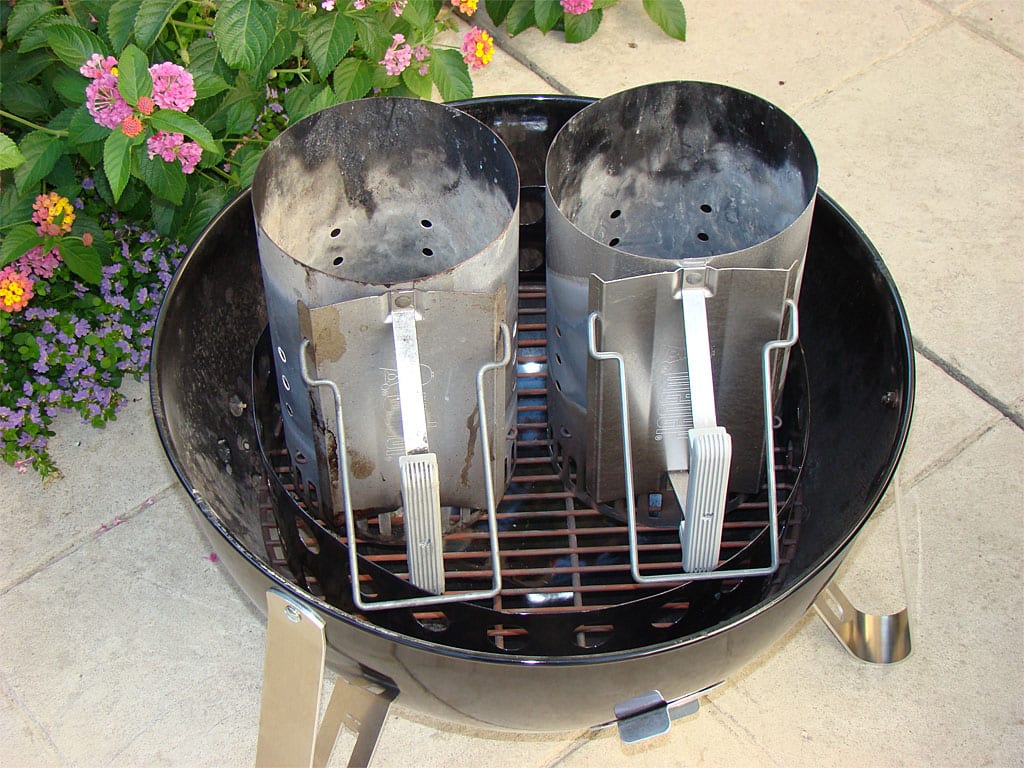
22.5″ Photo Gallery
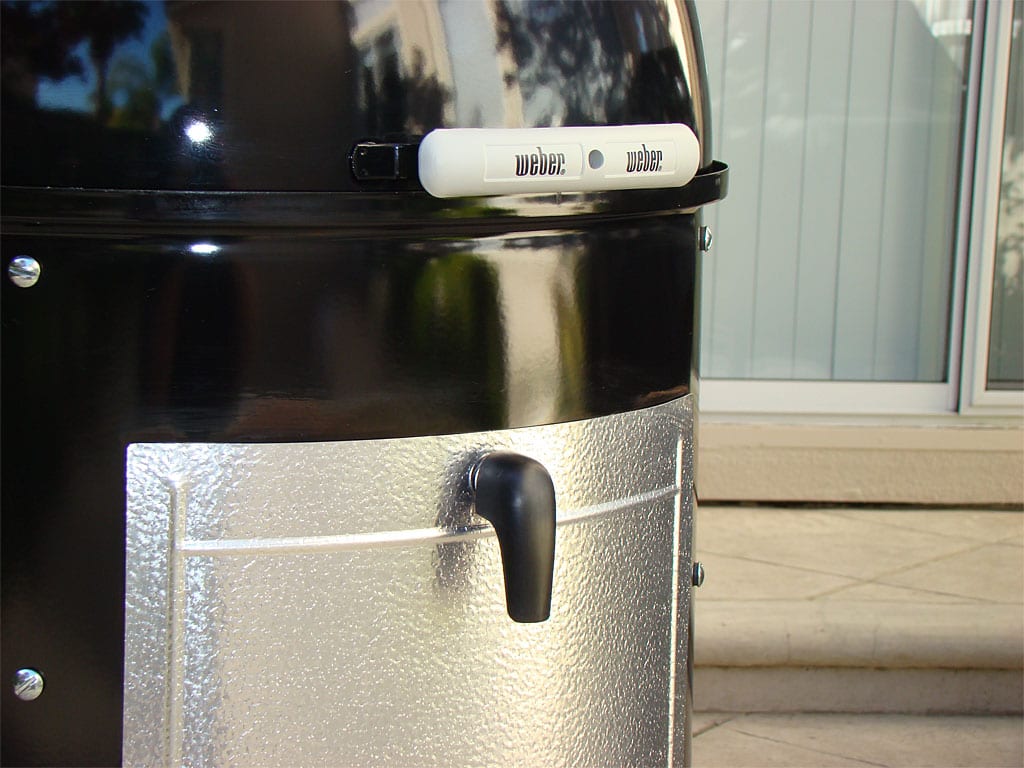
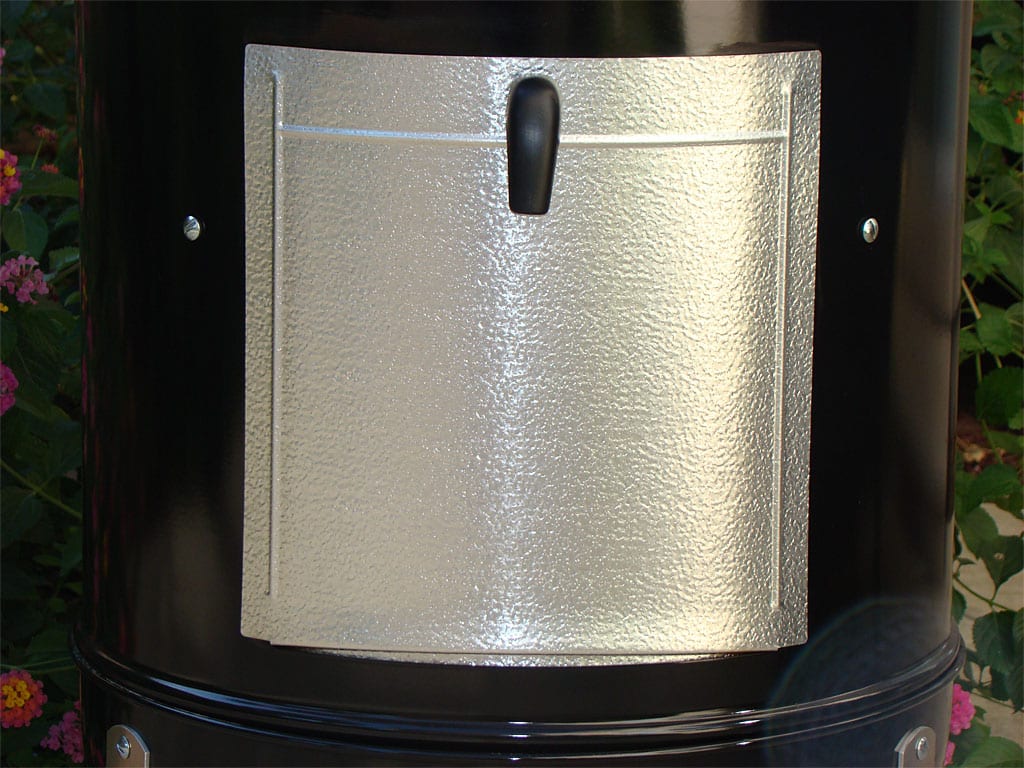
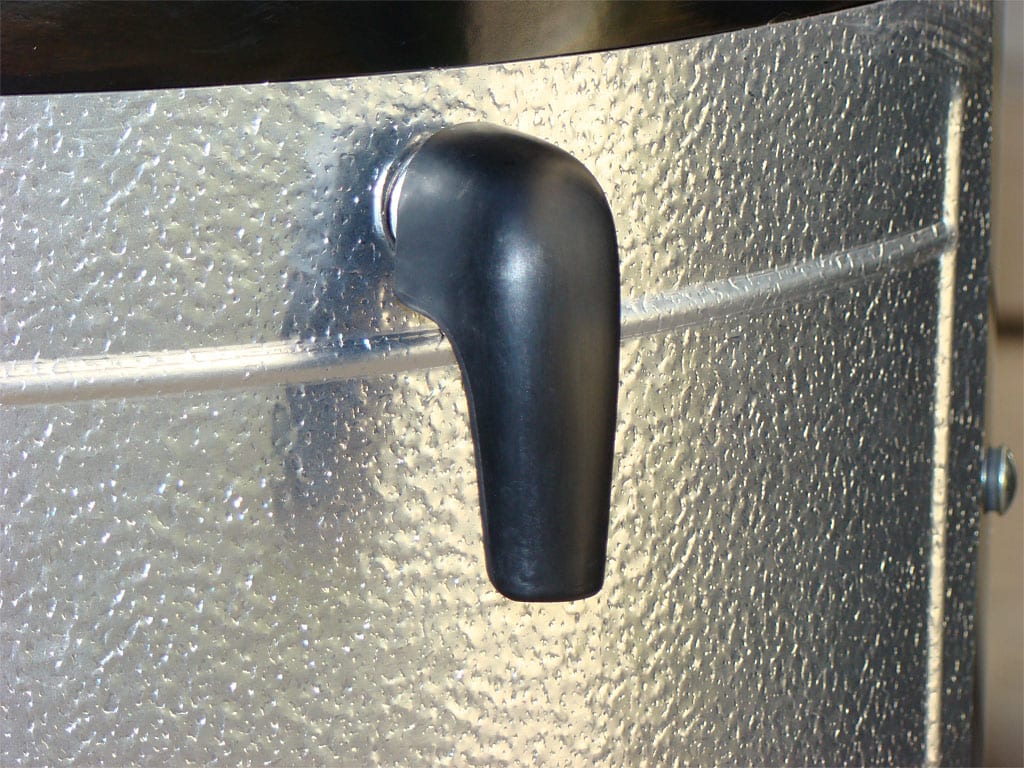
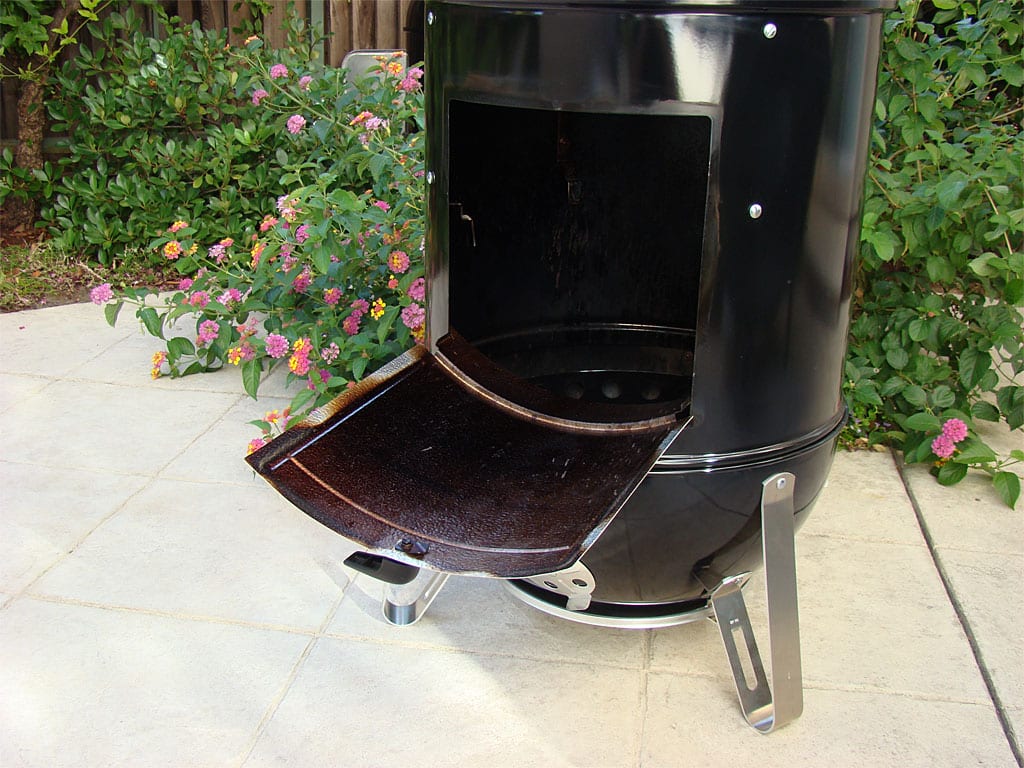
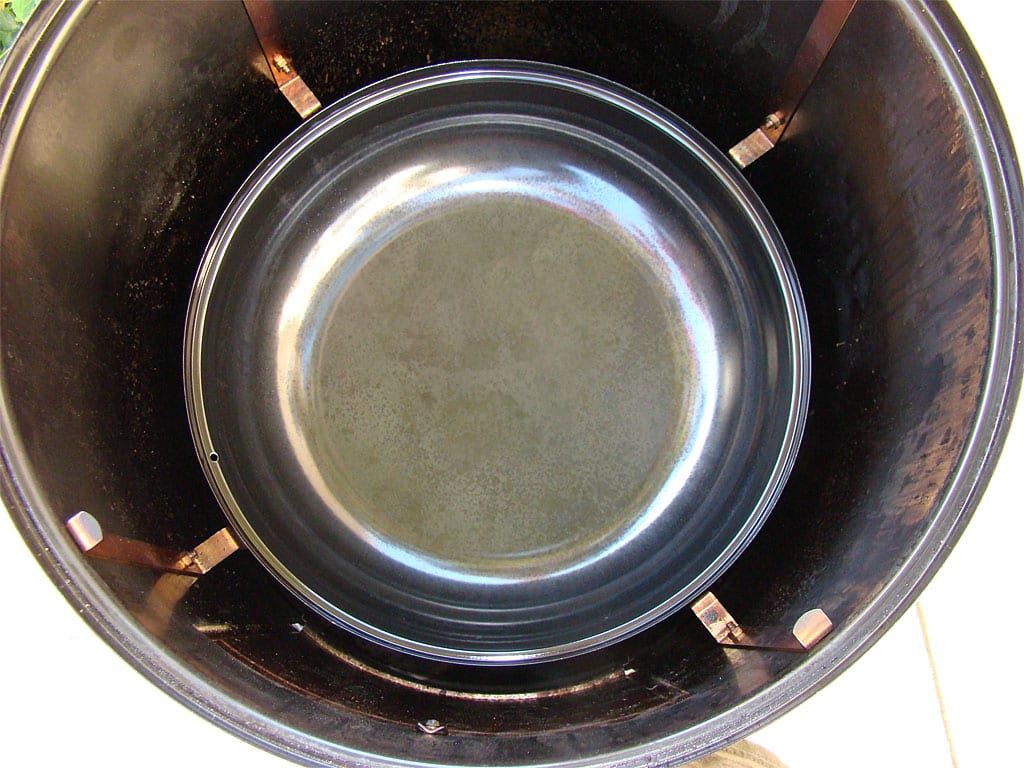
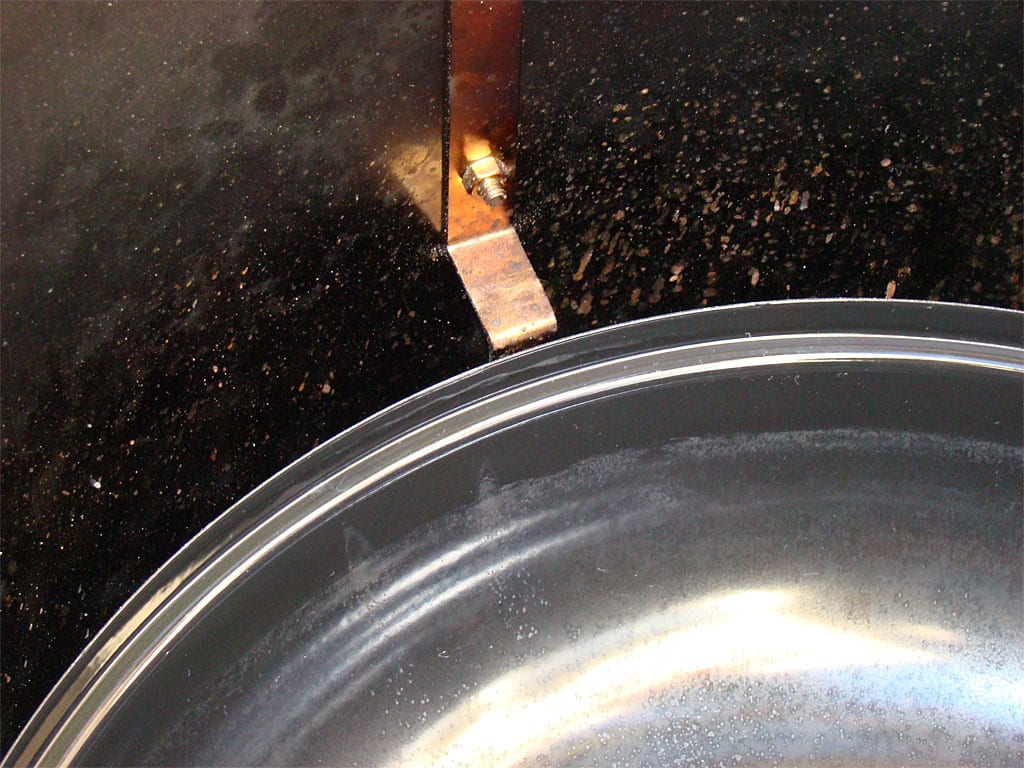
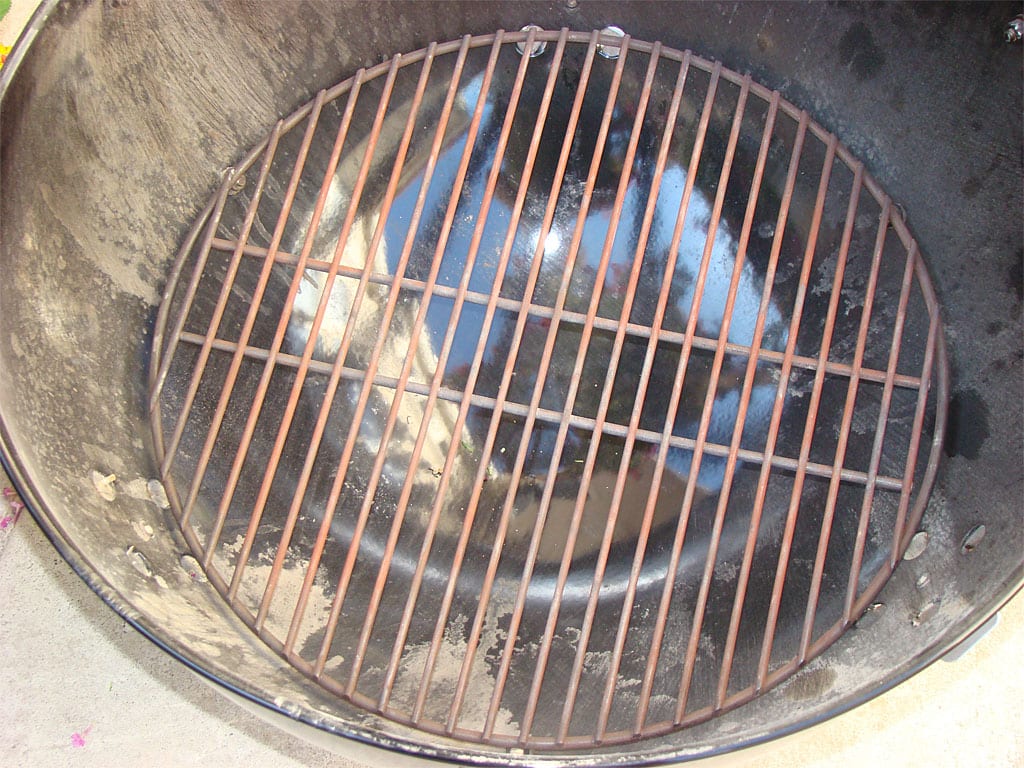
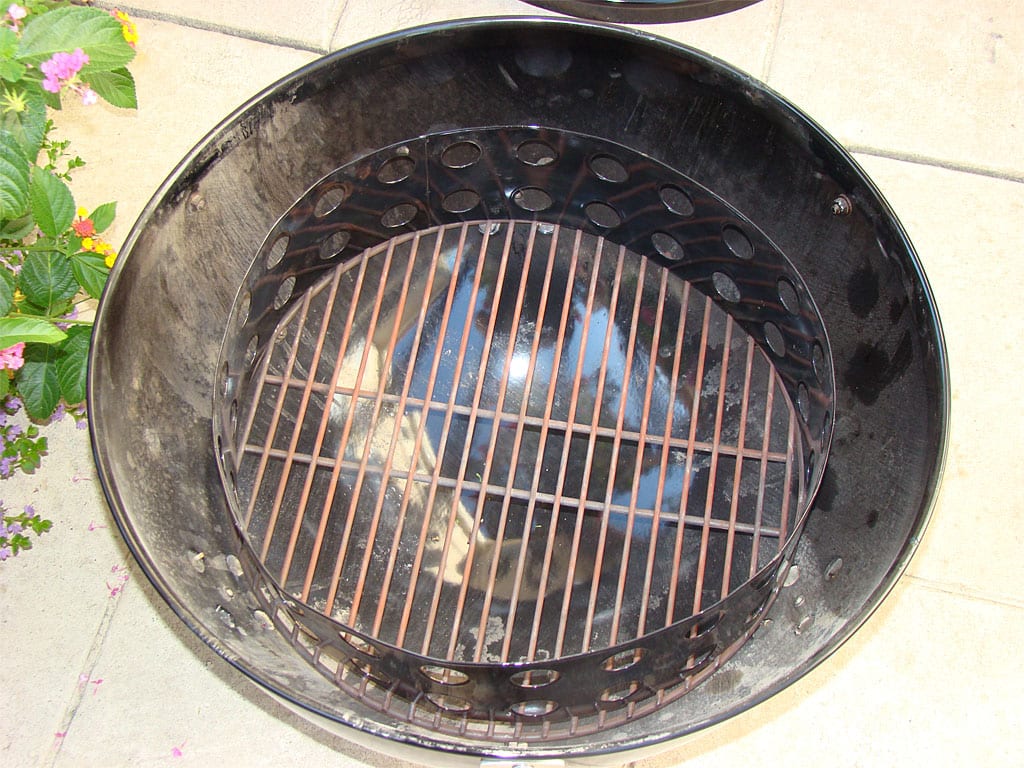
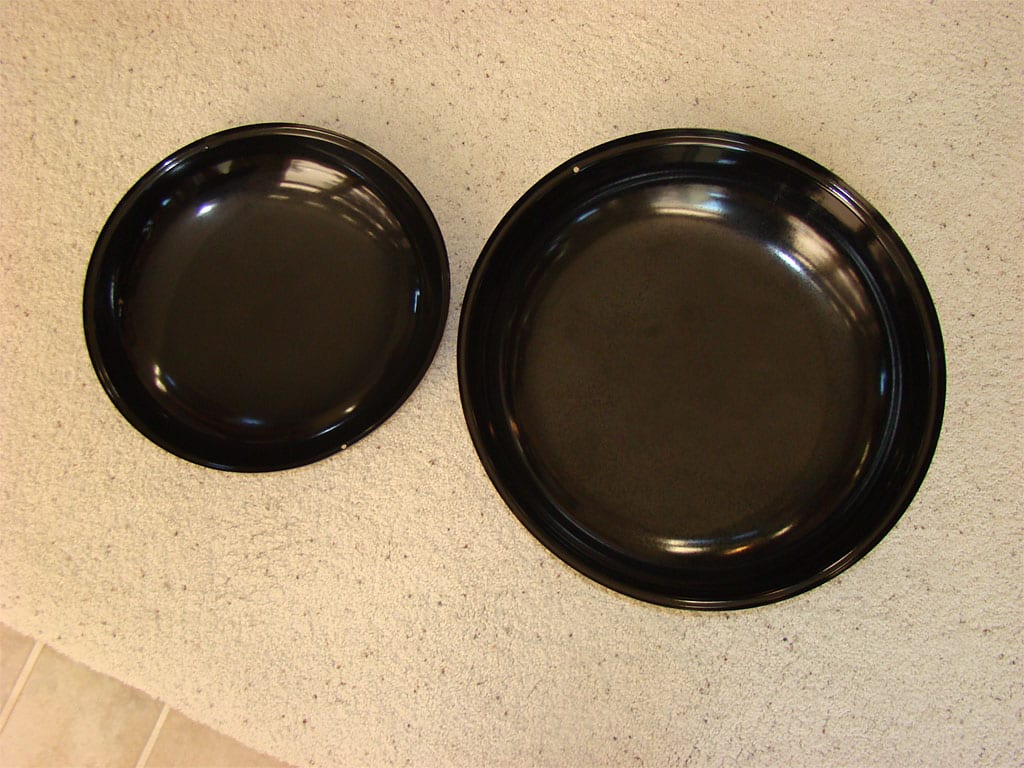
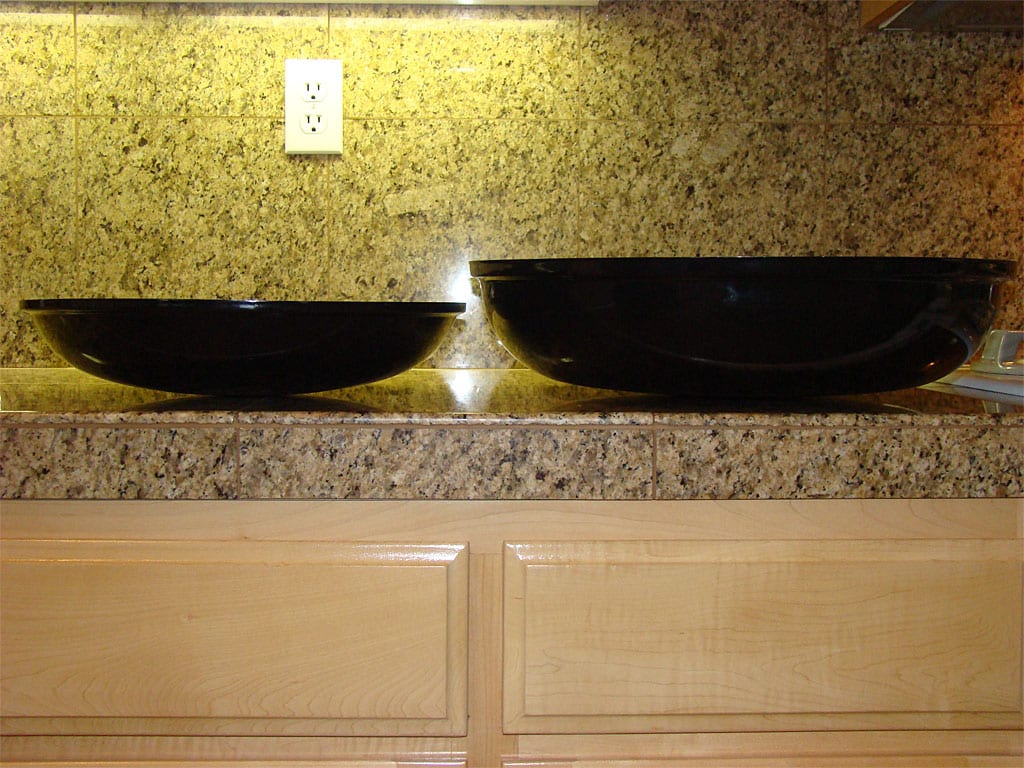
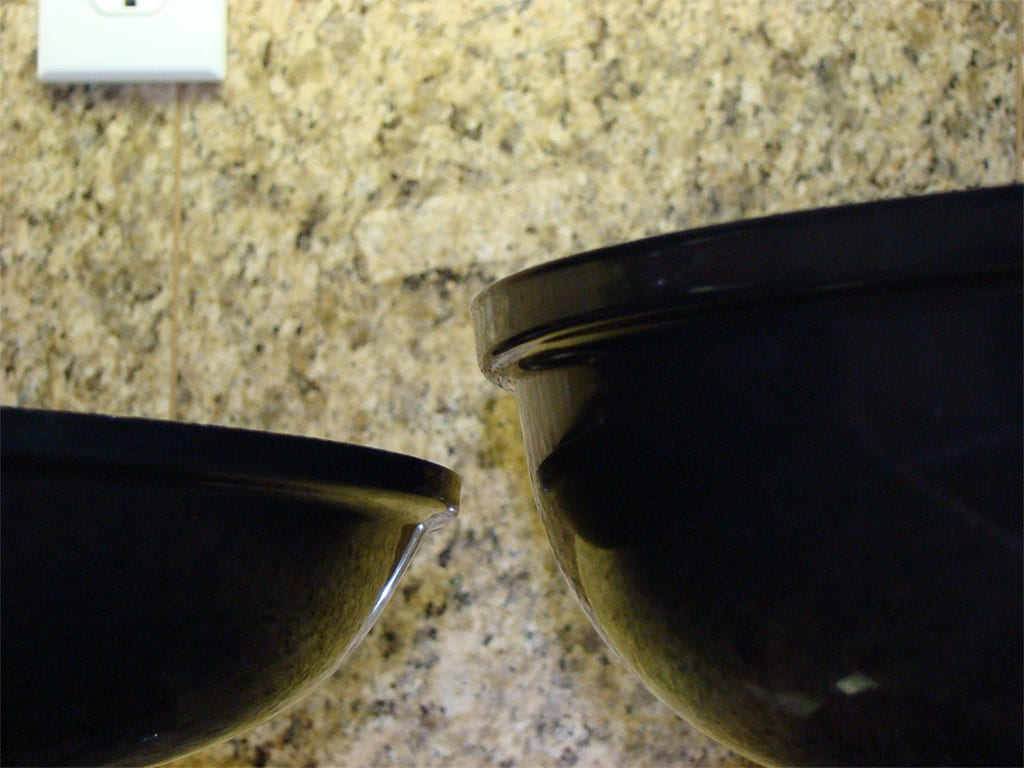
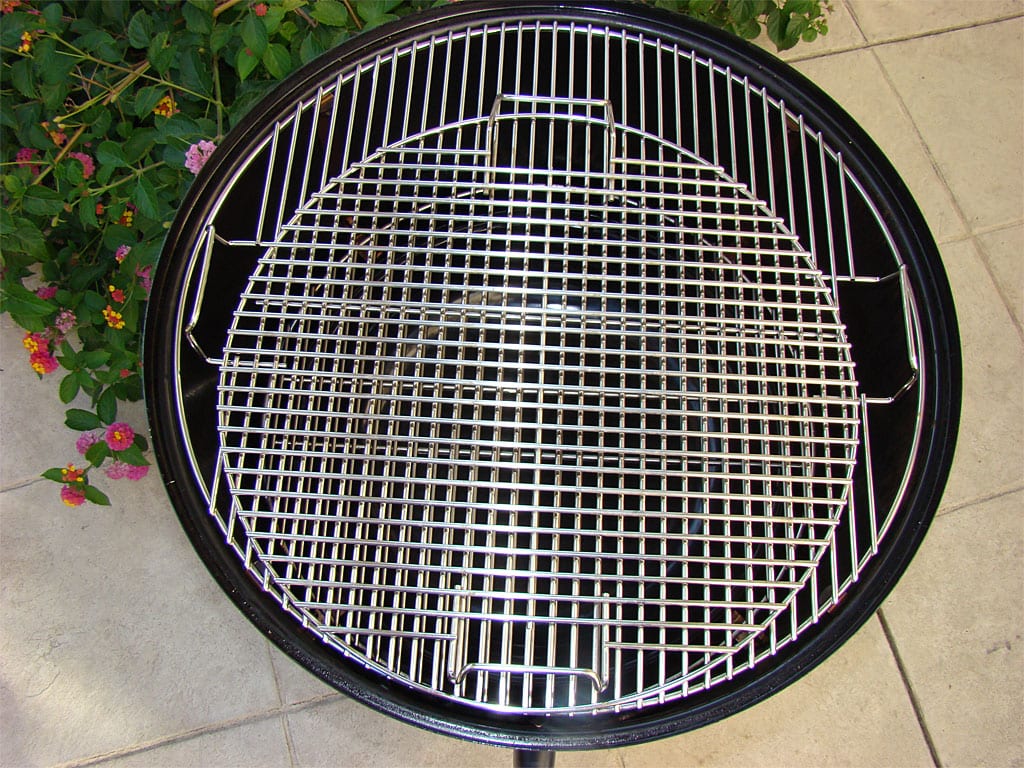
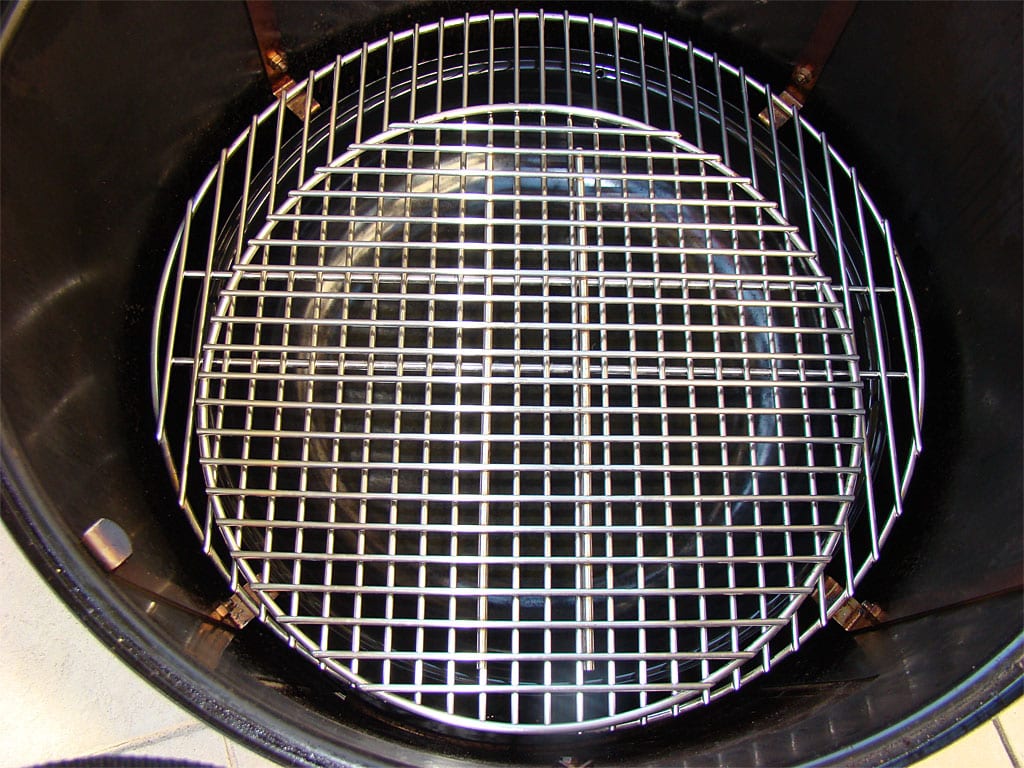
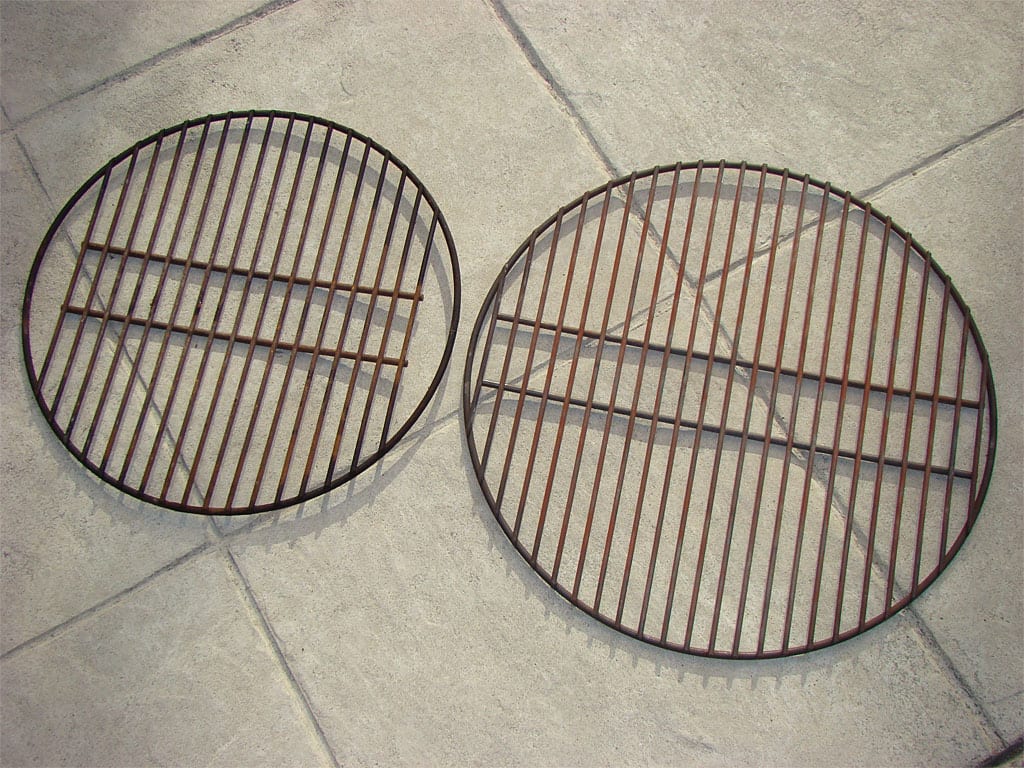
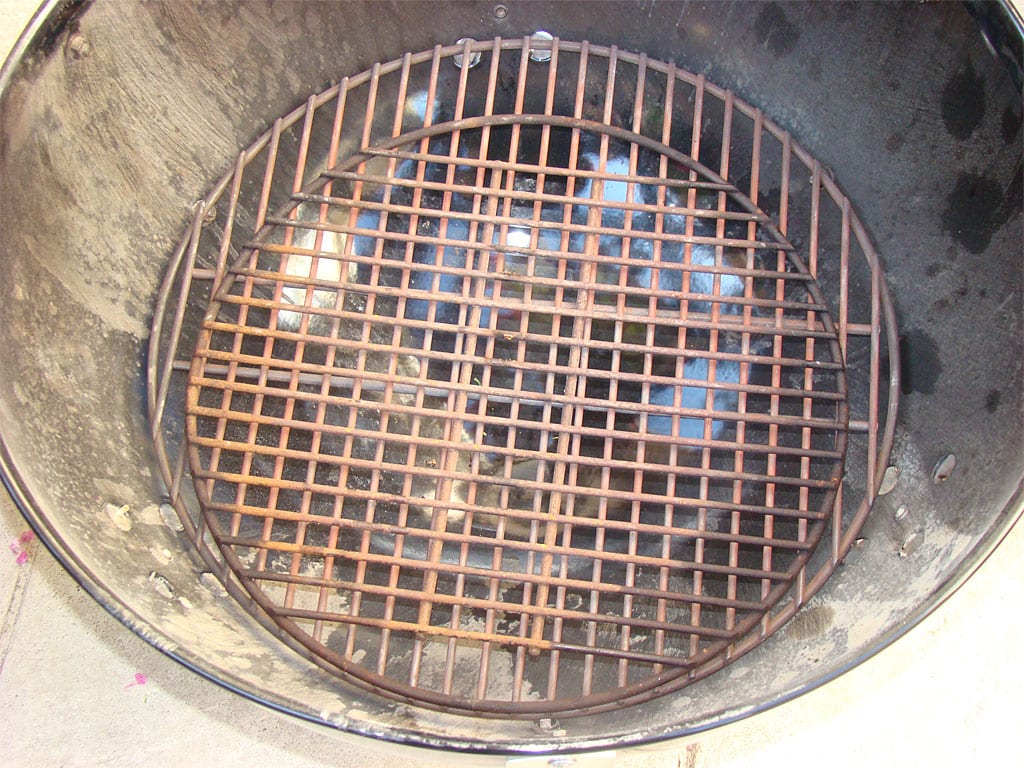
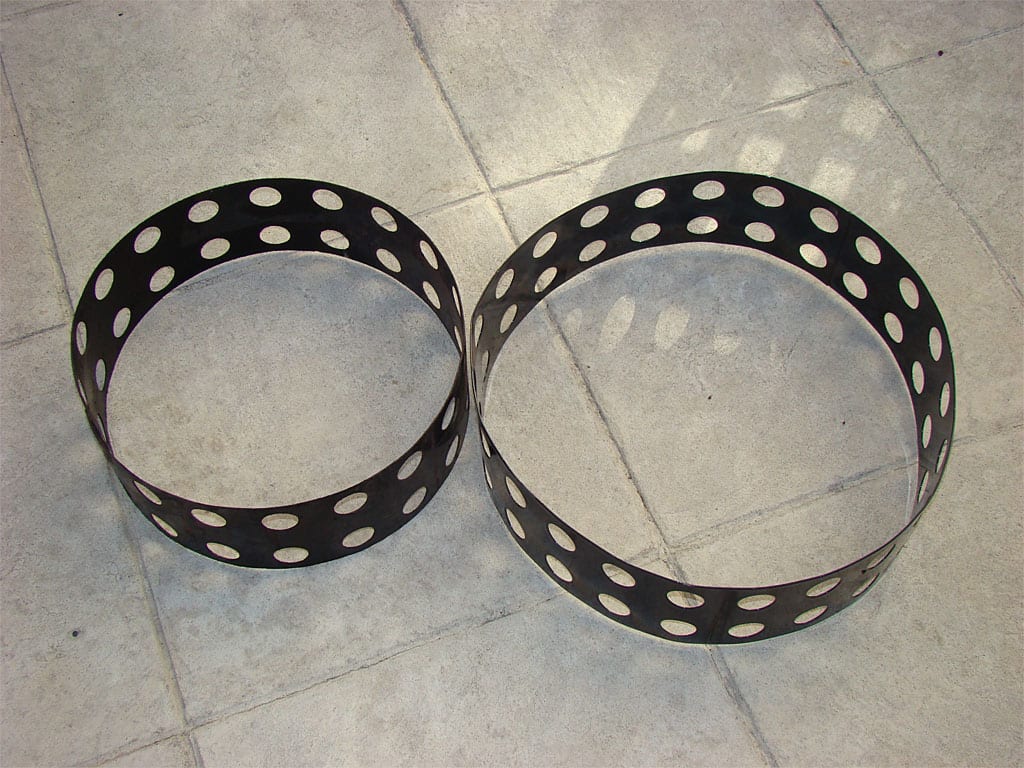
18.5″ vs. 22.5″ Comparison Photos
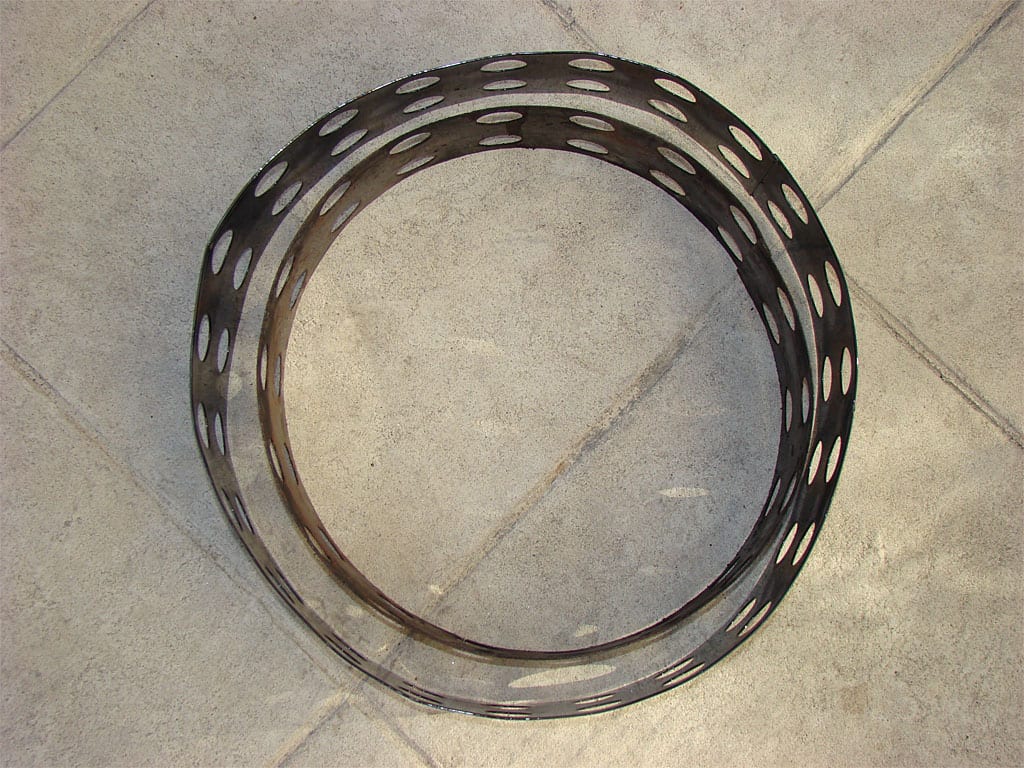
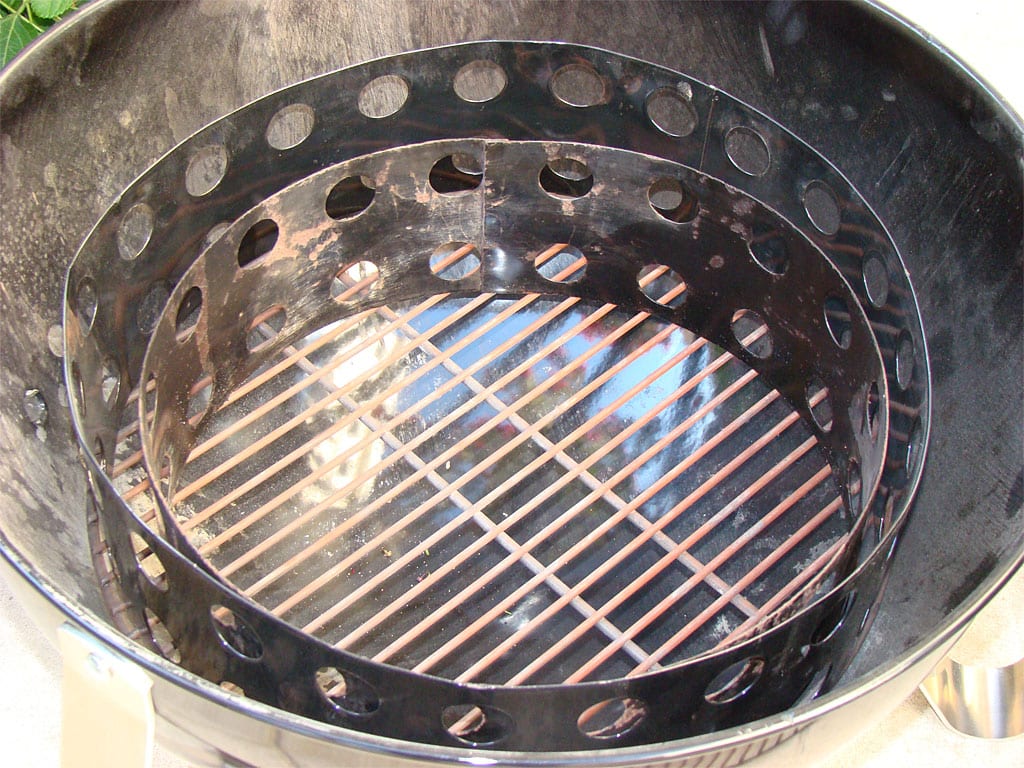
Smaller parts are 18.5″ parts, larger parts are 22.5″ parts.
Test Cook #1
6 Slabs Pork Loin Back Ribs – Total weight approximately 13 pounds
August 11, 2008
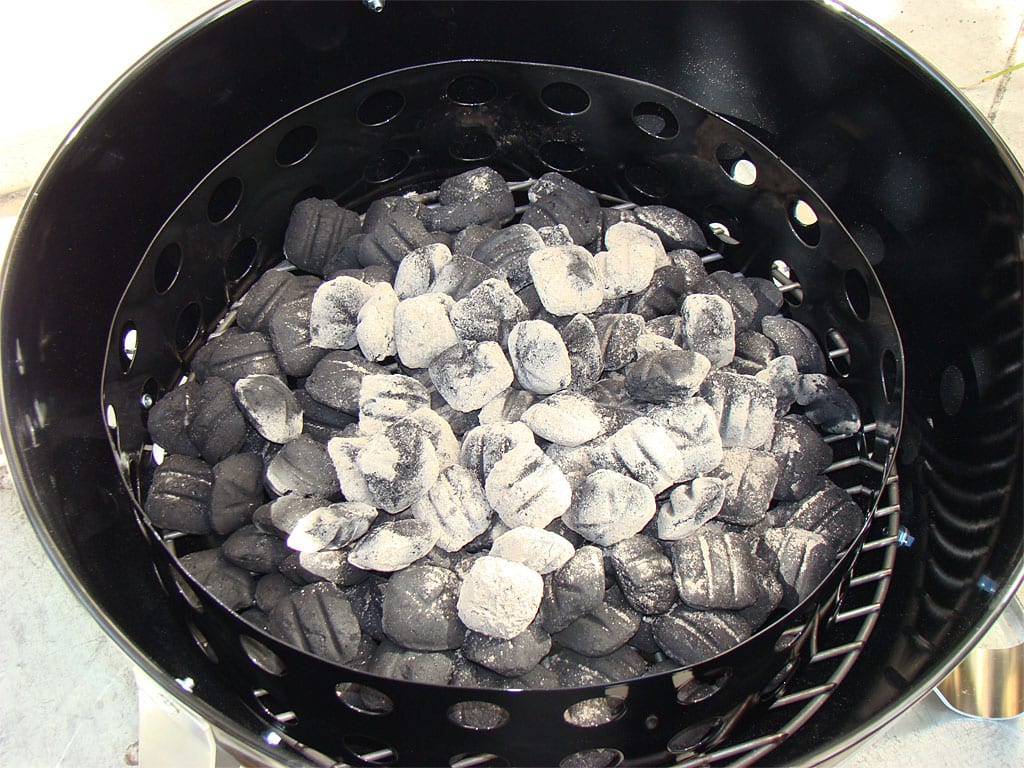
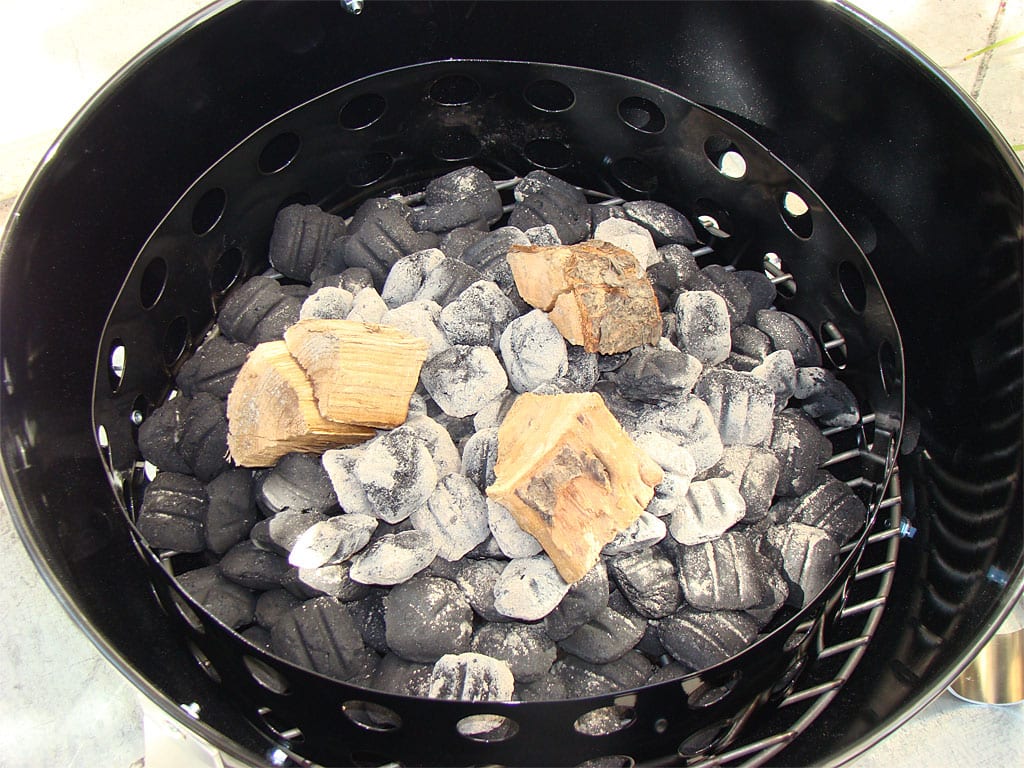
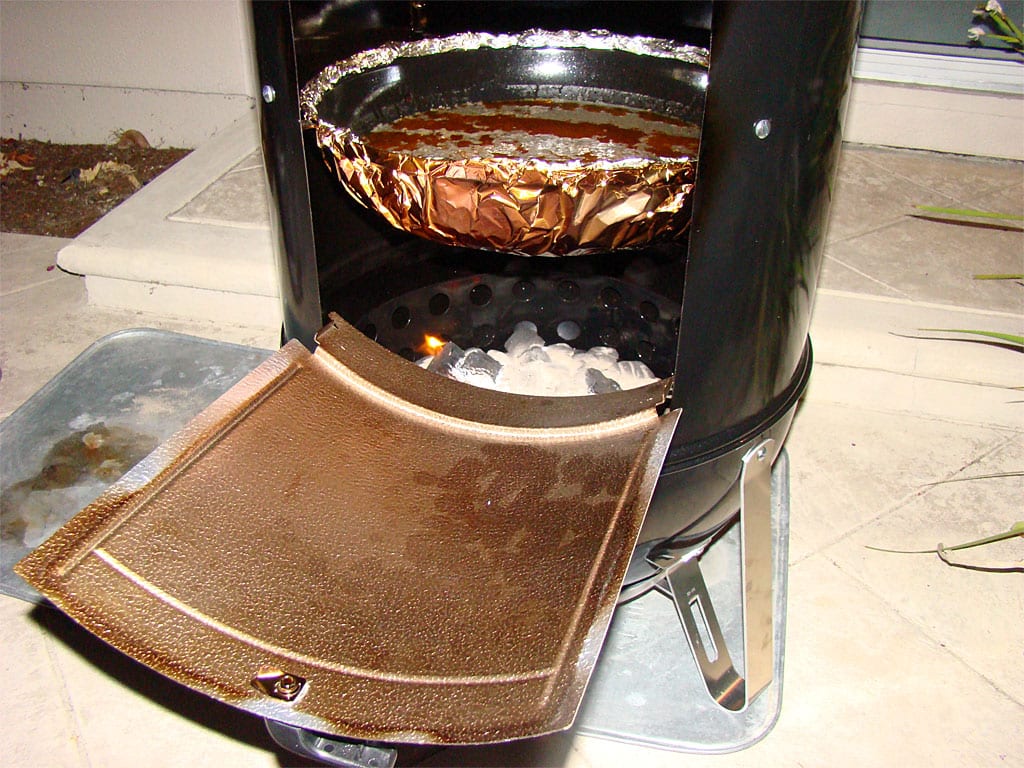
I fired the 22.5″ WSM using the Minion Method and a 9-pound bag of Kingsford Charcoal Briquets. I used a Weber chimney starter to light 40 briquettes and spread them over the unlit charcoal, added 3 chunks of apple wood, and put 2 gallons of water into the pan.
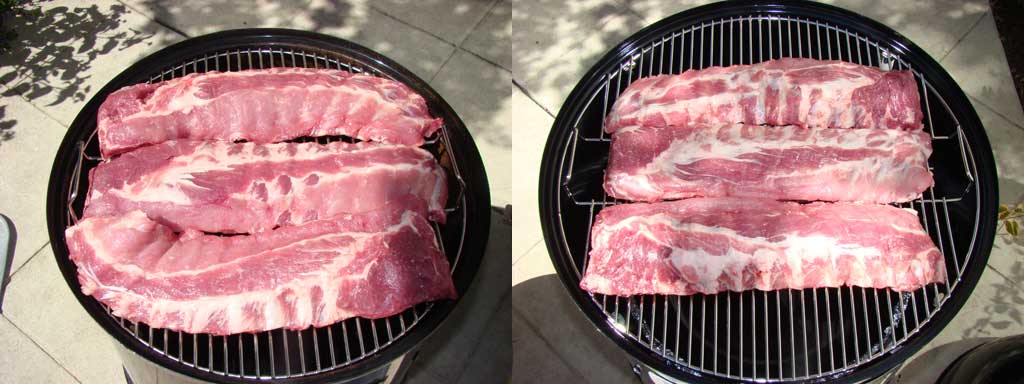
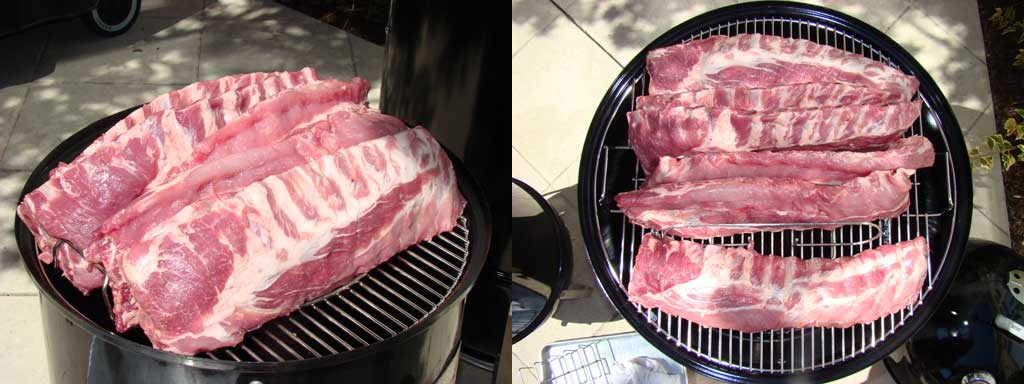
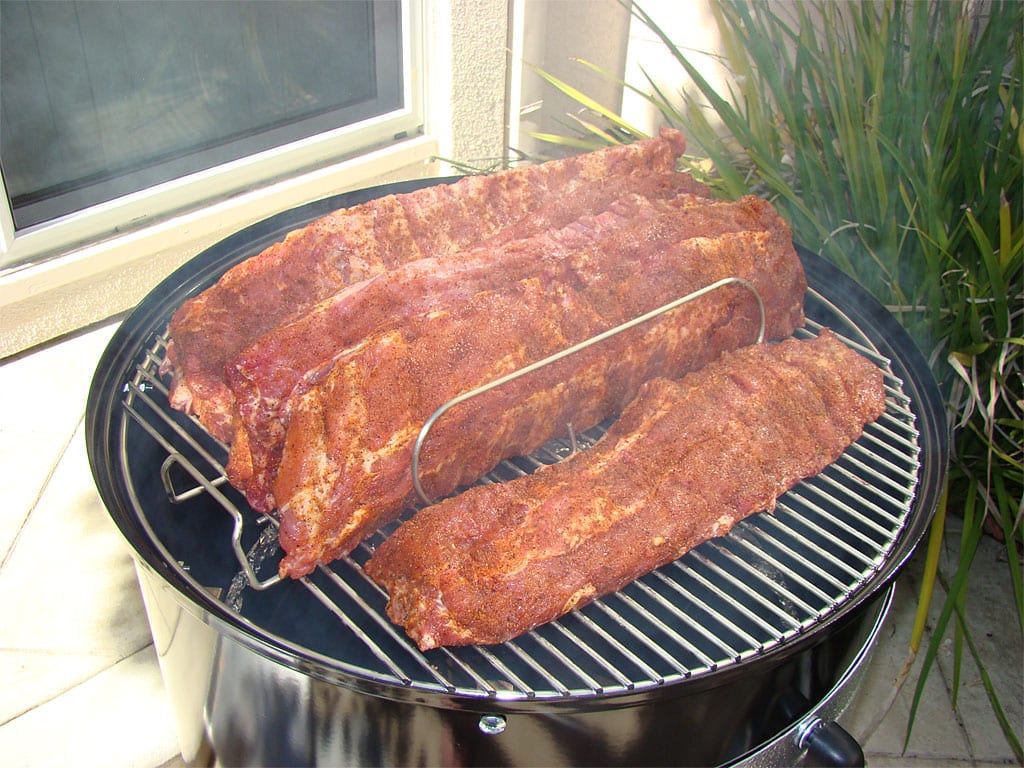
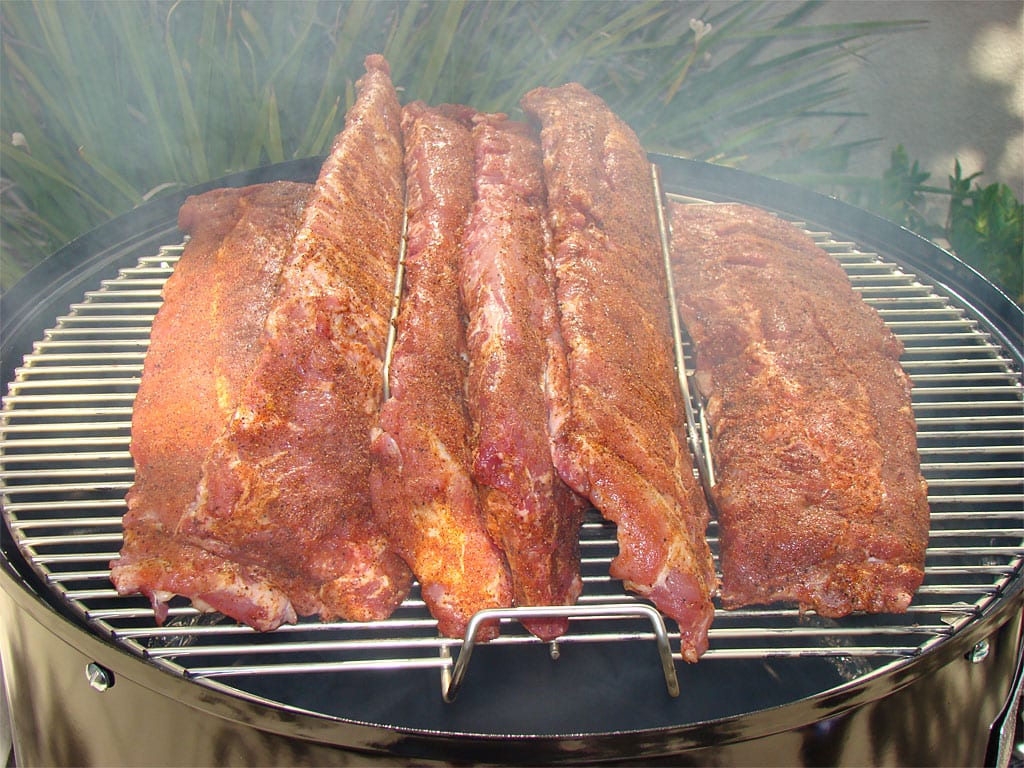
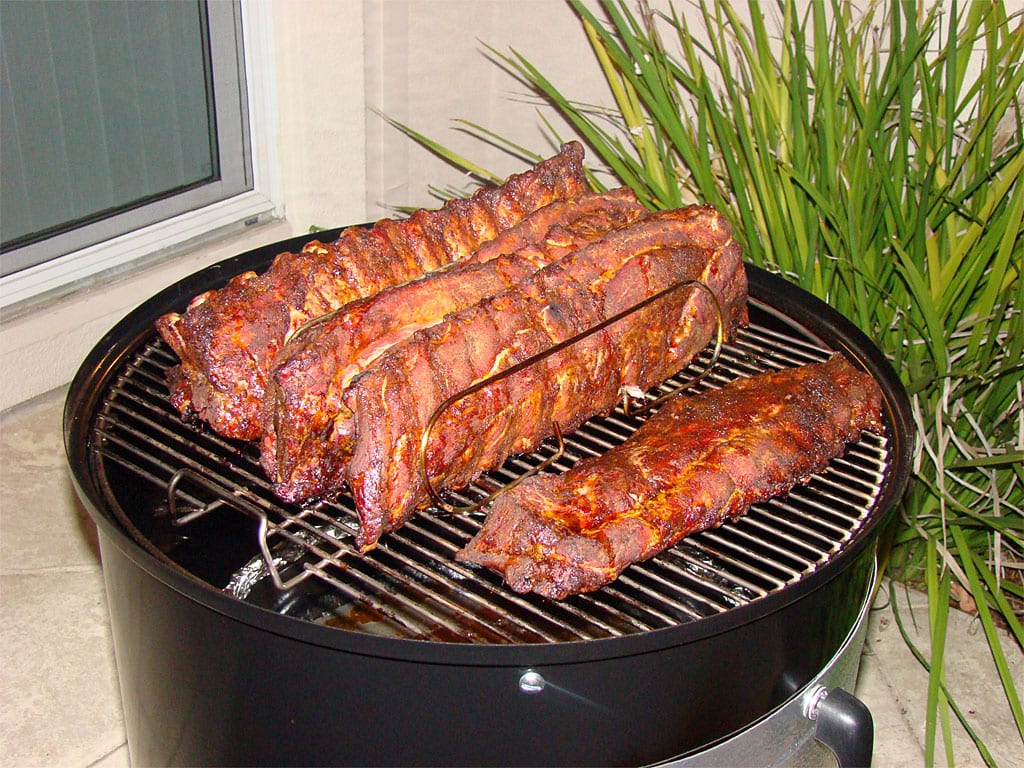
The 6 slabs of ribs were cooked on the top cooking grate using a Weber rib rack, 4 slabs in the rack and 2 slabs on either side, flat on the grate.
With all the vents wide open, it took about an hour for the cooker to rise to 225°F. I was able to easily control temperature over the next few hours until these ribs were tender.
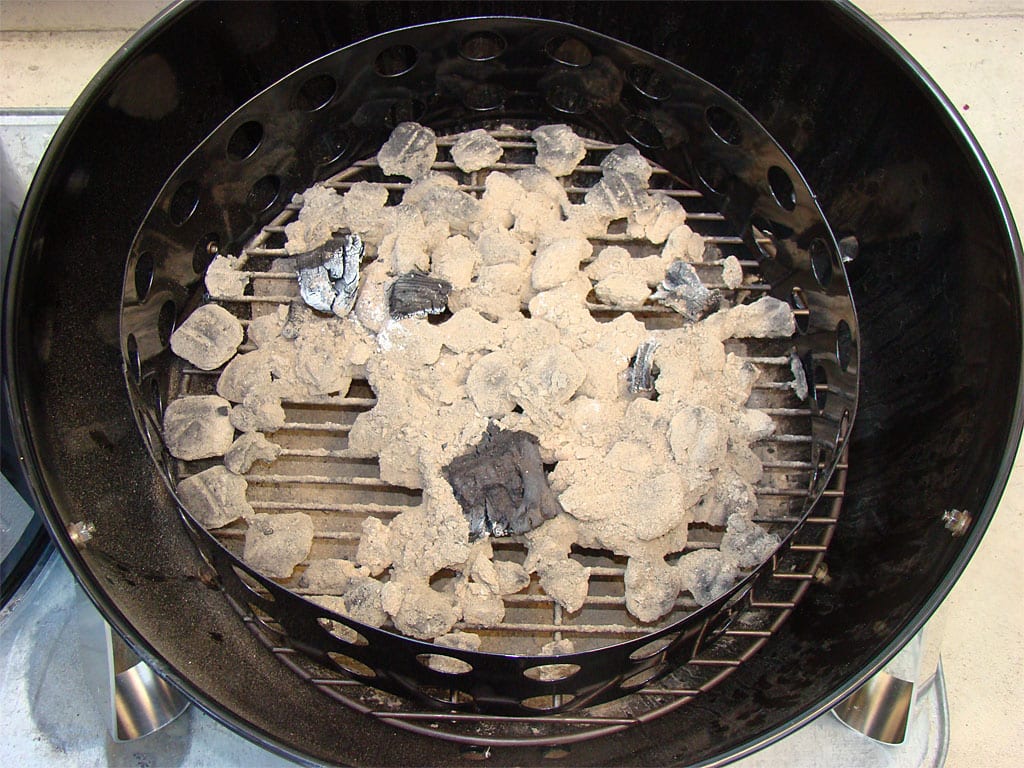
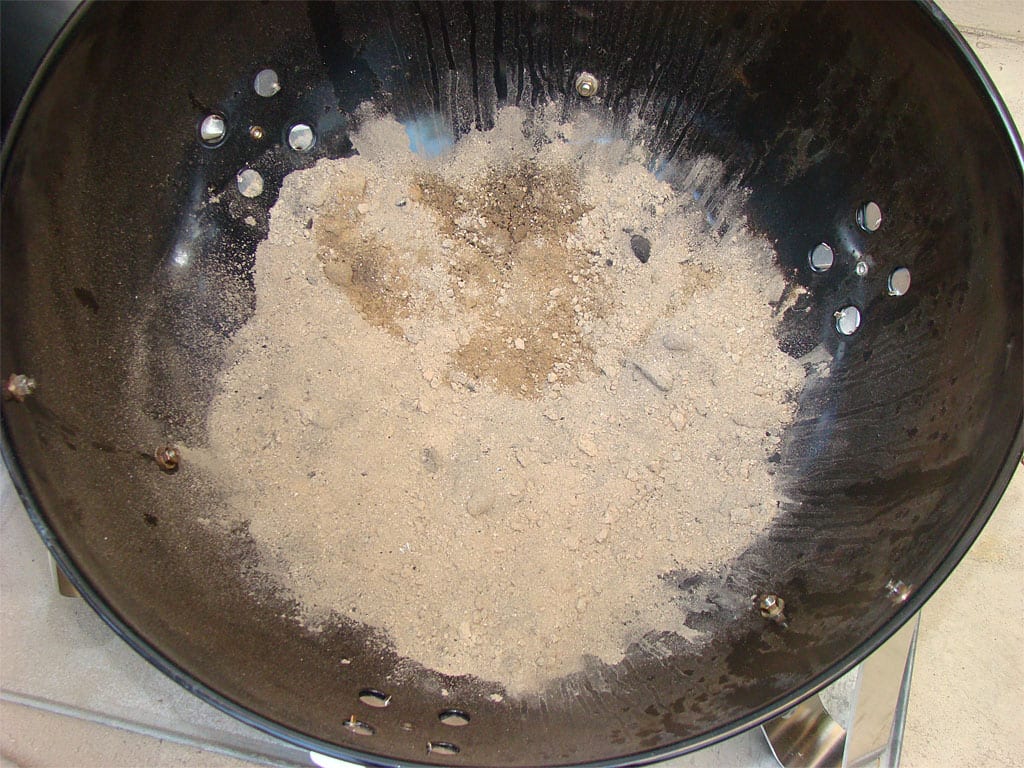
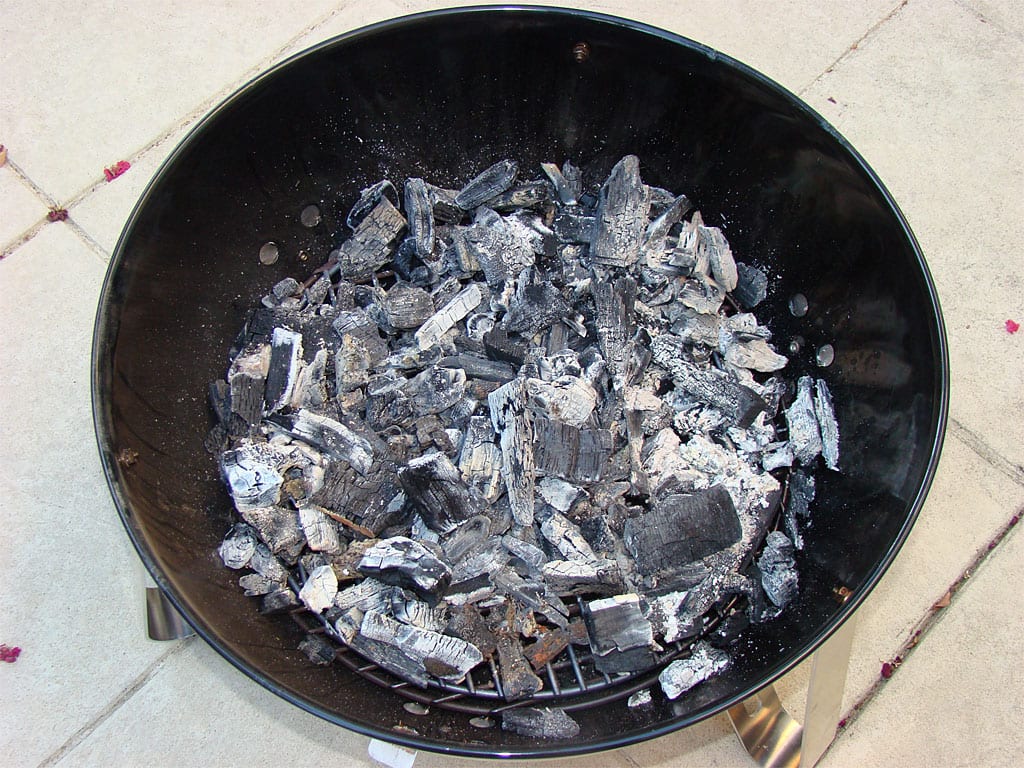
You will notice that there was very little fuel left over after I shut down the cooker. This may be due to the out-of-round condition exhibited by this pre-production unit. Having said that, I think this cooker generally uses more fuel because of its larger size and dampers.
The first 3 photos below show a comparison of ribs on the old WSM and the new 22.5″ WSM.
-
- 18.5″ left, 22.5″ right
-
- 18.5″ left, 22.5″ right
-
- 18.5″ left, 22.5″ right
Test Cook #2
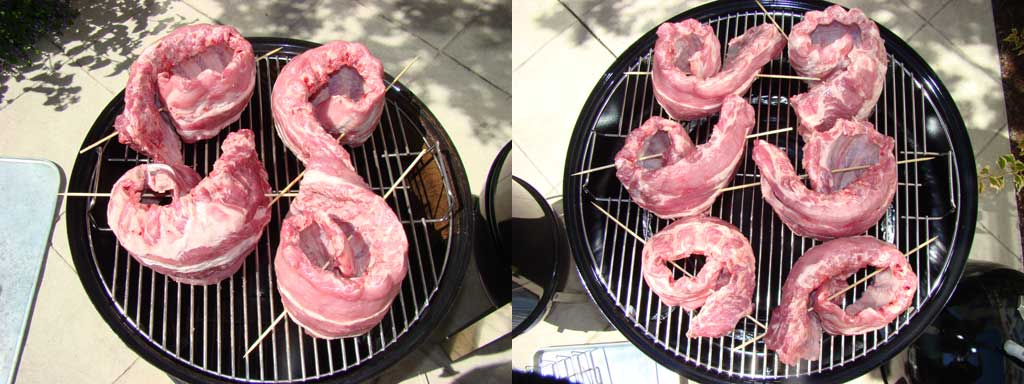
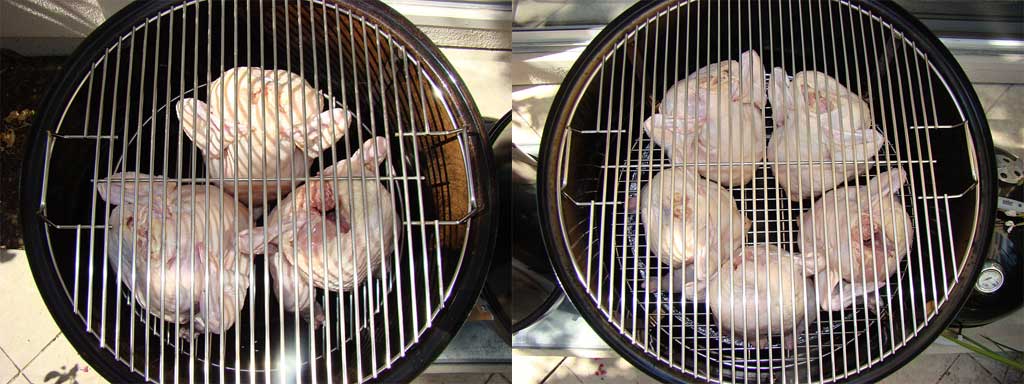
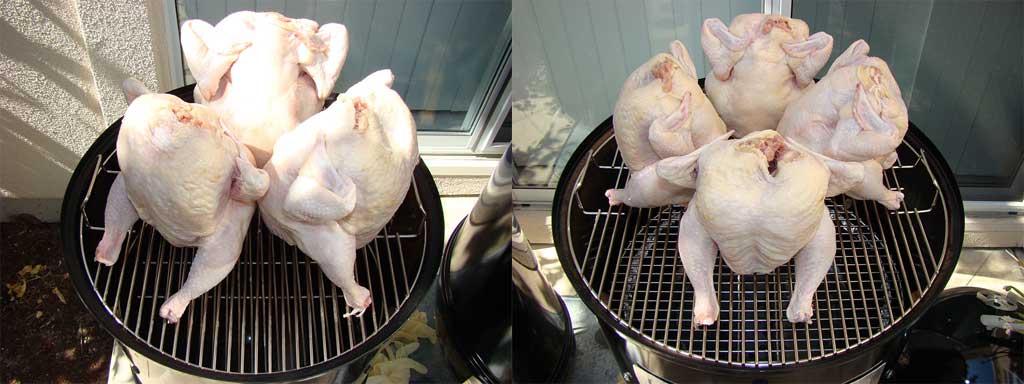
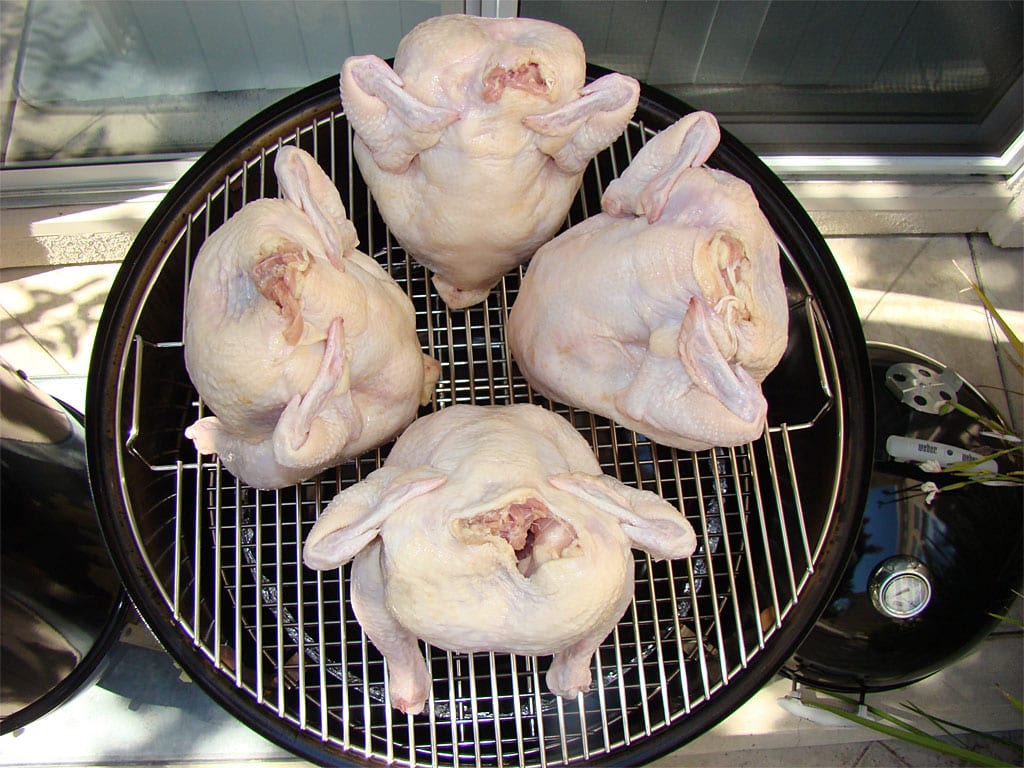
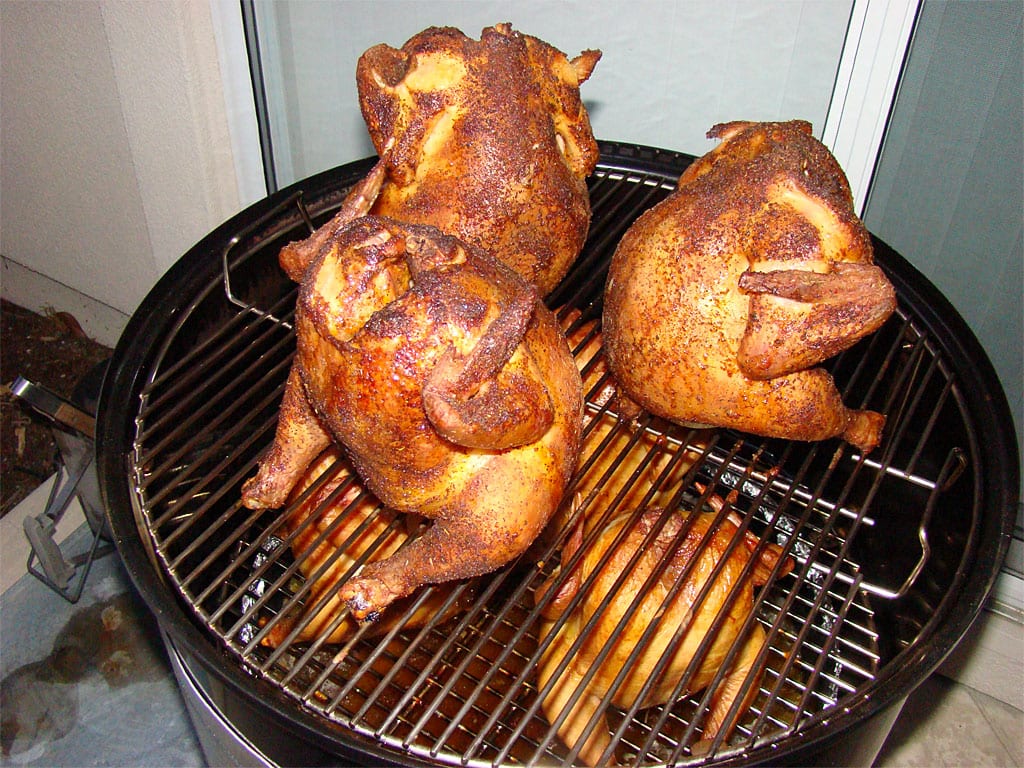
6 Beer Can Chickens – About 5 pounds each, total weight 30 pounds
August 15, 2008
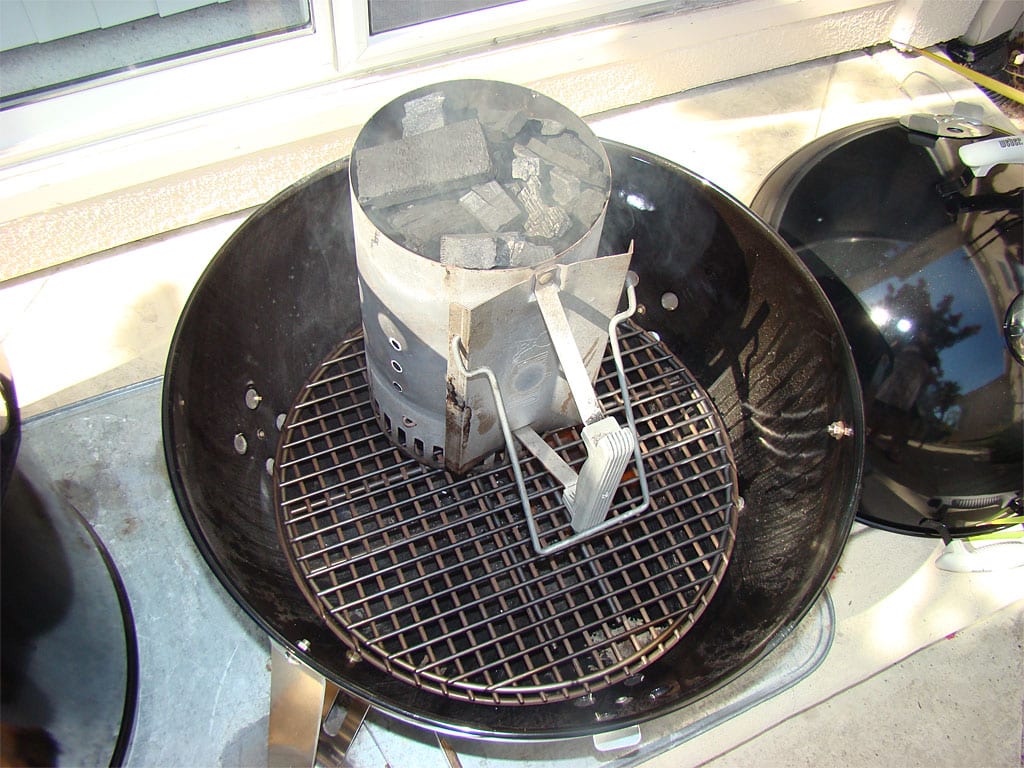
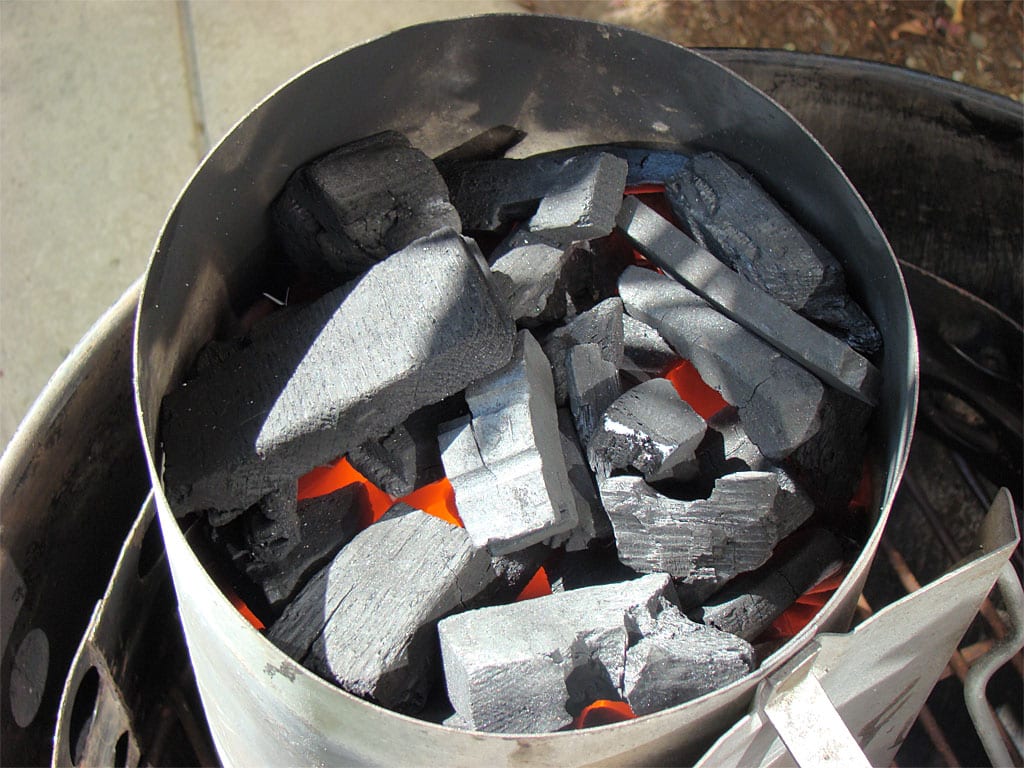
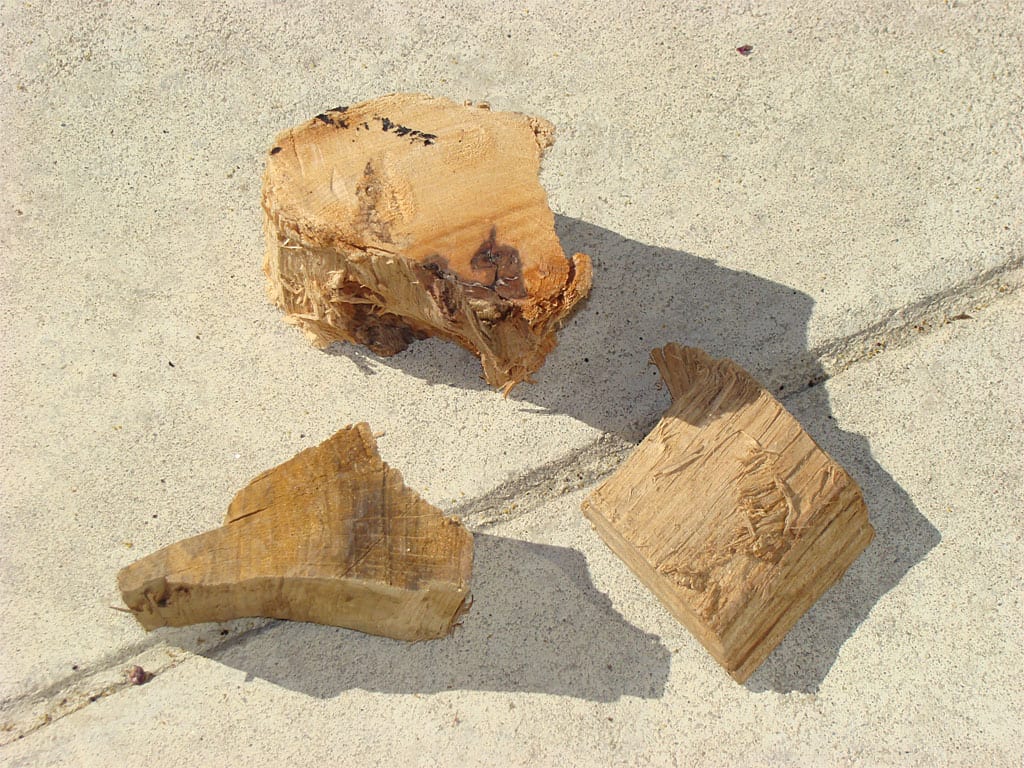
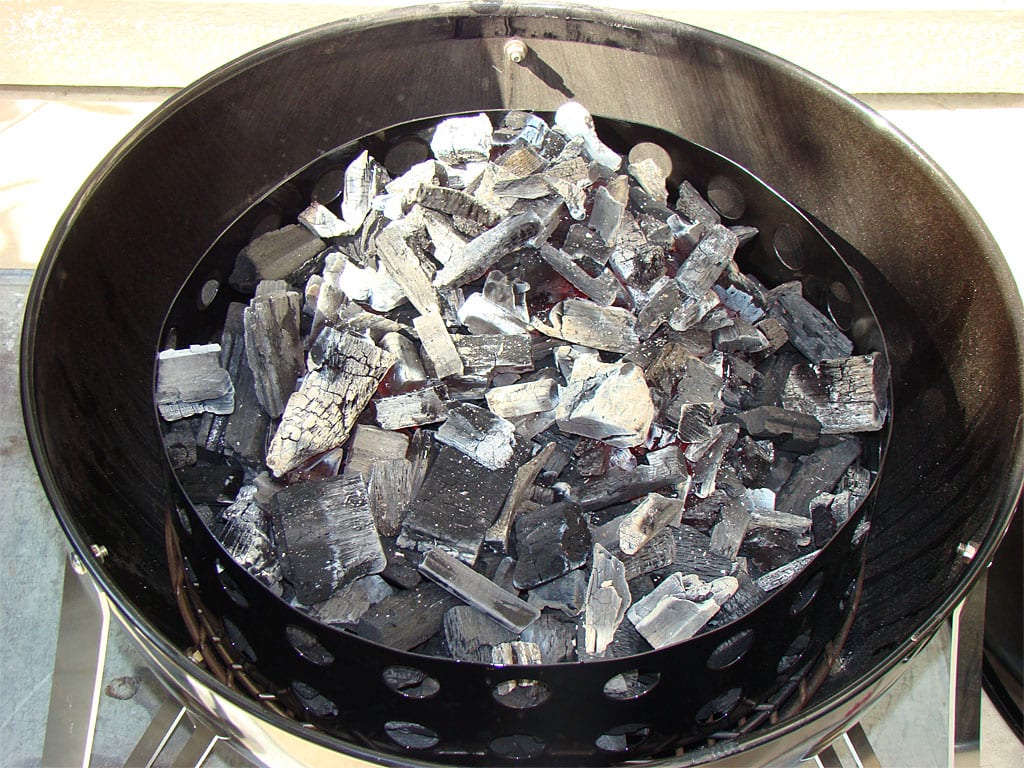
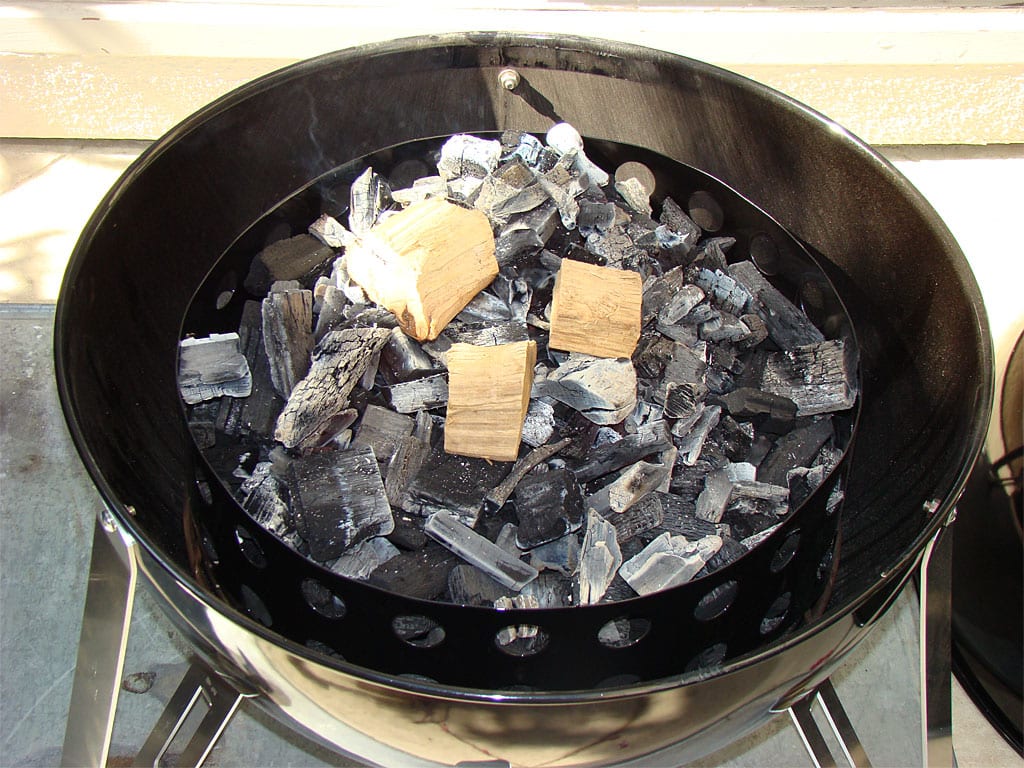
I fired the 22.5″ WSM using 7 pounds of Duraflame lump charcoal. I spread a hot Weber chimney starter full of lump over the unlit lump, added 3 chunks of cherry wood, and put 2 gallons of water into the pan.
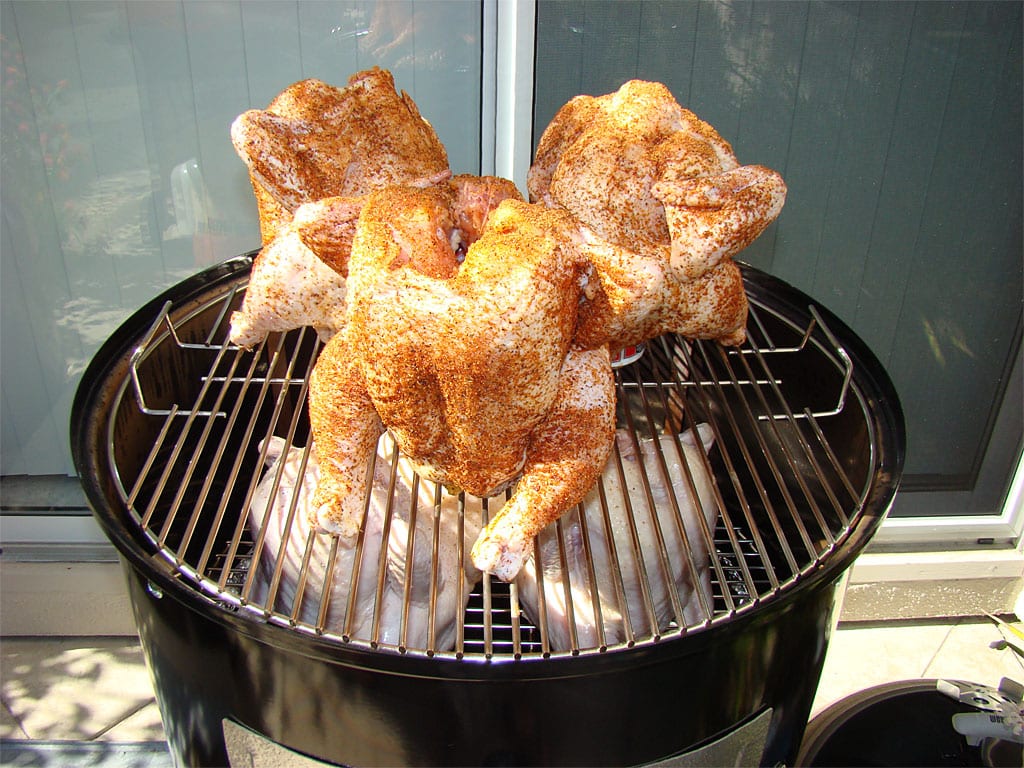
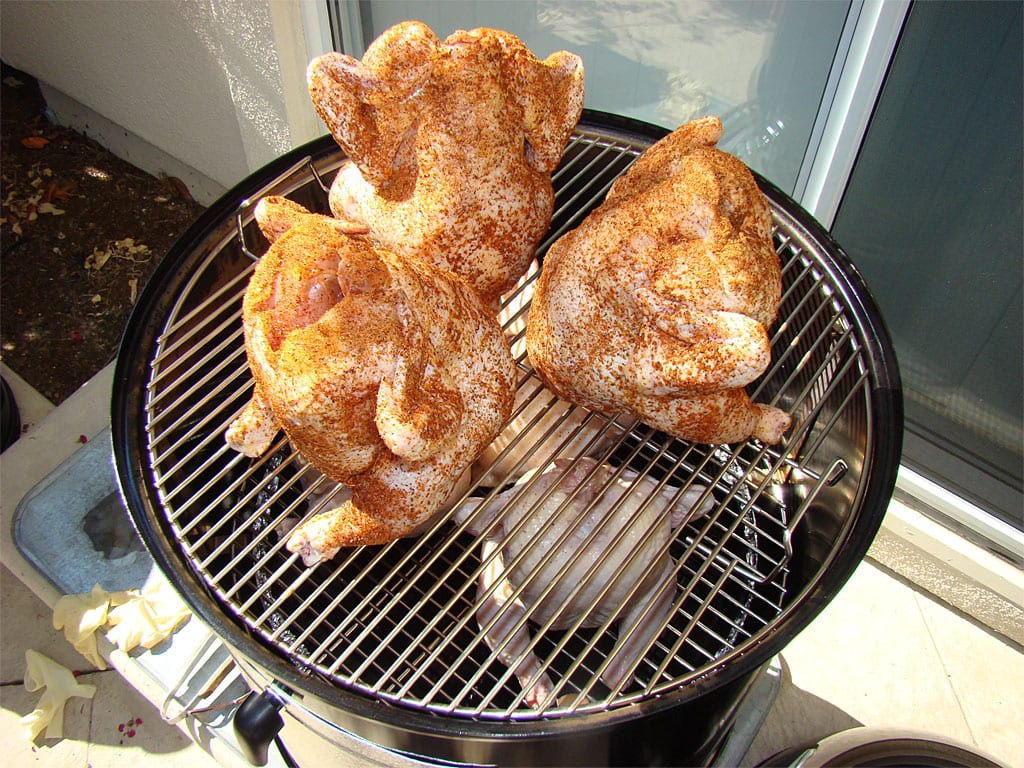
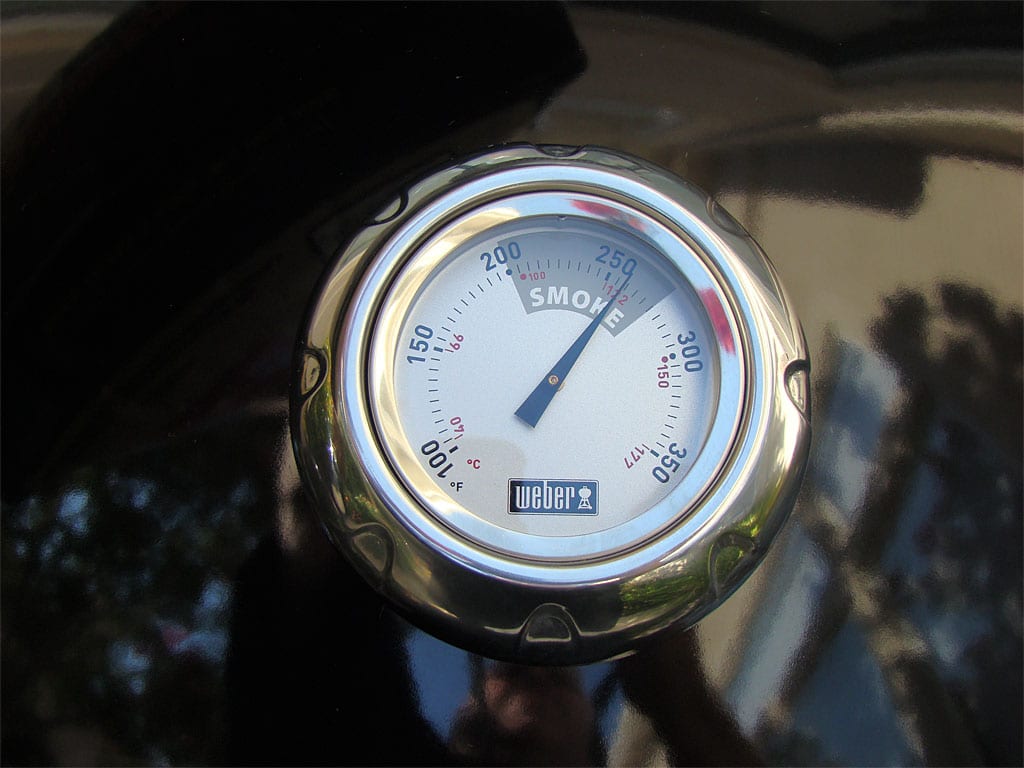
Three chickens went onto both the top and bottom cooking grates. The cooker immediately jumped past 250°F, and even with all the bottom vents fully closed, the cooker ran in the 260-270°F range for 90 minutes before drifting down to 245-250°F and stayed there 2-1/2 hours until these chickens were done. I never did open the bottom vents.
The first 2 photos below show a comparison of beer can chicken on the old WSM and the new 22.5″ WSM.
-

- 18.5″ left, 22.5″ right Chickens touch top grate on 18.5″
-

- 18.5″ left, 22.5″ right
Test Cook #3
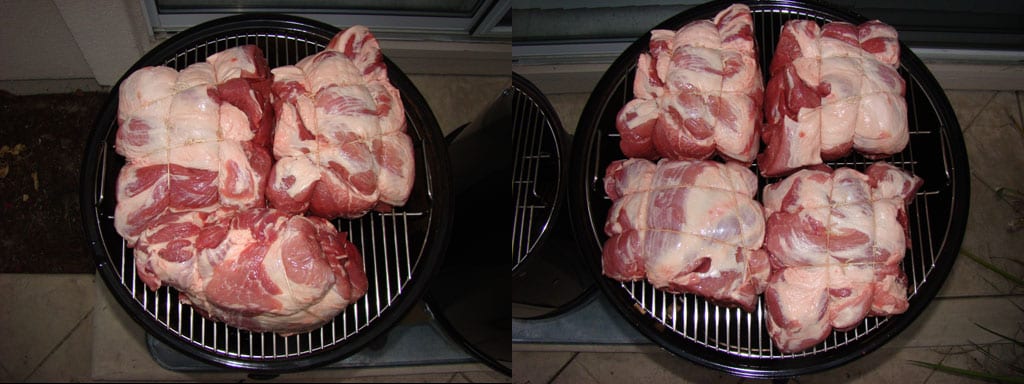
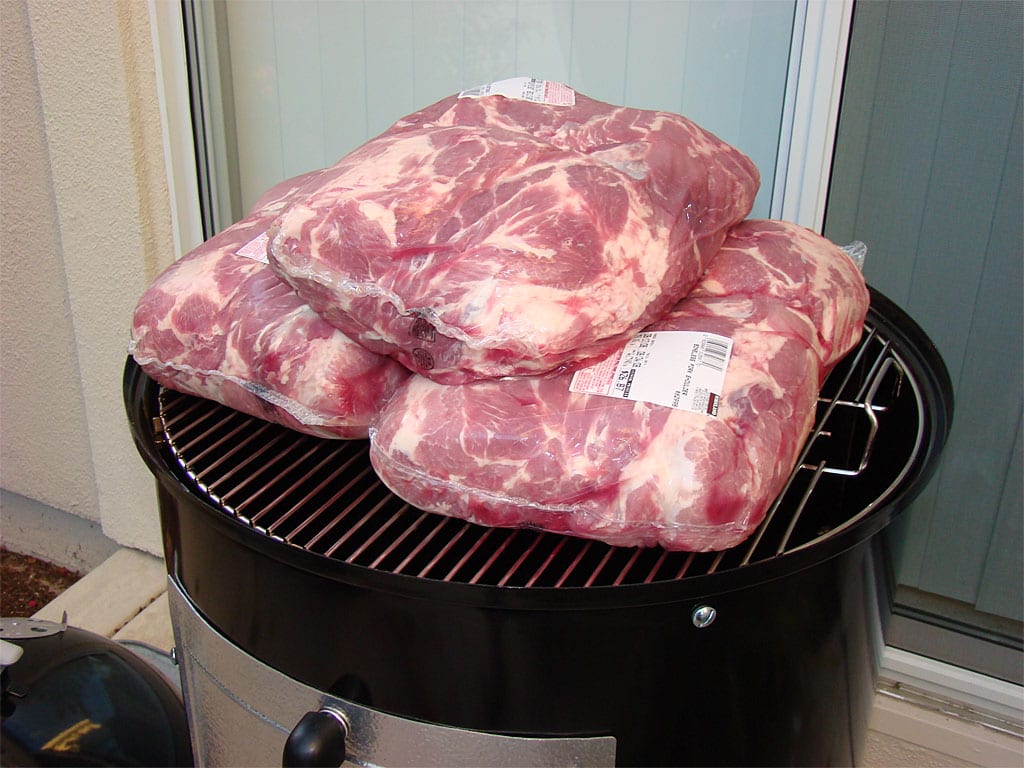
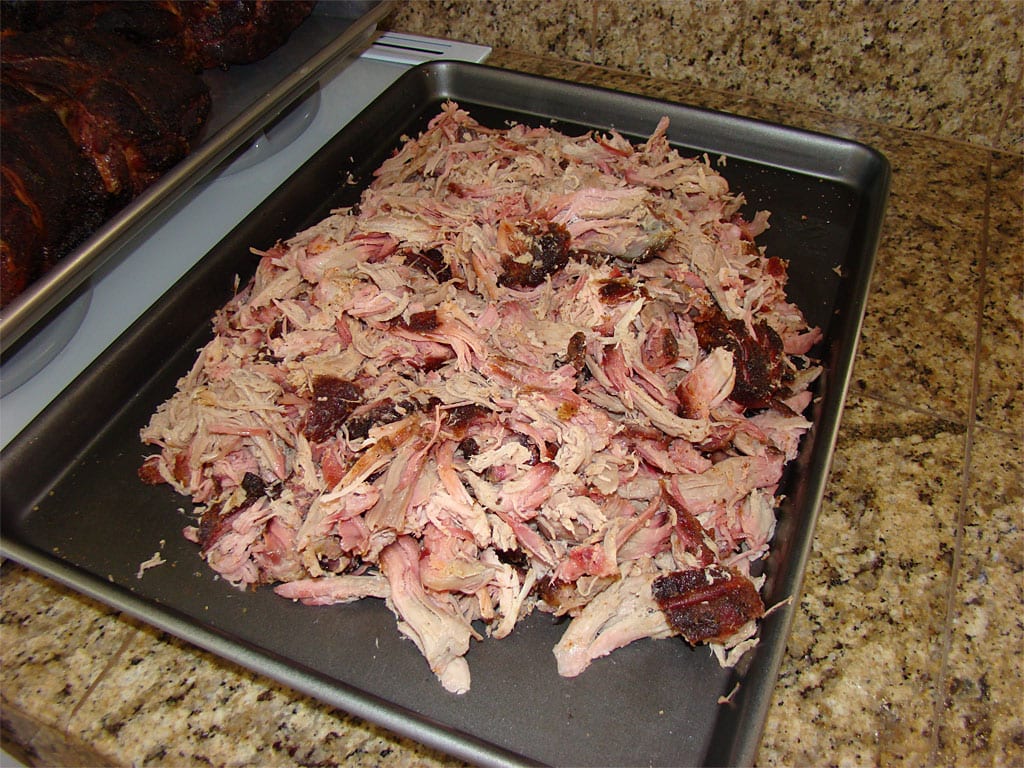
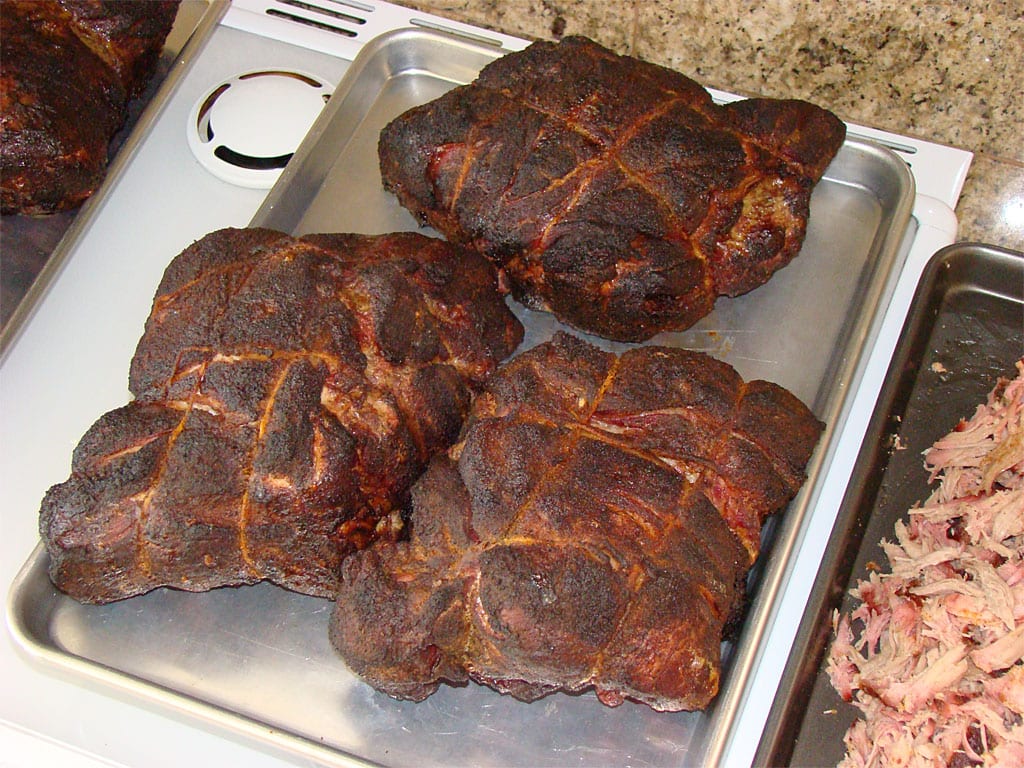
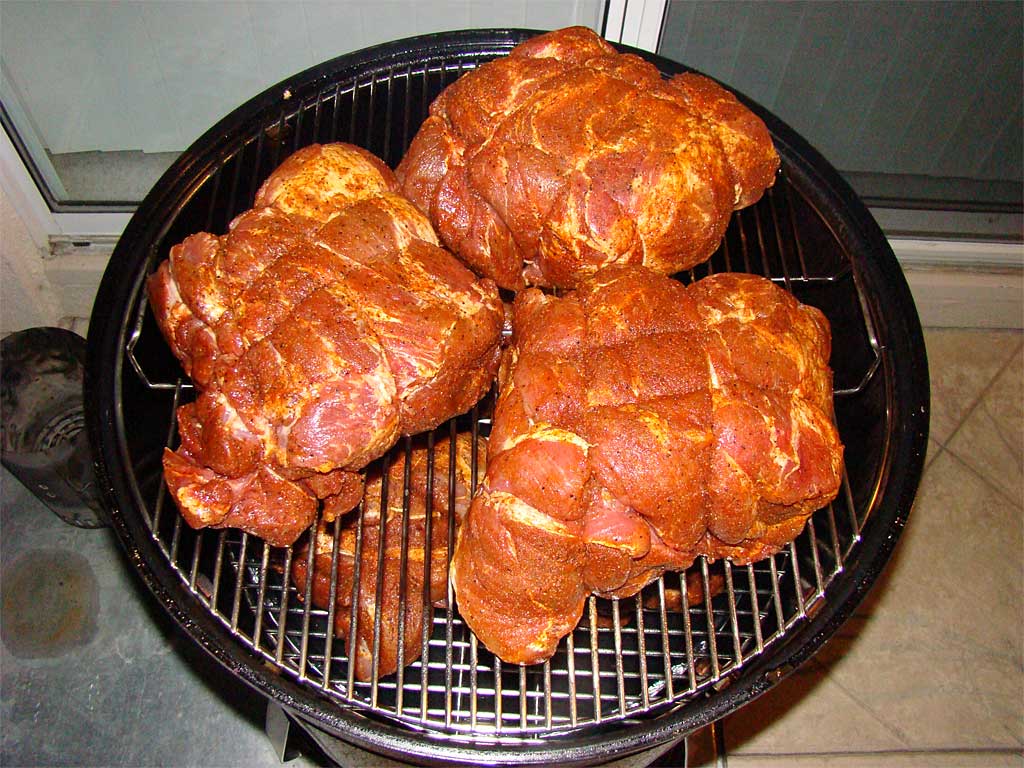
6 Pork Butts – Total untrimmed weight approximately 45 pounds
August 22, 2008
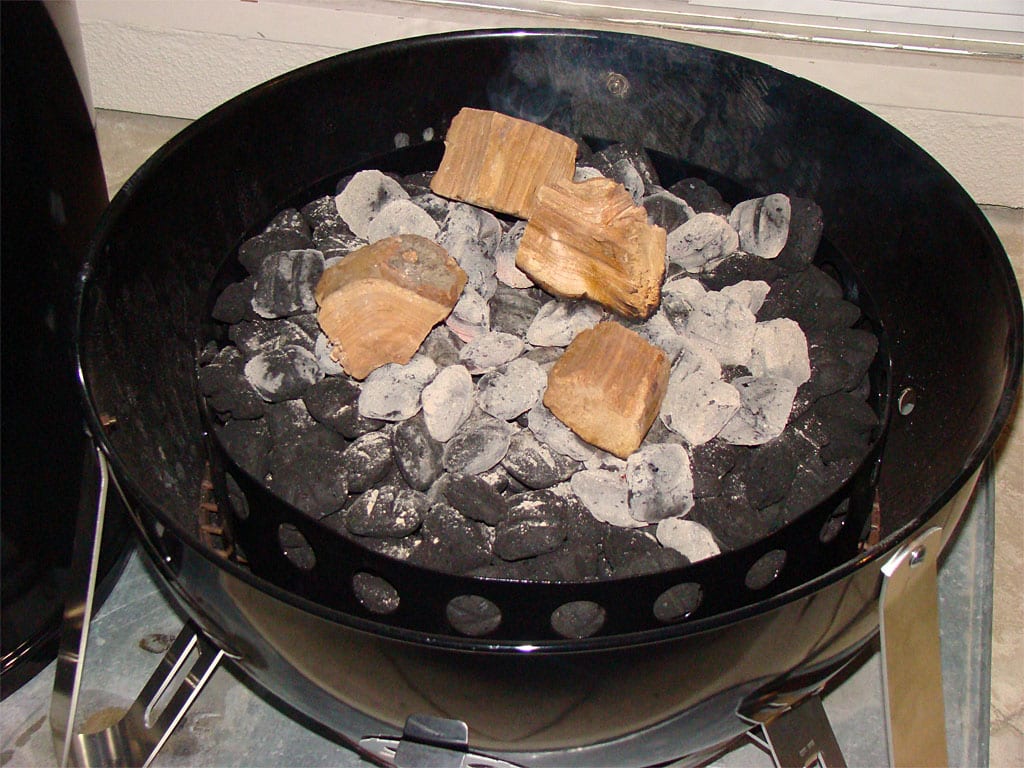
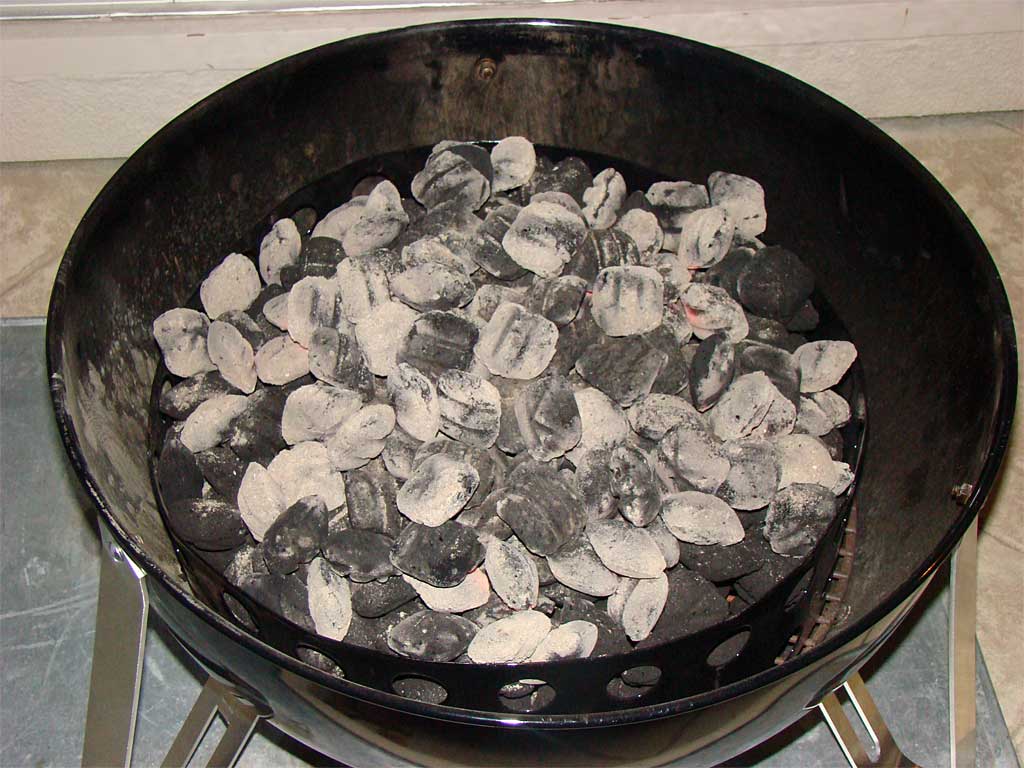
I fired the 22.5″ WSM using the Minion Method and a 21.6-pound bag of Kingsford Charcoal Briquets. I used a Weber chimney starter to light 50 briquettes and spread them over the unlit charcoal, added 4 chunks of apple wood, and put 2 gallons of water into the pan.
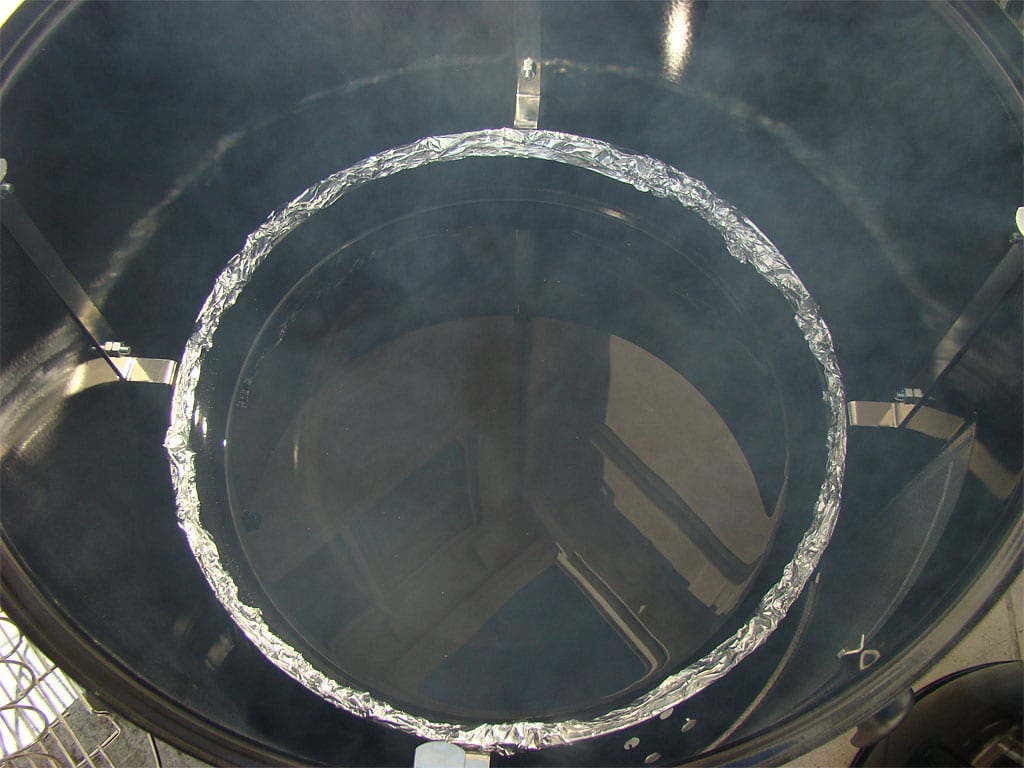
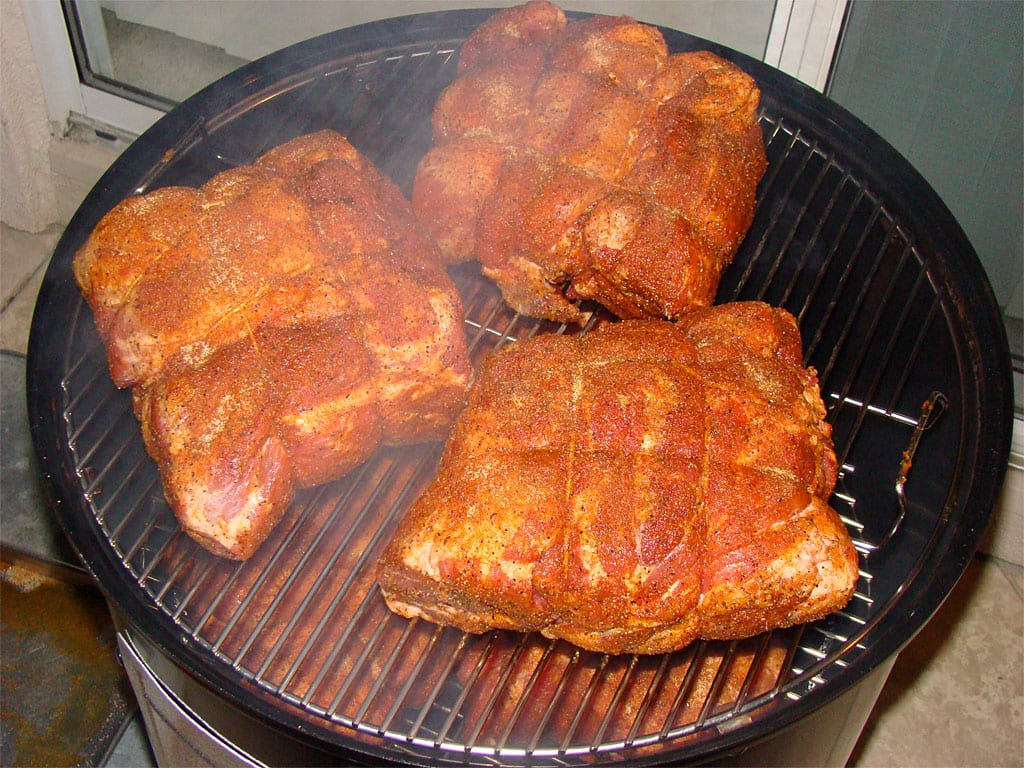
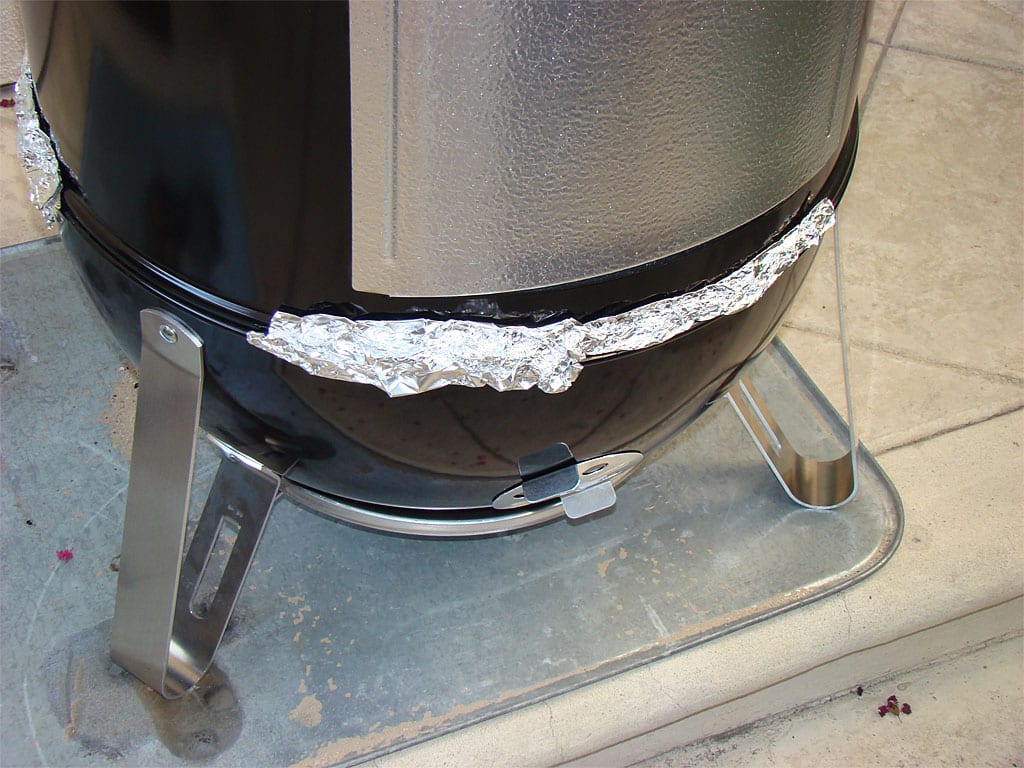
Three pork butts went onto both the top and bottom cooking grates. As with the ribs before and with all the vents wide open, it took almost an hour for the cooker to rise to 230°F. The cooker ran in the 225-250°F range easily for another 5 hours, but during the remaining 5-1/2 hours the cooker languished around 200°F, even with all the bottom vents wide open, stirring the coals twice to rejuvenate them, and having used foil to fill the out-of-round gaps at the beginning of the cook.
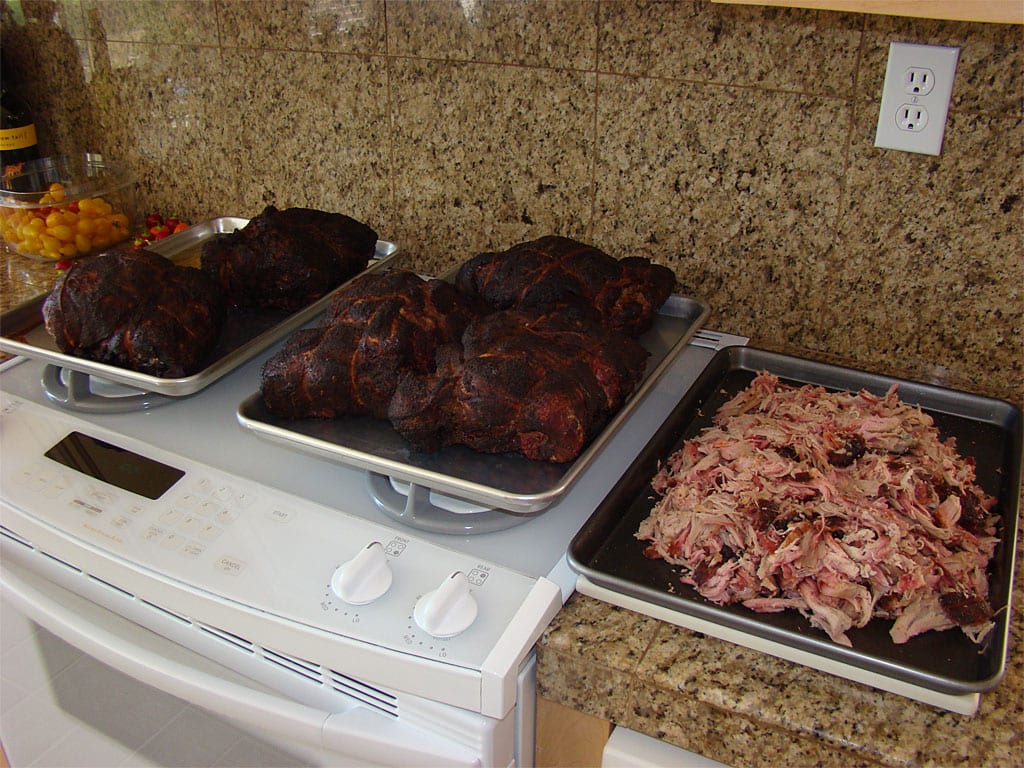
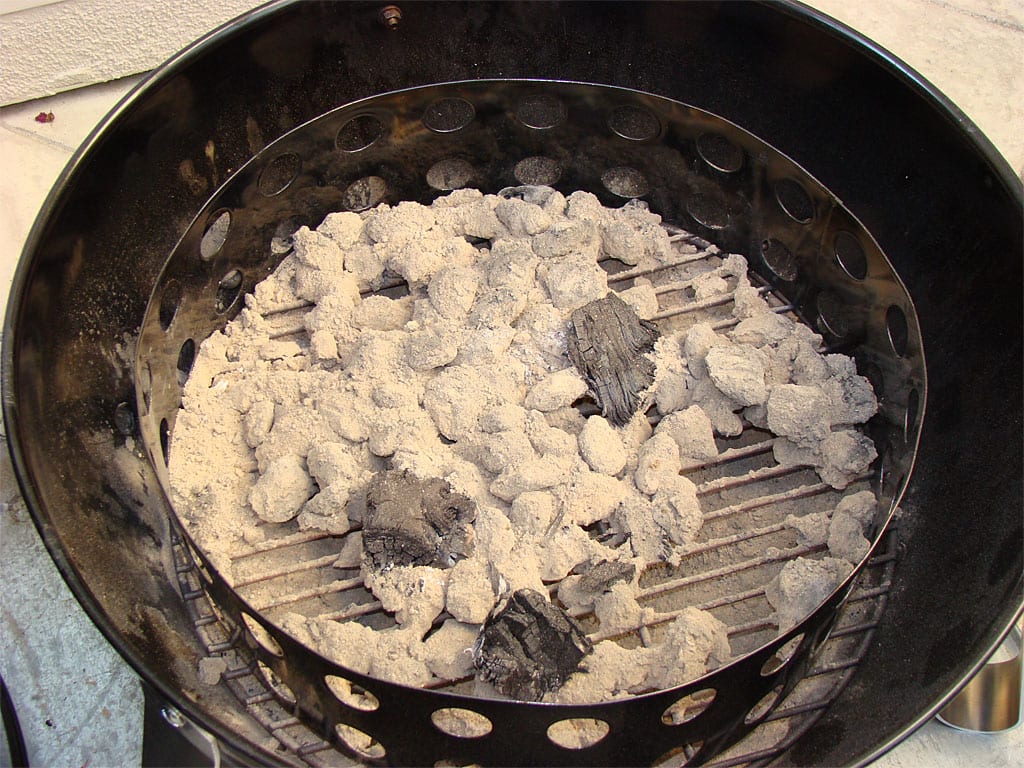
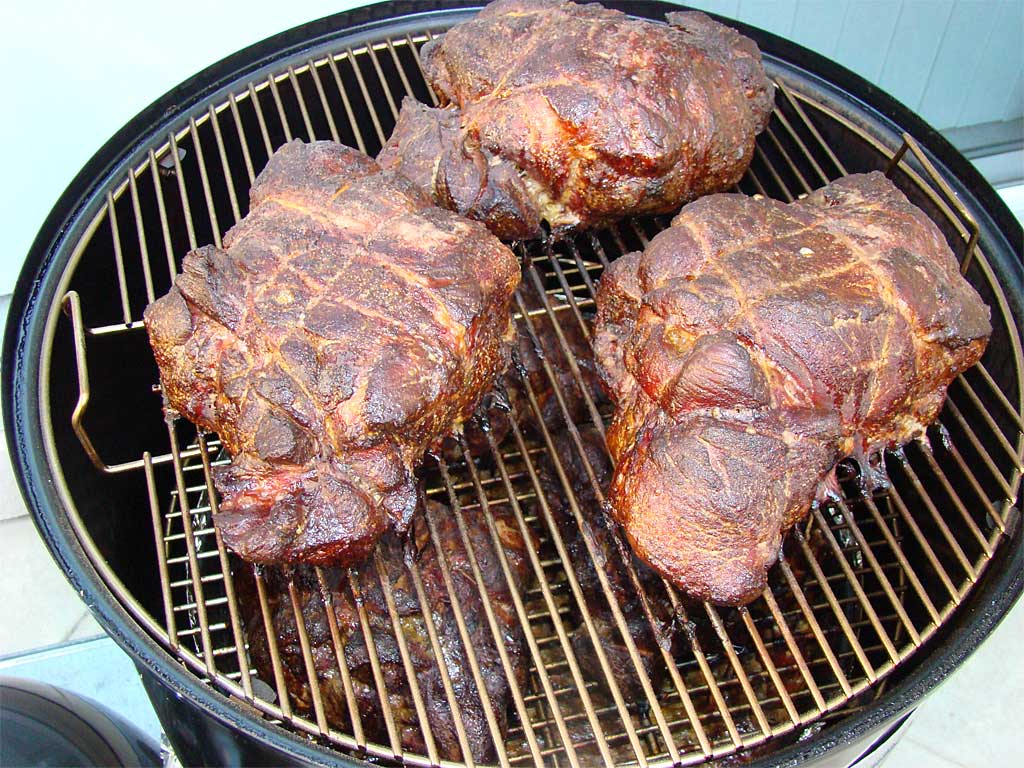
I was able to finish the butts successfully, but with the cooker temperature drifting below 200°F and with very little fuel left. I need to explore different methods to see how to get more than 11-1/2 hours of cooking time.
The first photo below show a comparison of pork butts on the old WSM and the new 22.5″ WSM.
-
- 18.5″ left, 22.5″ right
Test Cook #4
6 Pork Butts – Total untrimmed weight approximately 45 lbs.
September 5, 2008
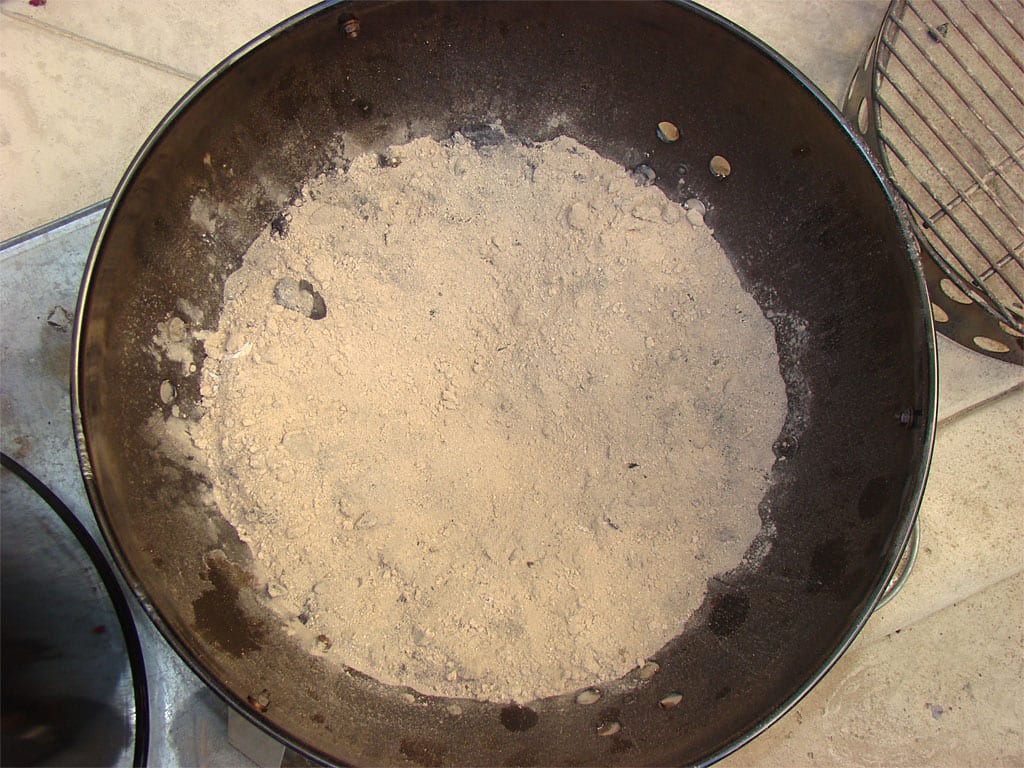
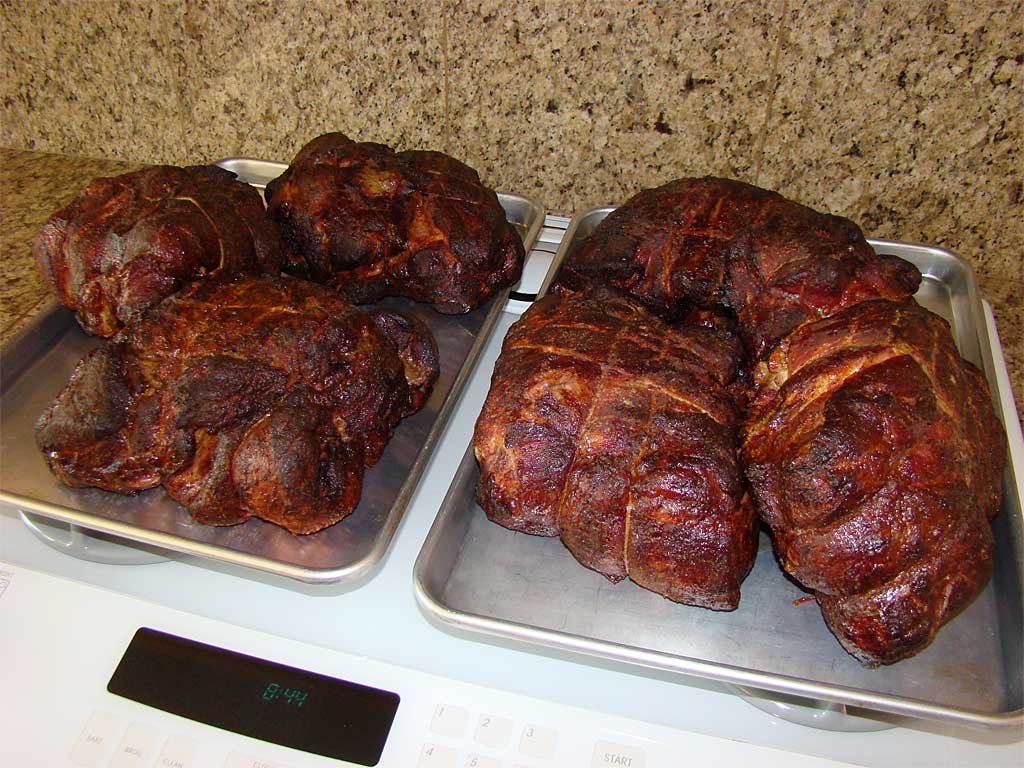
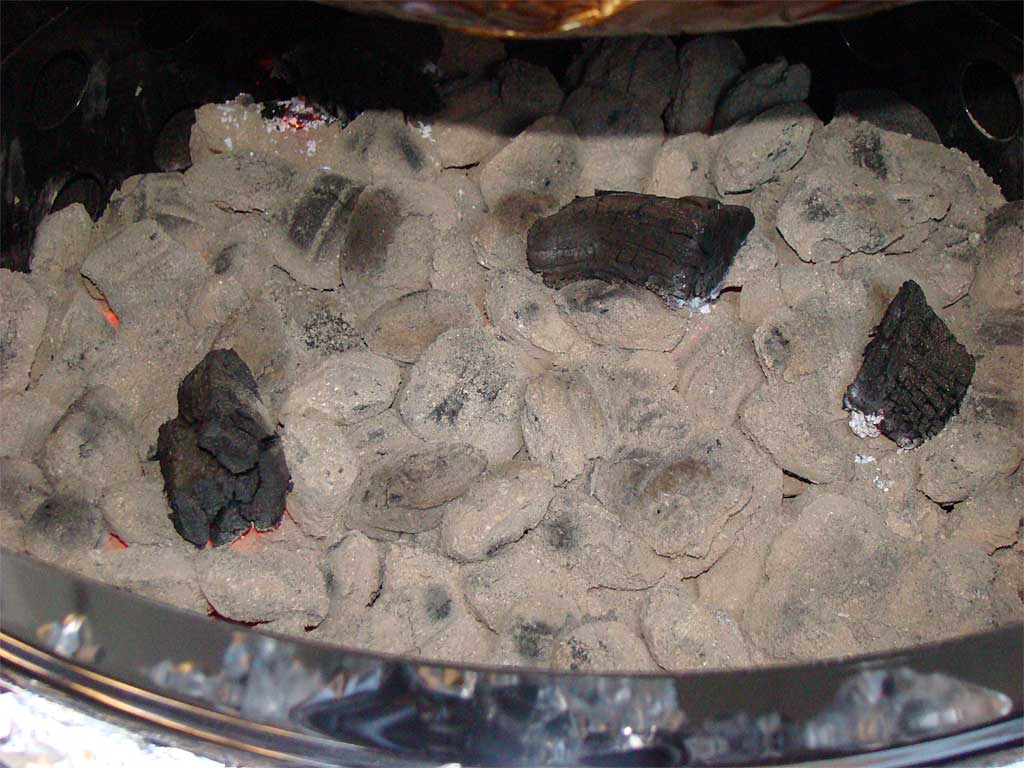
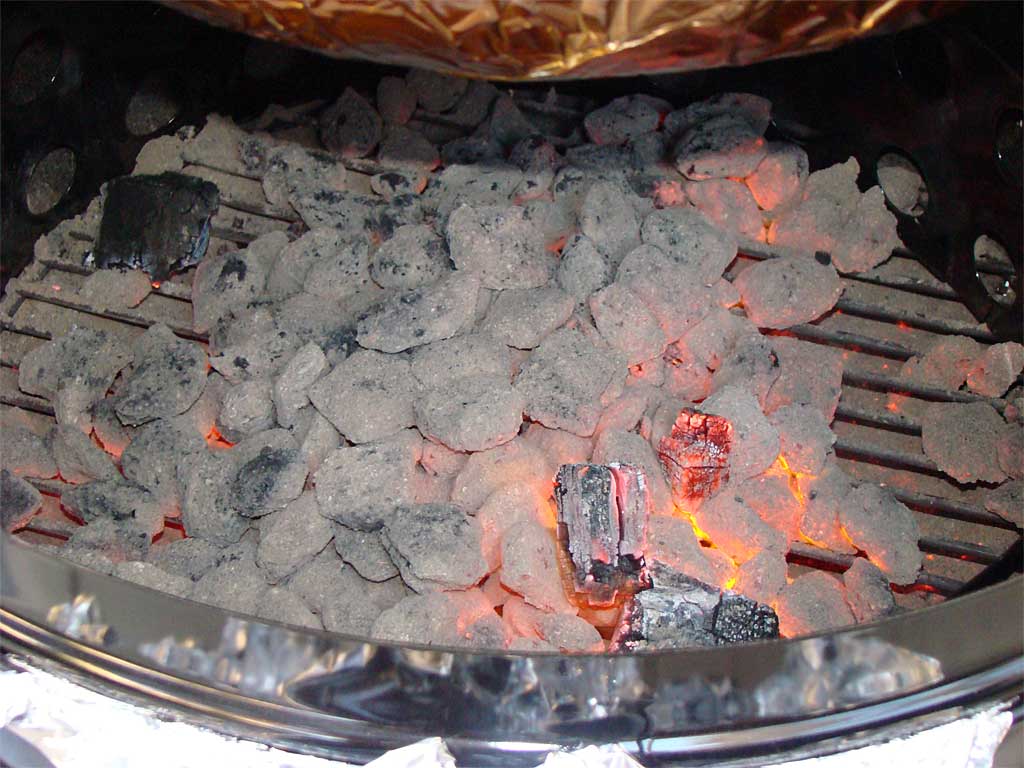
My fourth test cook was another 45 pounds of pork butt. I wanted to see if I could get more than 11 hours out of a big bag of Kingsford. This time I used 2 gallons of hot water in the pan instead of cool water. It was a calm, warm night and never went below 63°F outside.
Someone at Weber told me they got 14 hours of cooking time by starting with a lot of hot Kingsford, setting the top vent just 3/4 open, and closing all the bottom vents for the entire cook. So, I spread a full Weber chimney starter of hot coals over the remainder of a 21.6-pound bag of Kingsford and set the vents as described above. I used foil to plug the gaps in the out-of-round condition of the cooker. The meat sat at room temperature for 1 hour before going into the cooker.
I could not get the cooker temperature over 200°F. After about 90 minutes of this, I opened just 1 bottom vent 100% and it ran at 225°F for a long time. Toward the end of the cook, I had 2 bottom vents open 100%.
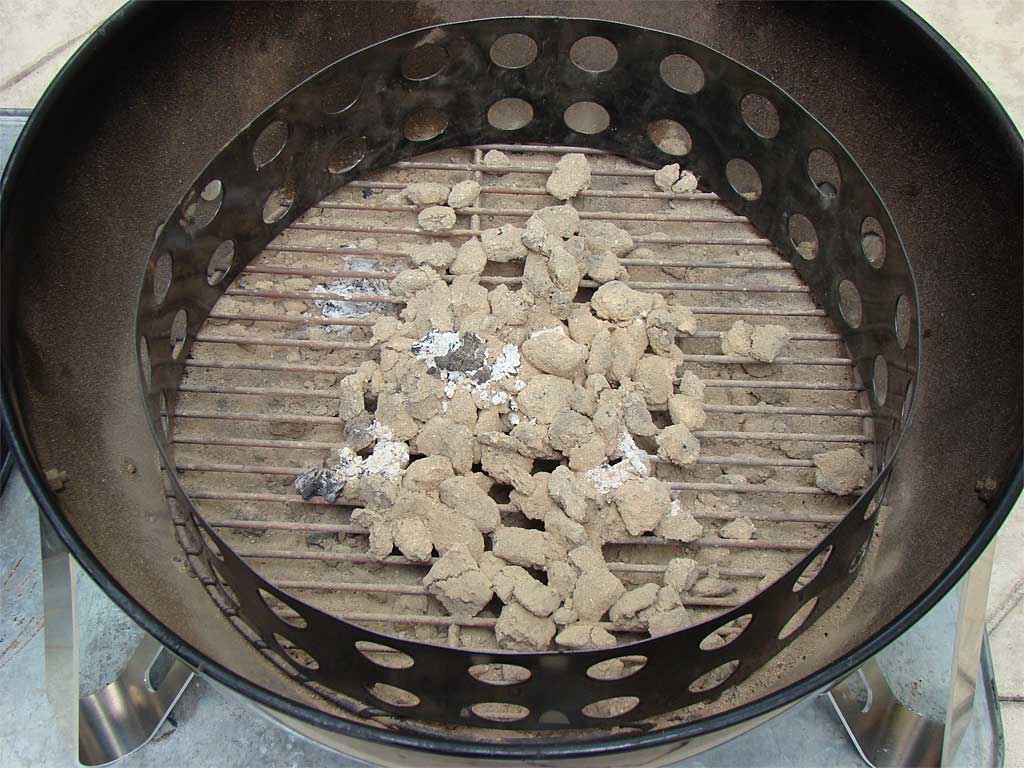
Once again, at about 11 hours the cooker was dropping to 200-210°F. The meat was done at 11-1/2 hours. I shook loose the ashes to reveal less than a chimney-full of partial briquettes in various stages of burning.
Test Cook #5
2 Beef Briskets – Total untrimmed weight approximately 31 lbs.
September 12, 2008
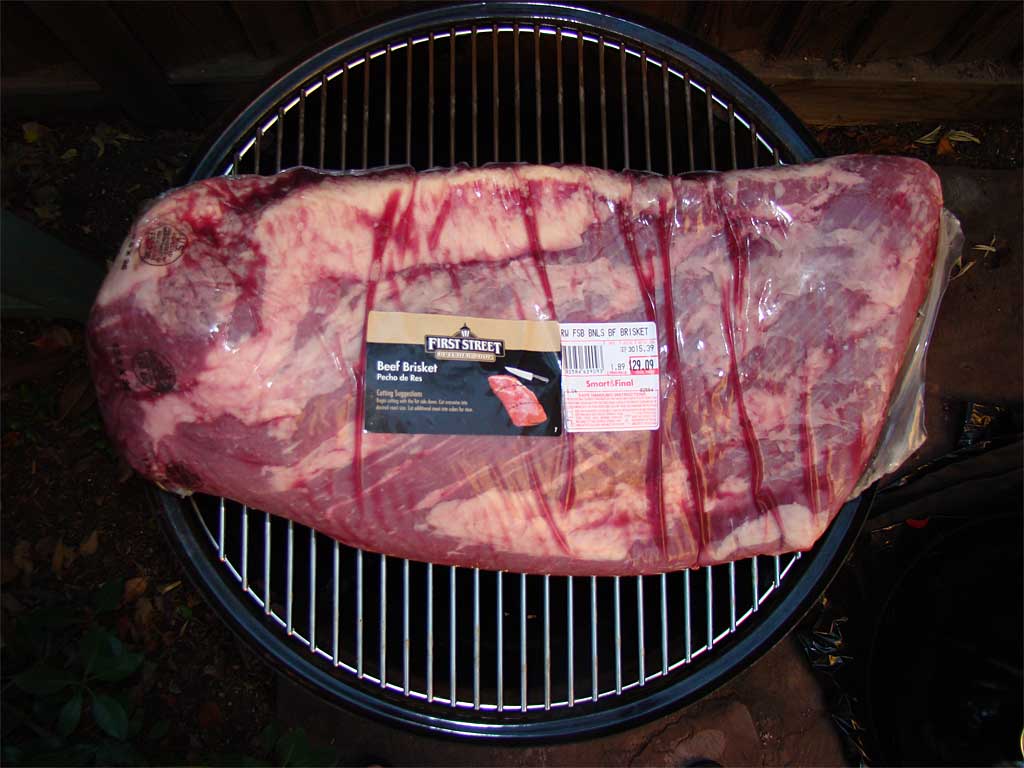
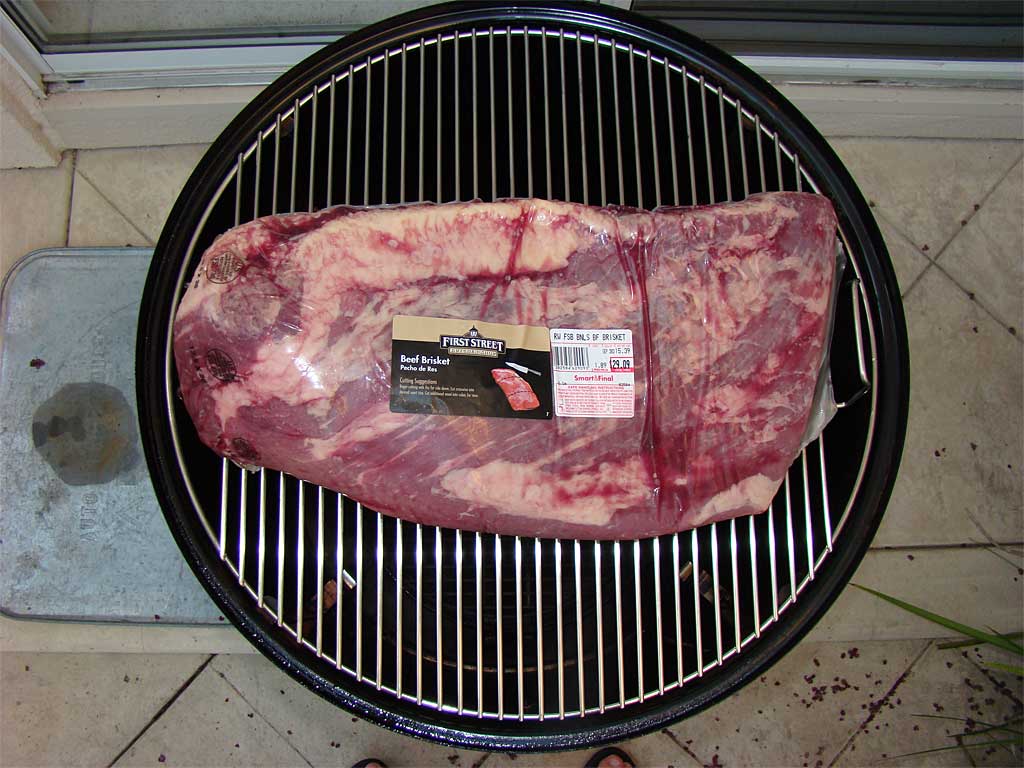
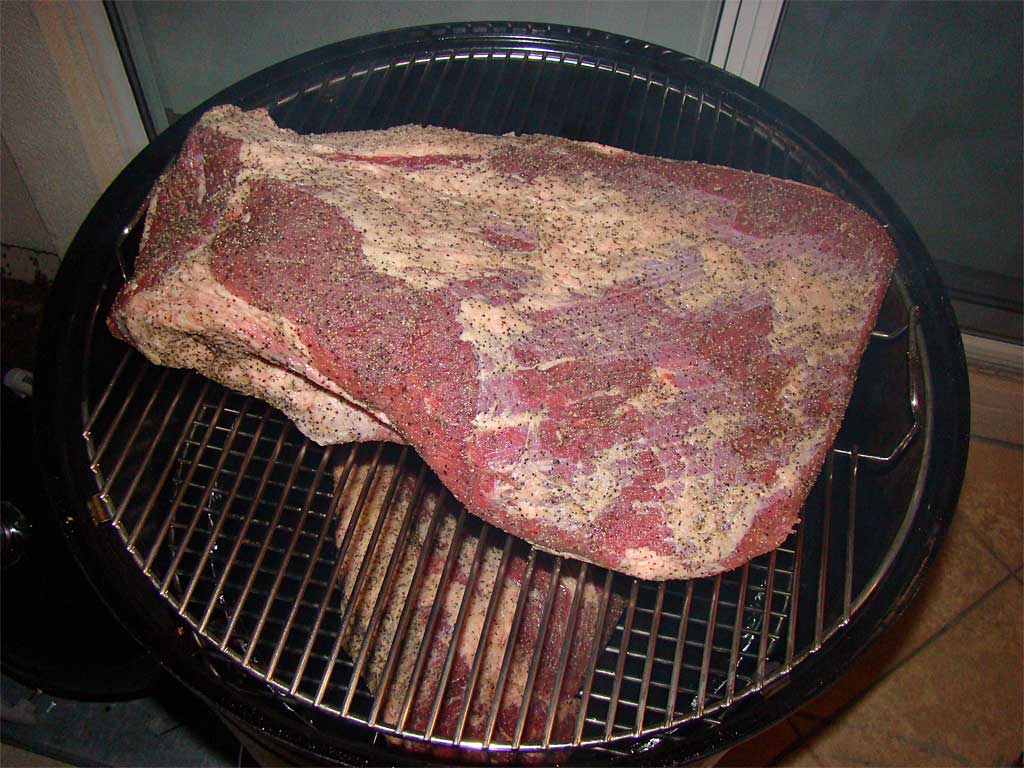
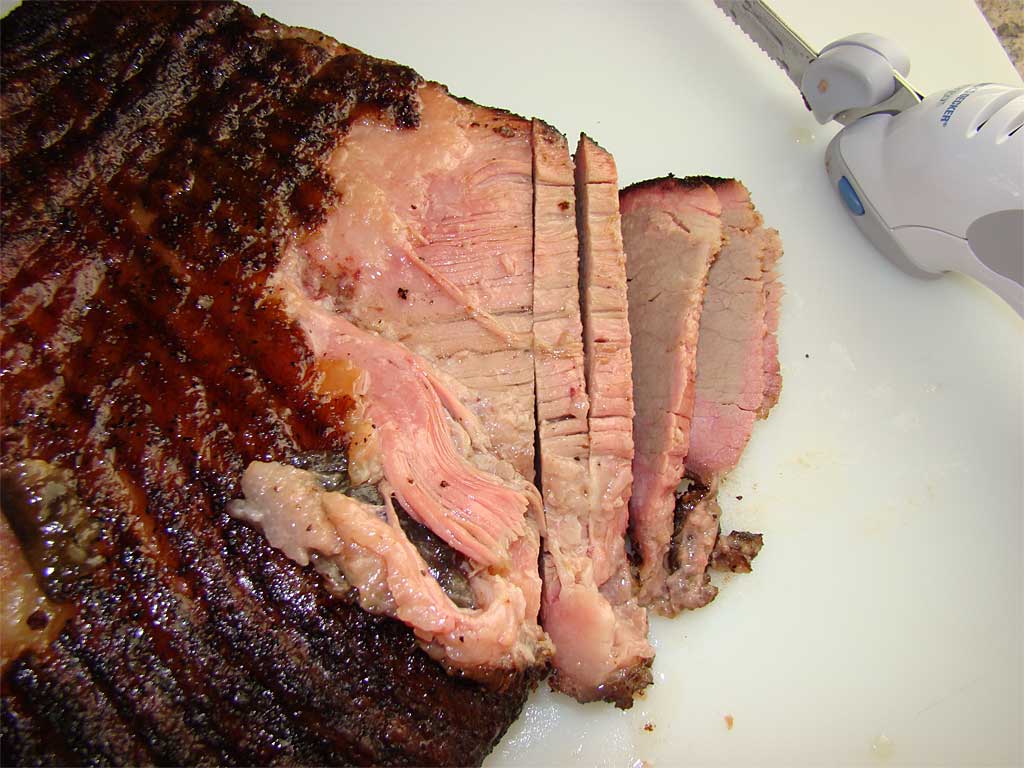
I trimmed a few large areas of fat from each brisket and cooked them using the Minion Method. I used a Weber chimney starter to light 50 briquettes and spread them over the remainder of a 21.6-pound bag of Kingsford, plus 2 gallons of hot water in the water pan. I did not refill the water pan during the cook.
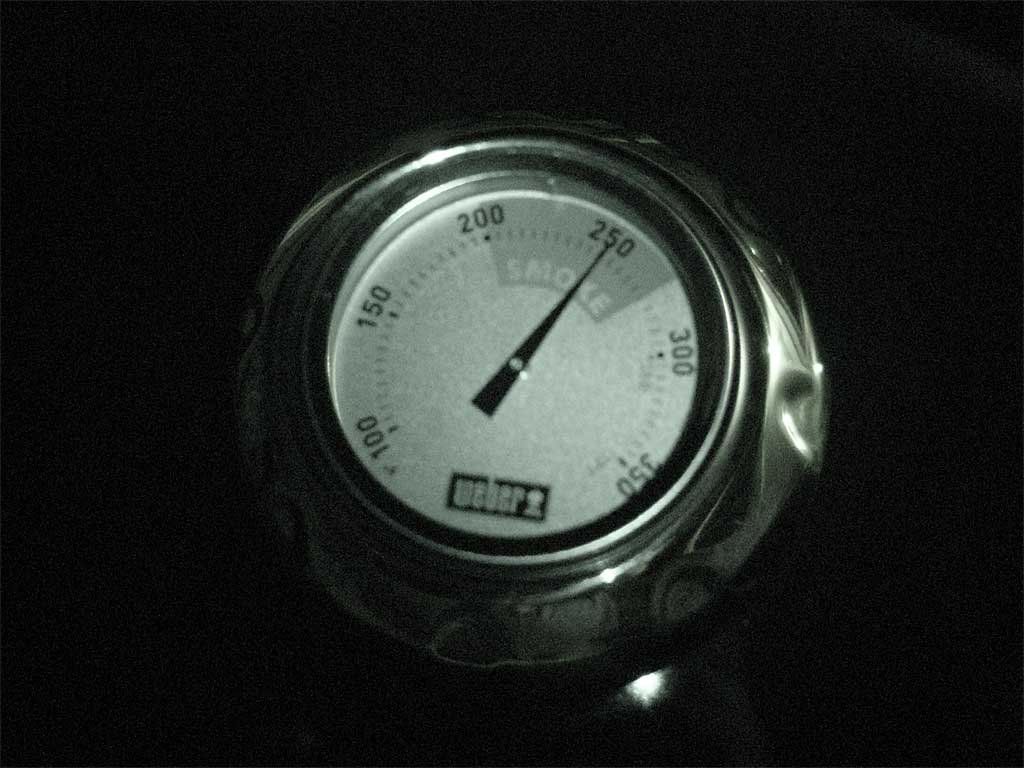
I cooked overnight, from 9:00pm to 11:00am the next morning. It never got below 59°F outside. It took 2 hours for the cooker to come up to 225°F with all vents wide open. The cooker then ran 225-250°F for the next 6 hours. After that I never measured a temp over 225°F even with all vents fully open and stirring the coals once.
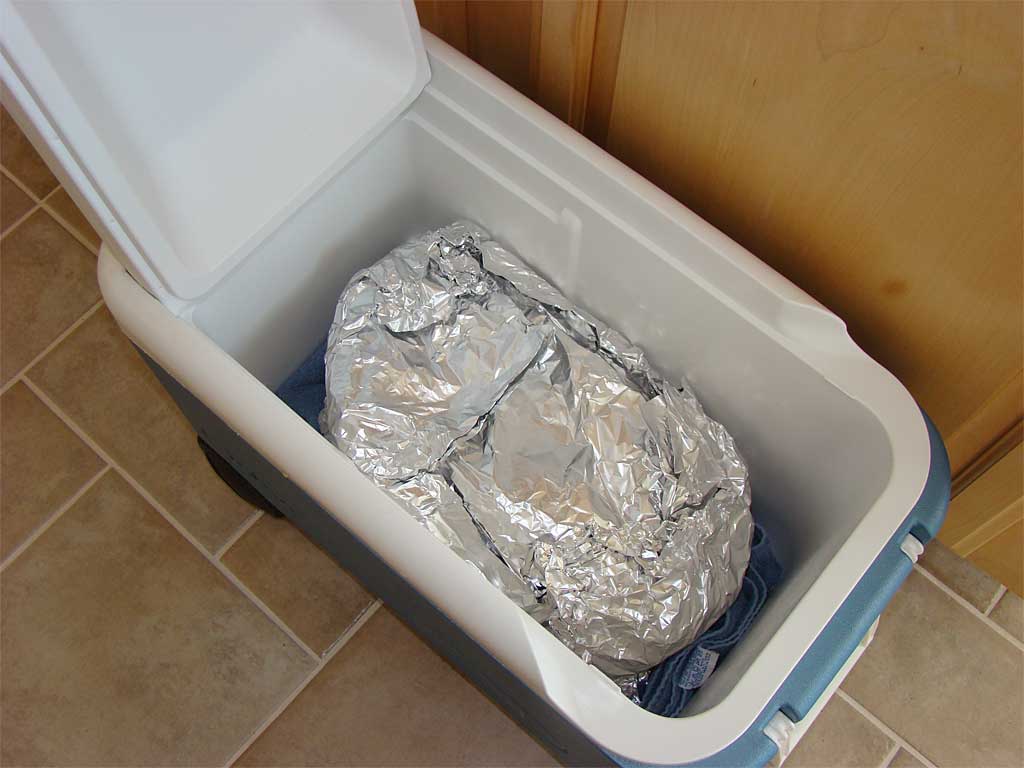
The brisket on the top cooking grate reached 185°F after 12 hours of cooking and got foiled and moved into an empty cooler to rest for a few hours. I moved the brisket from the bottom grate to the top and cooked for another 2 hours. It only reached 180°F after 14 hours of cooking, and at this point the cooker had dropped to 177°F, so I removed it from the cooker.
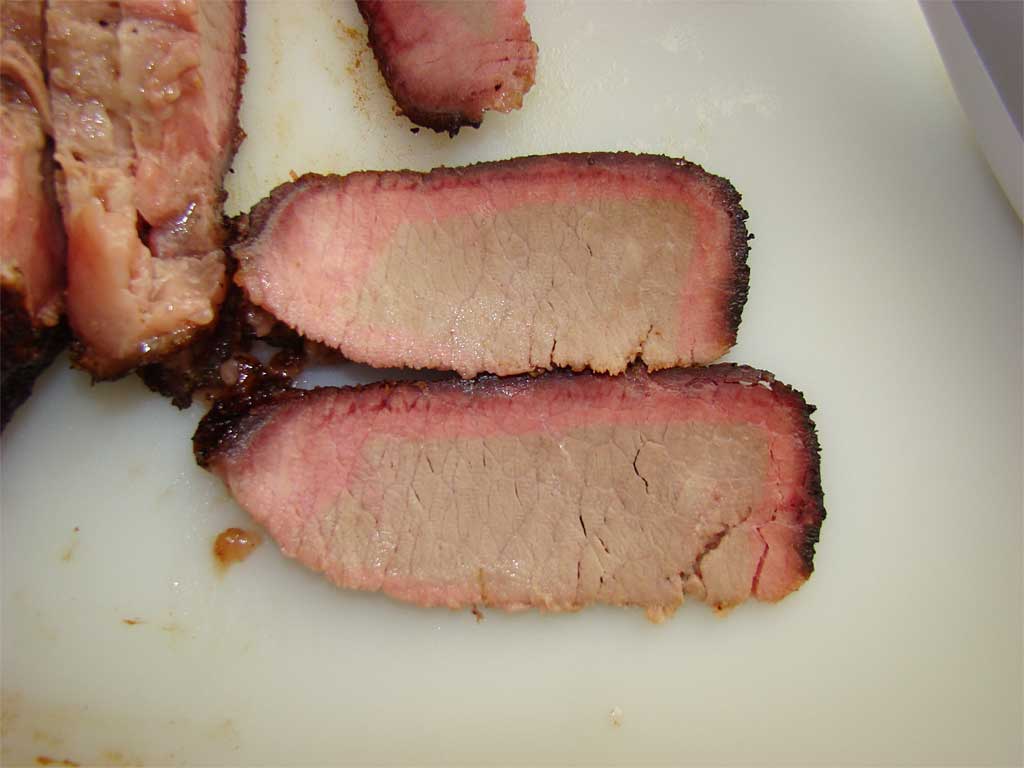
You can see the monster smoke ring achieved by the slow ramp-up of cooker temp during those first 2 hours.
I am coming to the realization that the 22.5″ WSM consumes more fuel in general than the 18.5″ version. Yes, you’re potentially cooking more pounds of meat and putting more water in the pan, and both of those affect fuel usage, but this new cooker also radiates more heat because of greater surface area, and it has to heat a larger amount of air inside the cooker, and more air is drawn through the cooker because of the larger vent dampers. All these factors affect fuel consumption.
-
- 18.5″ WSM
-
- 22.5″ WSM
More Cooking Photos
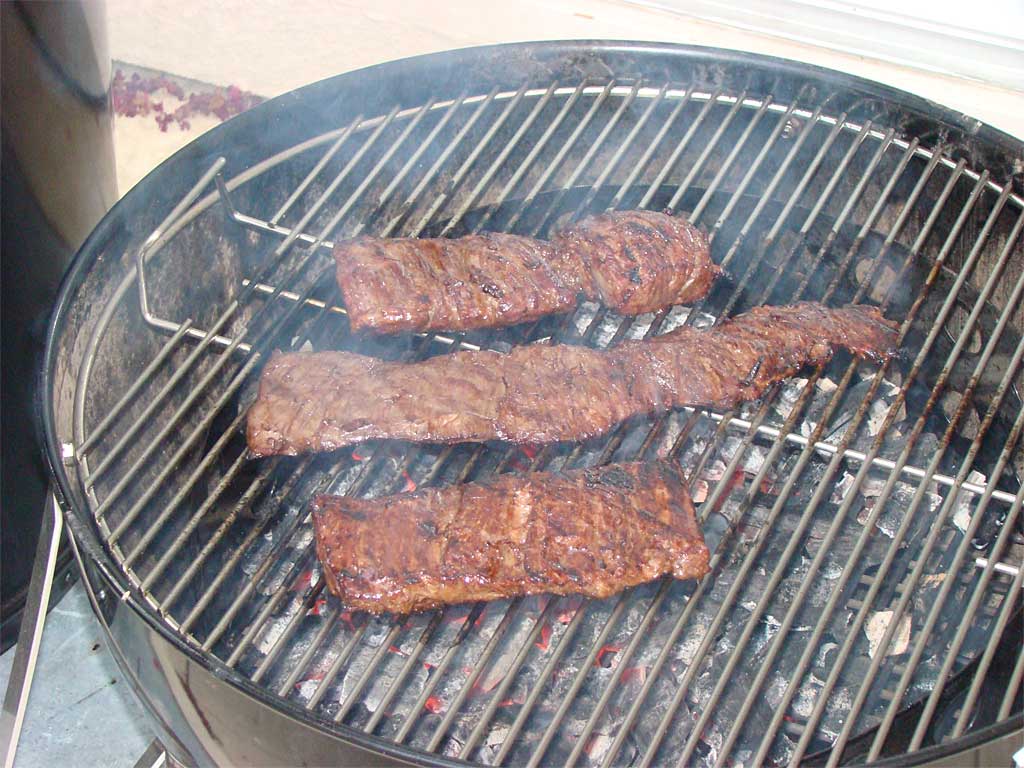
Grilled Skirt Steak
September 10, 2008
Decided to use the 22.5″ WSM as a “Smokey Joe on steroids” to grill skirt steak over lump charcoal. Delish!
Visit to Weber Corporate Headquarters
I was invited to meet with Weber’s R&D and marketing staff at Weber Corporate Headquarters in Palatine, IL on August 25, 2008 to discuss the new Weber smokers for 2009. You can read my trip report here.
Disclosure
The 22.5″ Weber Smokey Mountain Cooker shown in this article was provided compliments of Weber-Stephen Products Co. I was neither obligated to post a review of the product nor was I paid to write this article. The comments and opinions expressed are my own and have not been reviewed or approved by Weber.
Photos of 18.5″ and 22.5″ WSMs: 2008 Weber-Stephen Products LLC.